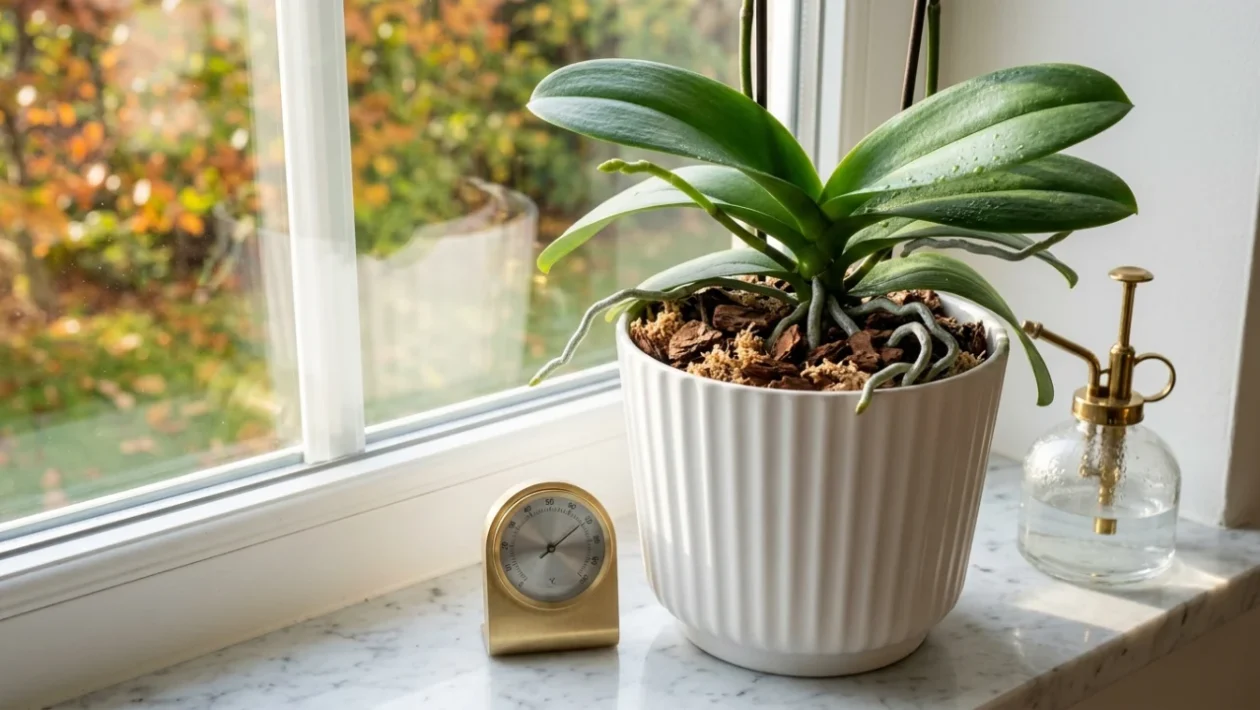
Dropping indoor nighttime temperatures down to roughly 15°C to 18°C for two to three weeks is the most reliable way to stimulate an orchid flower spike in fall. While moth orchids—known botanically as Phalaenopsis—thrive in warm living rooms throughout the summer, they require a clear seasonal signal to switch from growing glossy leaves to producing a brand-new floral stem.
Across Canadian homes, central heating systems often switch on automatically as outdoor conditions cool, maintaining a flat 21°C around the clock. That consistent warmth inadvertently tricks your plant into vegetative complacency. By actively creating a distinct day-to-night temperature shift during the autumn months, you provide the exact biological trigger your plant needs to start budding before deep winter sets in.
Achieving this transition does not require complex greenhouse equipment, but it does demand careful placement away from forced-air vents and chilly drafts.
Why Autumn Temperature Shifts Trigger Blooming
In their native subtropical canopy habitats, moth orchids experience distinct seasonal shifts where rainfall eases and nighttime temperatures drop steadily in the autumn. This environmental change signals that conditions will soon be ideal for pollinators, prompting the plant to invest its stored energy into floral development.
A flat, heated indoor temperature year-round tricks an orchid into believing summer never ended, keeping it in perpetual leaf growth rather than initiating blooms.
When an orchid sits in an environment where daytime temperatures reach roughly 22°C and night temperatures naturally dip by 4°C to 6°C, hormonal shifts occur within the plant’s central stem. This cooling period must be sustained consistently for about twenty days to activate dormant floral nodes nestled between the lower leaf joints.
The Step-by-Step Routine for Fall Spike Stimulation
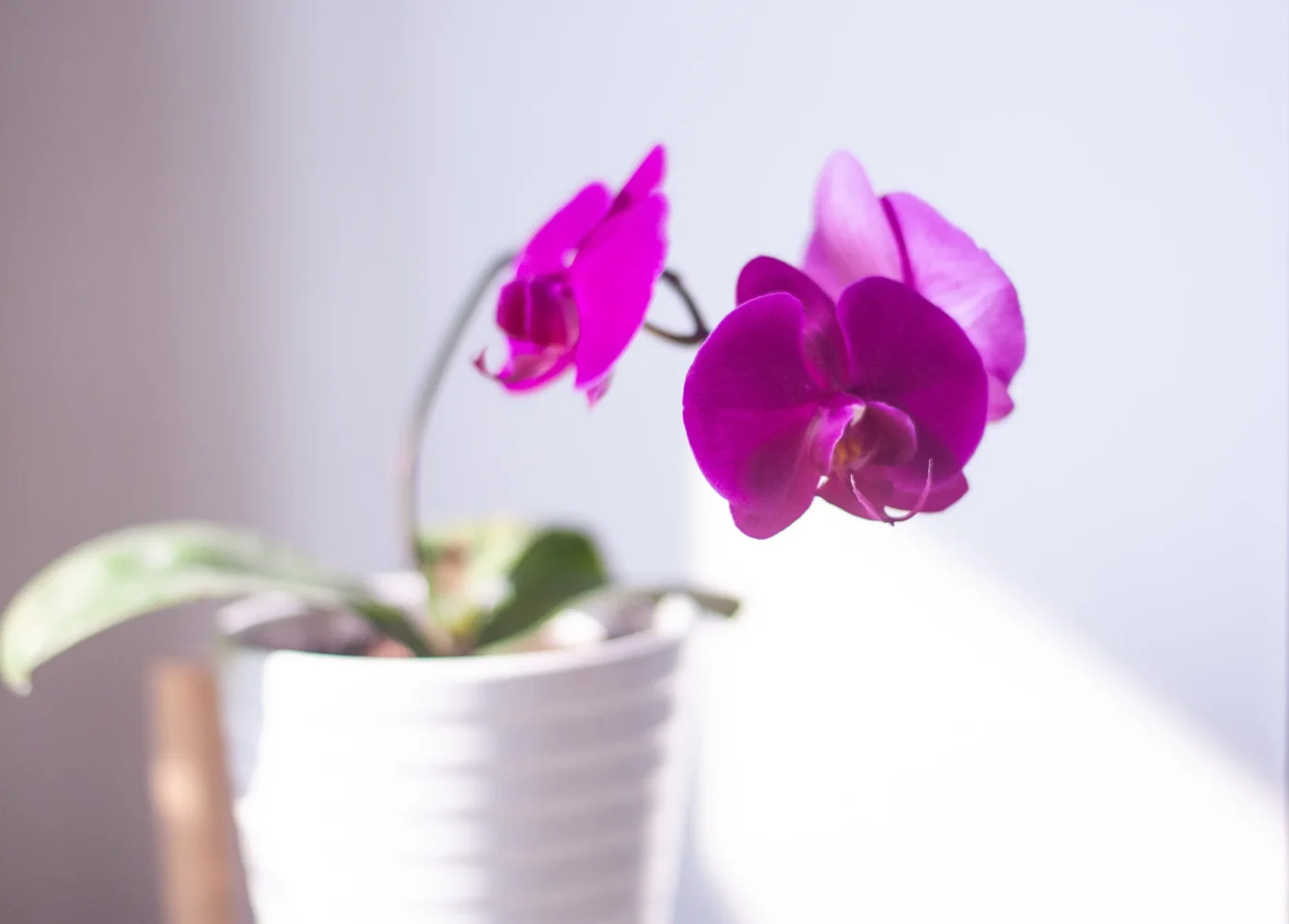
Successfully coaxing out a new spike requires balancing temperature drops with adequate autumn light and hydration. Follow these steps to prepare your plant safely:
- Select a cool windowsill: Move your orchid closer to an east- or south-facing window where the microclimate dips naturally at night, aiming for 15°C to 18°C while avoiding contact with cold glass panes.
- Maximize filtered daylight: As autumn daylight hours shorten across northern latitudes, provide as much bright, indirect sunlight as possible to fuel the energy-intensive process of spike emergence.
- Moderate your watering routine: Cooler temperatures slow down evaporation in bark substrates. Water only when the potting media feels nearly dry to the touch and the roots appear silvery-grey rather than bright green.
- Switch to a balanced maintenance fertilizer: Pause high-nitrogen growth formulas and instead apply a weak, balanced fertilizer diluted to one-quarter strength every two to three waterings.
Distinguishing a New Spike from an Aerial Root
Within two to four weeks of cooler nights, you should spot new growth emerging from the base of the plant. Gardeners often confuse a fresh flower spike with an emerging aerial root.
Look closely at the tip of the green nub: an emerging flower spike features an asymmetrical, mitten-shaped tip with distinct ridges along its sides. In contrast, an aerial root emerges rounded, smooth, and typically carries a glossy, uniform green or greyish tip.
Myth vs. Reality: The Ice Cube Method
A persistent houseplant myth claims that placing ice cubes directly onto orchid bark stimulates an orchid flower spike by shocking the root system into blooming. Horticulture science reveals the opposite reality: tropical epiphytic roots are exceptionally sensitive to freezing moisture.
Ice water causes localized cellular collapse, leading directly to root rot and premature bud drop. The required seasonal drop must occur in the surrounding ambient air, not through frozen shock delivered to the root ball. Keep root systems hydrated with room-temperature water while allowing the room itself to cool down naturally overnight.
Autumn Spike Induction vs. Winter Bloom Maintenance
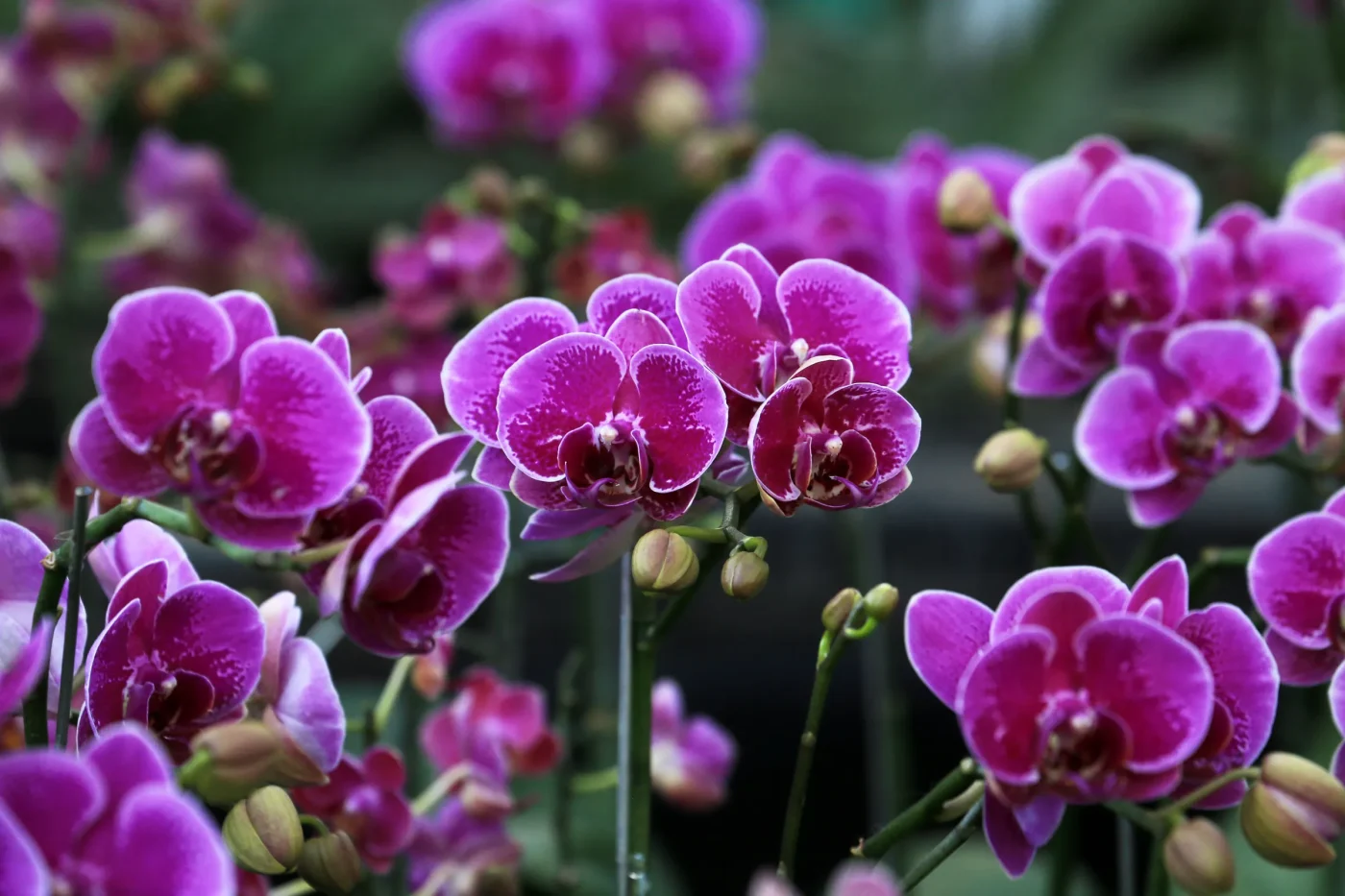
Managing an orchid during the initiation phase requires different care than maintaining open flowers during mid-winter. The parameters below illustrate how environmental needs shift once the spike begins to elongate:
| Growth Stage | Ideal Care Conditions |
|---|---|
| Spike Initiation (Fall) | Night temperatures between 15°C and 18°C; high indirect light; reduced feeding to trigger nodes. |
| Bud Development (Winter) | Stable room temperature near 20°C; higher indoor humidity; staked stems protected from furnace drafts. |
Once your flower spike reaches roughly ten centimetres in height, the initiation phase is complete. At that stage, you can safely return the plant to a steadily warm location, stake the stem gently with a small clip, and watch the buds swell toward their winter display.
✨ Check your indoor windowsill temperatures this evening to give your orchids the seasonal nudge they need.
💚 Share your experience with us and let fellow growers know what varieties you are coaxing into bloom.
👇 Leave a comment below with your best autumn indoor plant tips.