To successfully protect garden roses for winter in Canada without losing next season’s blooms, gardeners must avoid heavy fall cutting, halt late nitrogen fertilizing, and wait until plants enter full dormancy before applying heavy insulation. Rushing to bury bushes in early autumn or trimming healthy stems traps excess moisture and stimulates tender shoots that freeze solid.
Many backyard growers rush into autumn chores assuming a severe cleanup gives shrubs an early advantage when snow flies. Well-intentioned tasks often backfire when northern freezes arrive unexpectedly. Horticultural research reveals that premature winter protection disrupts a plant’s natural hardening process, leaving vulnerable wood exposed to severe cold injury.
Timing your winter prep to match how rose bushes naturally respond to falling temperatures keeps roots and graft unions fully viable until spring thaw.
The Critical Fall Care Errors That Threaten Canadian Roses

Cutting canes back severely simply because the growing season is finishing remains a frequent misstep. Major pruning stimulates fresh growth that cannot harden before sub-zero temperatures hit. Stems left intact insulate the core structure of the plant and help it endure drying winds.
Heavy pruning can stimulate tender new growth that may not have enough time to harden before freezing temperatures arrive. Waiting until early spring allows gardeners to identify winter-damaged stems and remove them without sacrificing healthy growth.
Another hazard comes from late-season feeding. Applying nitrogen-rich fertilizer when bushes look fatigued forces active cell division right when the plant needs to shut down. Soft wood resulting from late fertilization turns black and mushy under early frosts. The wiser path involves letting natural dormancy take over while monitoring soil hydration below the surface.
Hydration and Disease Sanitation
Colder air frequently disguises dry autumn soil conditions across Canadian yards. Rose bushes that enter frozen ground parched cannot sustain stem hydration against persistent winter winds. Watering deeply around the root zone before the ground solidifies provides an essential moisture reservoir, particularly for newly planted shrubs that lack deep root networks.
Ground sanitation around the root zone is equally vital. Foliage afflicted with fungal infections such as black spot drops to the ground and shelters spores all winter long. Leaving infected debris beneath protective wraps virtually guarantees disease re-emergence when warm weather returns.
Why Blanket Care Fails: Knowing Your Variety
Different rose categories demand vastly different approaches during freezing Canadian months. Treating every bush with identical wraps leads to wasted labour or dead canes come May.
Hardy shrub and landscape selections withstand sub-zero conditions with minimal assistance. Modern hybrid tea, floribunda, and grandiflora roses carry far less cold tolerance and frequently require insulated mounding to shield their vulnerable graft unions from repeated freeze-thaw cycles.
| Rose Variety Type | Winter Cold Vulnerability |
|---|---|
| Modern Hybrid Tea, Floribunda, and Grandiflora | High sensitivity; requires substantial root and graft protection in cold climates |
| Hardy Shrub and Established Landscape Roses | Low sensitivity; generally endure freezing temperatures with little or no special insulation |
| Grafted Garden Roses | Sensitive union point; union requires mounding against severe deep freezes |
| Potted / Container Roses | Elevated root exposure; container soil freezes faster than in-ground garden beds |
Not all roses need identical fall care, and assuming otherwise can lead to unnecessary work or inadequate protection. Modern hybrid teas often require winter protection in cold climates, while numerous hardy shrub roses do not.
Step-by-Step Method to Protect Garden Roses

Applying winter shields too early traps heat and humidity, which encourages fungal rot rather than plant dormancy. Follow these targeted steps to prepare bushes safely:
- Rake and clear diseased debris: Strip away fallen leaves showing black spot or mildew and clear dead organic matter around the base instead of leaving it as natural mulch.
- Check soil moisture levels: Test soil several inches below the surface during dry periods and water the root zone deeply until the ground freezes.
- Tie unruly canes: Secure exceptionally long branches to keep gusty winter winds from whipping and breaking structural wood, leaving overall pruning for the spring.
- Wait for complete dormancy: Withhold heavy mounding or wrapping materials until cold conditions have fully prompted leaf drop and dormancy, avoiding early insulation traps.
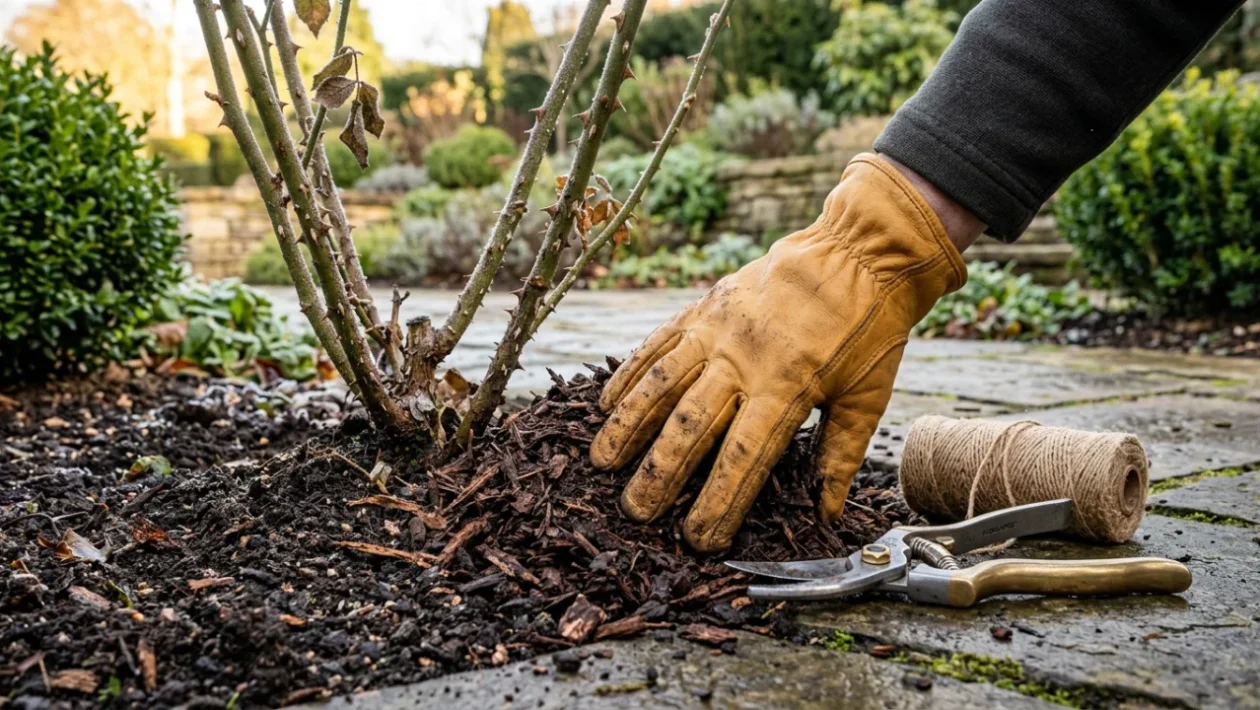
- Protect the crown: Once freezing weather arrives steadily, mound clean soil, compost, or protective mulch over vulnerable graft unions on sensitive hybrid tea and floribunda varieties.
- Shield container-grown plants: Move potted roses to sheltered spaces or insulate containers, as above-ground pots freeze through far faster than garden soil.
💚 Share your experience with us on how your garden roses handled the last winter freeze.
📱 Pass this guide along to fellow Canadian green thumbs prepping their beds for the season.
👇 Leave a comment below with the specific rose varieties you are preparing this autumn!