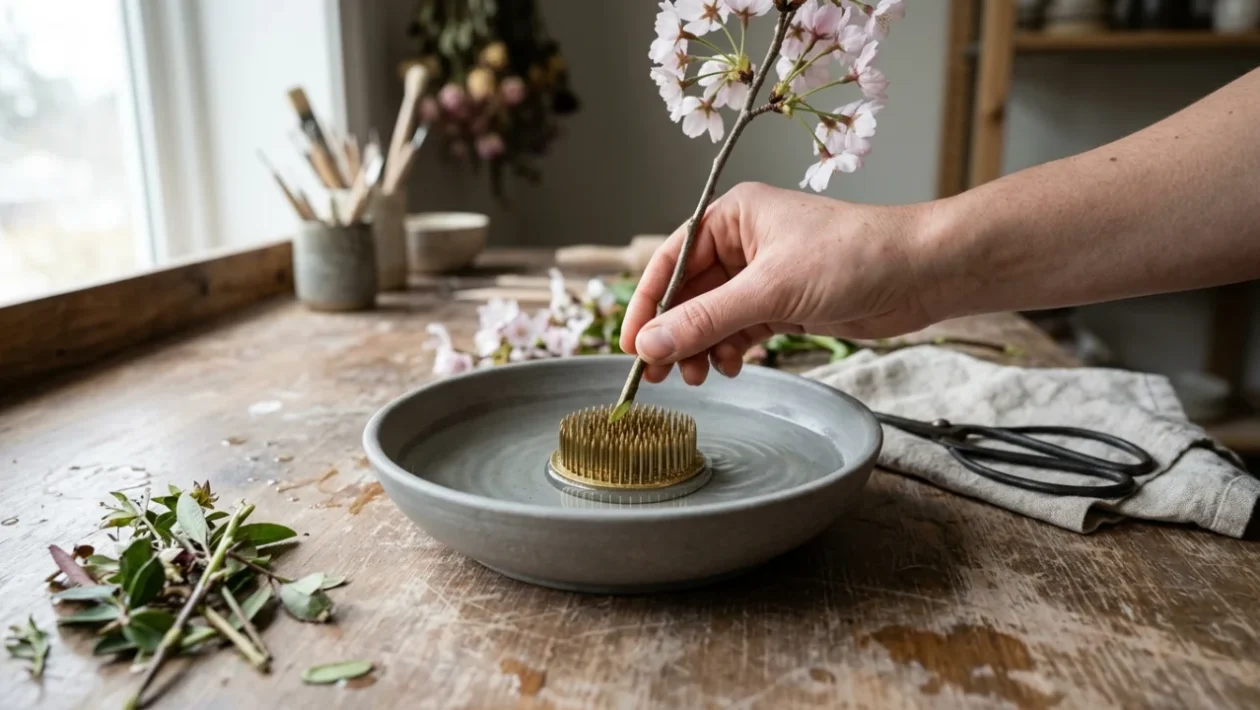
Switching to a reusable flower frog replaces single-use synthetic foam entirely, providing rigid structural support for cut stems while keeping your vase water crystal clear. By anchoring a weighted pin frog to a dry vessel with waterproof floral putty, you create a stable, circular mechanic that supports delicate blooms and heavy woody branches alike.
Traditional green floral bricks degrade into non-biodegradable microplastics that end up in household drains and local waterways every time a vase is emptied. A heavy brass kenzan or moulded glass frog lasts a lifetime, allowing fresh stems to draw clean water naturally without chemical blockages.
Transitioning away from single-use mechanics does not require professional floristry credentials, but it does require understanding balance, stem cuts, and water placement.
The Environmental Shift: Foam Waste Versus Reusable Mechanics
Phenolic floral foam was designed for convenience, yet it fragments into millions of microscopic plastic particles during handling and disposal. These synthetic particles cannot be composted or recycled, creating an ongoing waste footprint for temporary indoor displays.
By contrast, a metal pin flower frog—traditionally known in Japanese ikebana as a kenzan—relies on physical tension and pure gravity. Its heavy lead or brass base holds stems upright directly in an open water reservoir, eliminating artificial debris completely.
A common misconception is that floral foam hydrates flowers better than plain water, yet stems pressed into compact synthetic resin frequently suffer from clogged vascular tissue compared to stems drinking freely from an open vessel.
Dispelling this hydration myth is the first step toward better floral longevity. Flowers held in a frog take up fresh water through unobstructed cuts, preventing premature petal wilt.
Comparing Sustainable Frogs and Plastic Foam

Understanding how physical mechanics contrast with chemical blocks helps clarify why sustainable floristry produces healthier, more dynamic arrangements.
| Design Factor | Flower Frog Performance |
|---|---|
| Environmental Impact | Zero microplastic runoff with infinitely reusable metal or glass |
| Water Absorption | Unrestricted direct hydration through unblocked stem capillaries |
| Mechanical Stability | Heavy weighted base prevents top-heavy stems from flipping |
| Water Maintenance | Allows effortless water top-ups and complete water changes |
Because the mechanics remain stationary at the bottom of the container, you can pour out cloudy water and refill the bowl without dismantling your arrangement.
Step-by-Step: Securing and Arranging With a Pin Frog
Mastering this technique comes down to preparing your surface correctly before introducing water. Moisture ruins adhesion, so precision in the opening step ensures total stability.
Preparing Your Base and Stems
- Dry the vessel thoroughly: Wipe both the bottom of your ceramic bowl and the underside of your metal flower frog with a clean towel to ensure zero moisture remains.
- Apply waterproof floral putty: Roll a pea-sized snake of floral adhesive putty, press it in a ring along the underside edge of the frog, and press down firmly into the vessel with a slight twisting motion.
- Fill with cool water: Pour fresh water into the container until the metal pins are submerged by at least one centimetre, adding flower food if desired.
- Cut stems straight across: Unlike vase arrangements that call for a steep diagonal cut, trim thicker stems straight across so they slide cleanly onto the brass pins without slipping off.
- Anchor your structural branches: Insert primary branches straight down or at deliberate angles into the pins, letting the heavy base counterbalance the natural lean of the foliage.
- Layer in focal blooms: Fill negative space with medium and delicate flowers, sliding softer stems gently between the needles rather than jamming them forcefully onto the sharp points.
For exceptionally hollow or delicate stems, insert a small wooden toothpick or a sturdier woody clipping inside the base of the stem first to give the frog pins something solid to grip.
Extending Bloom Life Through Regular Care

Arrangements built on pin mechanics drink significantly more water than those sitting in foam because their vascular pathways remain wide open. Keep an eye on shallow containers, as evaporation occurs more rapidly in open bowls.
To refresh the display, place the entire container under a slow-running tap to flush out older water, allowing fresh water to overflow gently without dislodging the anchored stems.
Once blooms reach the end of their life, remove the stems, rinse the pins under warm running water, and scrub away organic residue with an old toothbrush. Store the frog dry to preserve the needle points for your next centrepiece.
💚 Making the switch to a reusable flower frog cuts out plastic waste while giving you complete creative control over your arrangements.
✨ You will enjoy longer-lasting petals, clearer water, and a sustainable mechanic that lasts for decades of seasonal tabletop designs.
📱 Share your favourite floral design tips with your local gardening circle or tag fellow plant enthusiasts in your latest styling projects.
👇 Leave a comment below to let us know which ceramic bowls and garden blooms you plan to pair with your frog first!