Deadheading peonies immediately after their petals drop stops the plant from wasting vital energy on seed production, redirecting critical nutrients into root crowns to guarantee larger, healthier blooms next season. By removing only the spent flower head down to the first healthy leaf axil, gardeners preserve the lush green foliage needed for summer photosynthesis while eliminating decomposing plant matter that invites common fungal infections.
Across Canadian gardens, herbaceous and intersectional peonies remain long-lived cornerstones of the border. When that spectacular June and July display finishes, many growers wonder whether to let the drying seed heads mature or take the pruners straight to the stems. Leaving fading blossoms in place does more than create an untidy appearance; it directly robs the root system of stored carbohydrates required to survive harsh winter conditions.
The botanical mechanics behind this process reveal why a simple cut makes such a measurable difference in plant vigour.
The Science: Why Peonies Need Spent Blooms Removed
Once pollination occurs, a peony naturally shifts its metabolic focus from vegetative growth to reproduction. The plant produces thick carpels filled with developing seeds, an energy-intensive cycle that pulls phosphorus and potassium away from the crown.
Snipping off the withered bloom breaks this reproductive cycle instantly. The root system halts seed formation and instead stores food reserves in its fleshy, tuberous roots until dormancy arrives. This reserve bank dictates the quantity and size of the flower buds that emerge the following spring.
Deadheading also serves as an essential line of defence against plant disease. Decaying petals that cling to wet stems or fall into dense foliage create ideal conditions for Botrytis paeoniae, commonly known as peony grey mould. This pathogen thrives during humid spells, causing black lesions on stems and rotting nascent buds from the inside out.
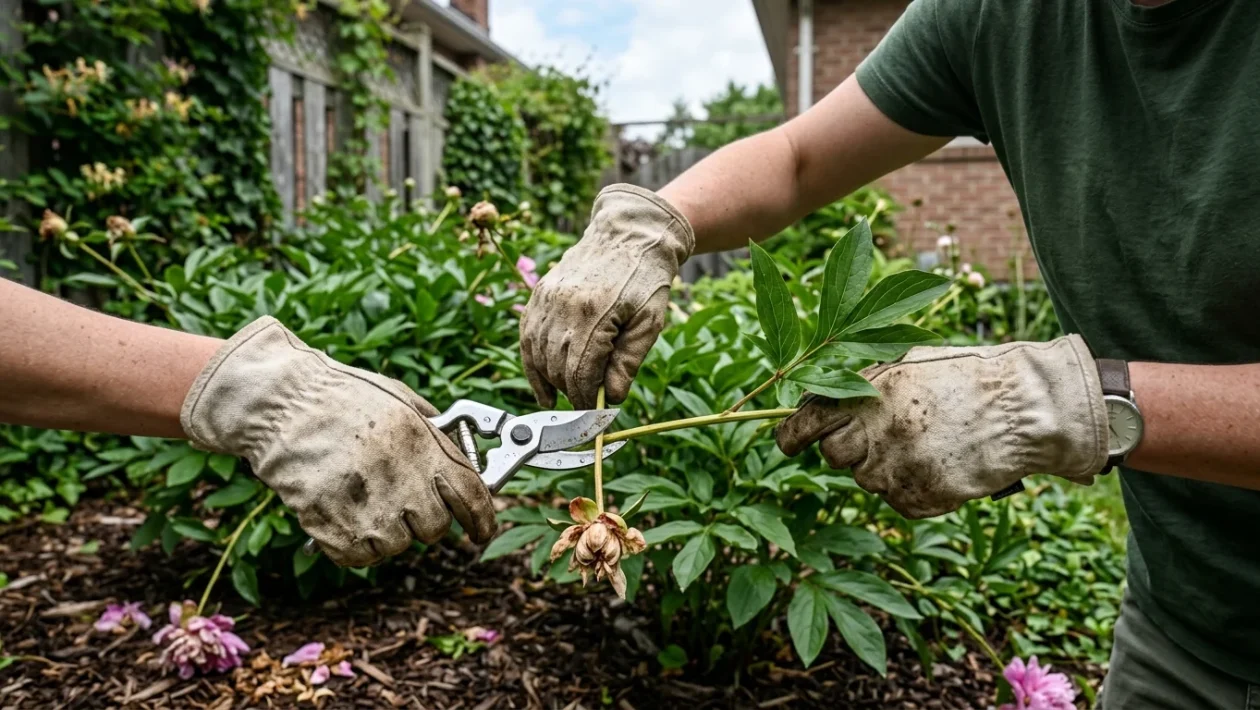
Snipping spent flower heads as soon as the petals lose their colour prevents seed formation and significantly reduces the moisture traps where fungal spores take hold.
Step-by-Step Guide to Deadheading Peonies Correctly
Proper pruning technique ensures you do not inadvertently stunt the perennial by taking off too much foliage. Follow this simple pruning sequence once the petals begin to brown or fall to the soil:
- Sterilize your bypass pruners: Wipe cutting blades with isopropyl alcohol or a mild bleach solution before moving between plants to avoid transferring fungal spores.
- Locate the cut point: Follow the spent flower stem down past the old bloom to the first set of robust, healthy leaves.
- Make an angled cut: Slice the stem roughly half a centimetre above the leaf joint at a 45-degree angle. This allows rainwater to run off rather than settle on the cut wound.
- Clear dropped petals: Rake up and discard fallen petals from the ground beneath the plant canopy to minimize lingering mildew risks.
While the mechanics are straightforward, the biggest mistakes often happen when gardeners misinterpret how much of the plant to remove.
Myth vs. Reality: The Foliage Trap
A widespread gardening myth suggests that cutting an entire herbaceous peony bush down to the soil right after flowering keeps the garden neat without harming the plant. In reality, shearing green peony foliage in midsummer effectively starves the root crown.
Peony leaves act as solar panels throughout July, August, and September, generating the starches required for hardiness against freezing ground temperatures. Without foliage, the crown cannot prepare for winter, resulting in sparse flowering or outright crown rot the following year.
Herbaceous, Tree, and Itoh Peonies: Knowing the Difference
Different peony types demand subtle adjustments during post-flowering cleanup. While common herbaceous varieties die back completely after hard frost, tree peonies form permanent woody branches that must never be cut back to ground level.
| Peony Type | Deadheading Action |
|---|---|
| Herbaceous Peonies | Cut spent flower stems to top leaf; retain all green foliage until late autumn frost. |
| Tree Peonies (Woody) | Snip just below the seed capsule; preserve the woody framework entirely. |
| Itoh (Intersectional) | Prune spent bloom stems down to upper foliage; leave stems intact through early autumn. |
Once spent flowers are removed, maintenance is minimal. Simply ensure your peonies receive consistent moisture during prolonged dry spells, avoid high-nitrogen fertilizers that encourage weak leaf growth at the expense of root storage, and monitor the foliage as autumn approaches.
💚 Have you deadheaded your garden peonies yet this year?
✨ Taking five minutes with clean shears now ensures massive, fragrant blossoms next spring.
📱 Share your favourite peony varieties and care routines in the comments below!
👇 Keep your soil healthy and happy gardening across the seasons.