
The groundbreaking collaboration and historic lineage linking Dorothy Davis, Muriel Gold, and the Montreal Children’s Theatre established one of the most transformative arts training traditions in Canadian cultural history. Founded during the Great Depression, the institution redefined how young people interacted with dramatic literature, creative expression, and stage performance across Quebec and the rest of Canada. Long before government arts councils provided structural funding, these visionary leaders proved that youth theatre could hold the same artistic weight as mainstream adult production.
For decades, the Montreal institution served not merely as a weekend recreational outlet, but as an elite artistic crucible that sent its alumni into international broadcasting, professional stages, and prominent academic chairs. Understanding this creative legacy reveals how grassroots theatre initiatives fundamentally built modern Canadian performing arts culture from the ground up.
Why did this specific drama institution achieve such an outsized cultural footprint across Canada?
Who Was Dorothy Davis and How Did the Montreal Children’s Theatre Begin?
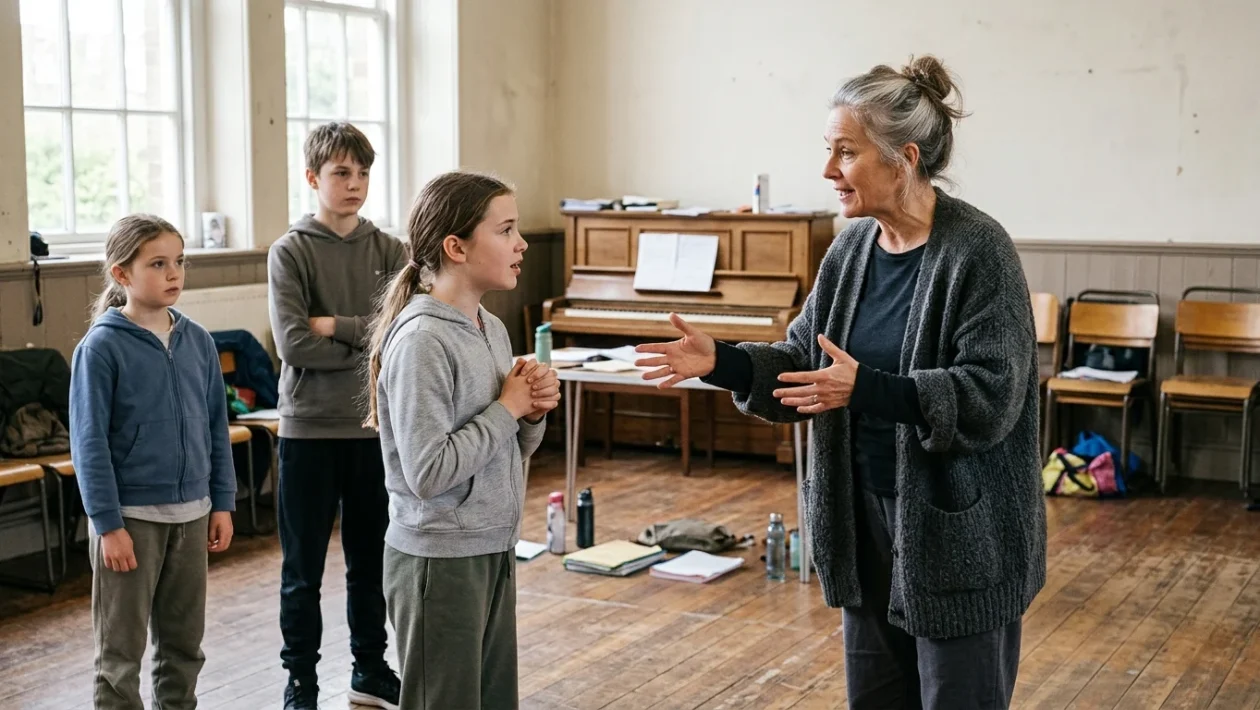
In 1933, theatrical pioneer Dorothy Davis co-founded the Montreal Children’s Theatre alongside business and creative partner Violet Walters. Establishing a major community arts enterprise in Montreal in the middle of severe economic hardship demanded extraordinary determination. Rather than relying on simple fairy-tale pantomimes, Davis insisted on providing rigorous speech arts, vocal training, physical poise, and classical staging for young performers.
Under Davis’s direction, the company introduced thousands of young Montrealers to stagecraft. The training was so thorough that the company developed a reputation as Canada’s premier youth training pipeline, educating future household names including international screen star William Shatner and celebrated operatic contralto Maureen Forrester.
Davis understood early that dramatic training was as much about building personal confidence and civic articulation as it was about producing professional actors. That holistic philosophy transformed the institution into an indispensable fixture of English-speaking artistic life in Quebec throughout the mid-twentieth century.
The essential objective of dramatic arts education is not solely the creation of working actors, but the cultivation of expressive, empathetic, and courageous citizens.
This enduring educational philosophy left a permanent mark on every student who crossed the stage, including a gifted young actor who would carry the torch into academic and professional theatre leadership.
How Did Muriel Gold Document and Expand the Institution’s Vision?
Artistic leader and educator Muriel Gold, who was appointed a Member of the Order of Canada for her distinguished contributions to drama in education, entered this world first as a dedicated pupil of Davis and Walters. The creative standards instilled during her formative years at the Montreal landmark sparked a lifelong dedication to advancing professional Canadian theatre.
Gold went on to lead Montreal’s renowned Saidye Bronfman Centre Theatre (now the Segal Centre for Performing Arts) as artistic director for decades, elevating multicultural drama and commissioning vital new works. Yet, she continually traced her foundational artistic ethics back to the classrooms of the Montreal Children’s Theatre.
Preserving Canadian Stage History Through Literature
Recognizing that early Canadian performing arts achievements risked being forgotten, Gold turned to archival research and biographical writing. Her historical volumes meticulously recorded the lives of Dorothy Davis and Violet Walters, preserving primary source recollections, archival production photographs, and performance reviews from mid-century Montreal newspapers.
Through this scholarship, Gold ensured that Canada’s performing arts historians, students, and cultural policymakers recognized youth theatre pioneers as central architects of the nation’s artistic infrastructure.
The Structural Pillars of Davis and Gold’s Creative Legacy
The institutional achievements of both women can be directly compared through their contributions to drama, pedagogy, and Canadian cultural preservation:
| Historical Dimension | Pioneering Cultural Impact |
|---|---|
| Dorothy Davis | Co-founded the Montreal Children’s Theatre in 1933; pioneered early professional child actor training in Quebec; mentored prominent Canadian cultural icons. |
| Muriel Gold | Served as artistic director at the Saidye Bronfman Centre; authored vital histories documenting Davis and Walters; earned the Order of Canada for advancements in arts education. |
| Pedagogical Approach | Shifted youth theatre from casual memorization toward comprehensive voice, emotional expression, physical discipline, and collaborative stagecraft. |
| National Significance | Demonstrated that community-rooted performing arts institutions serve as the bedrock for Canada’s professional theatre, television, and film industries. |
Myth-Busting: Child Drama as Mere Entertainment
A persistent myth suggests that mid-century children’s theatre was purely amateur recreation designed to occupy idle weekends, devoid of serious technical methodology. The archival records maintained by historians tell a completely different story.
Davis structured curricula around classical elocution, breath control, textual deconstruction, and authentic physical performance. This rigorous technical foundation was the primary reason so many pupils transitioned seamlessly into international theatre companies, national radio networks like the Canadian Broadcasting Corporation, and conservatory programs.
Core Lessons Contemporary Arts Programs Draw From Their Work
Educators and community arts leaders in Canada still apply the principles championed throughout the history of the Montreal Children’s Theatre to contemporary youth programming:
- Empowering Youth Agency: Treating young actors with professional respect by offering them complex, emotionally nuanced scripts rather than simplistic caricatures.
- Interdisciplinary Stagecraft: Integrating vocal technique, classical movement, set awareness, and ensemble listening into foundational lesson plans.
- Institutional Documentation: Preserving production records, personal memoirs, and prompt scripts so future generations understand the developmental path of Canadian culture.
- Community Accessibility: Creating welcoming neighborhood artistic homes that nurture creative literacy across diverse demographic groups.
By treating youth performance as an art form deserving of rigorous technique, Davis built the platform, and Gold guaranteed its enduring place in Canadian cultural history.
✨ The story of Montreal’s pioneer drama educators reminds us that community arts institutions shape national culture for decades to come.
💚 Share your memories of youth theatre programs or local stage mentors who shaped your own creative journey.
📱 Leave a comment below to join the conversation on preserving Canada’s rich performing arts heritage.
👇 Pass this story along to fellow Canadian theatre lovers and arts advocates.