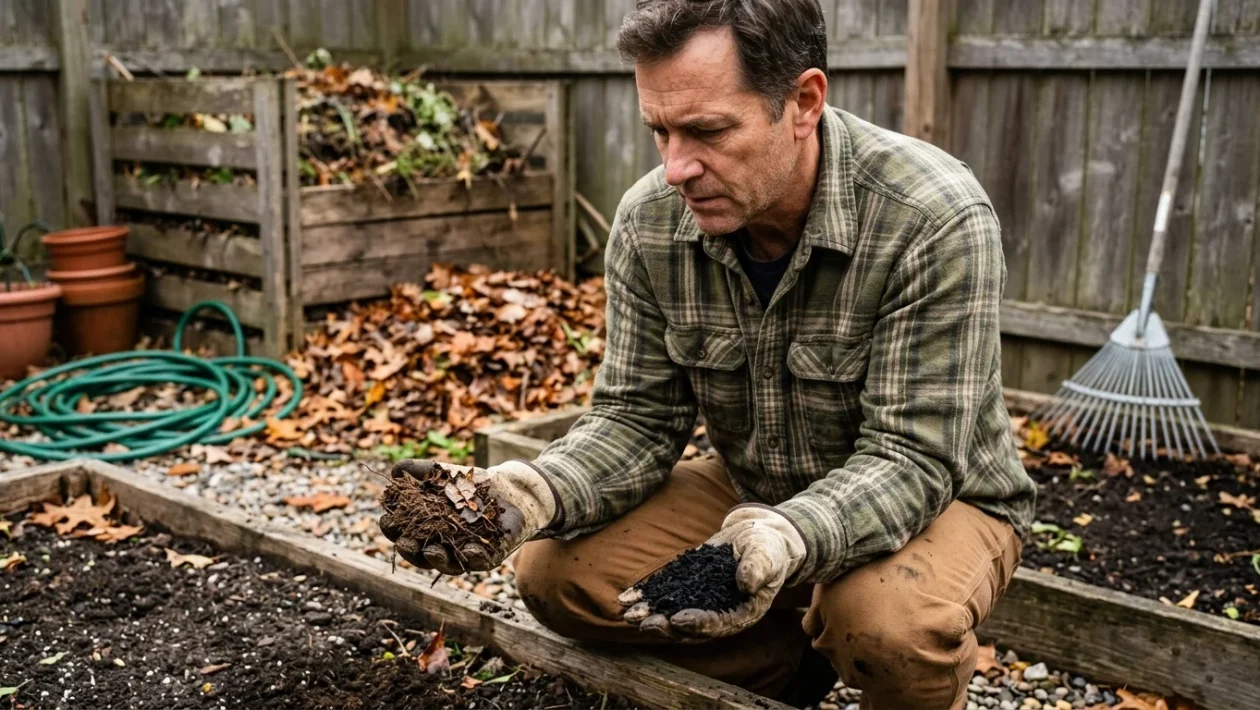
Leaf mold serves as an exceptional physical soil conditioner that dramatically improves moisture retention, whereas traditional compost functions as a nutrient-rich biological fertilizer designed to feed plants. While both resemble rich, dark earth once decomposed, confusing the two can leave your vegetable beds starving for essential nitrogen or cause your soil to dry out far too quickly during dry summer spells.
Gardeners across Canadian regions frequently rake up tonnes of deciduous autumn foliage and toss it into municipal collection bags without realizing they are discarding one of the most effective soil amendments available. Knowing when to apply leaf mold and when to reach for standard compost directly impacts root development, fungal balance, and overall garden yield.
How Fungi and Bacteria Create Two Entirely Different Amendments
The primary distinction between leaf mold and compost comes down to the biological mechanisms responsible for breaking down the raw organic material. Standard garden compost relies on a careful ratio of nitrogen-heavy green materials and carbon-rich brown materials, driven by rapid bacterial activity that generates high temperatures within an active pile.
In contrast, leaf mold is produced almost exclusively through the slow, cool action of fungal decomposition on carbon-dense tree leaves. Fungi, particularly white rot fungi, slowly dismantle the tough lignin and cellulose found in tree leaves without ever heating up the pile.
A common mistake is treating leaf mold as a direct plant fertilizer; its true superpower lies in rebuilding soil structure and holding up to five hundred percent of its weight in water, not delivering rapid nitrogen.
Because fungal breakdown occurs at ambient temperatures, the process requires patience. A dedicated wire corral filled with shredded maple, oak, or birch leaves will quietly transform into crumbly, sweet-smelling leaf mold over twelve to twenty-four months, requiring minimal turning compared to an active, heat-regulated compost bin.
Myth-Busting: Does Leaf Mold Acidify Garden Soil?
A persistent myth among home growers suggests that leaves from specific trees, notably oaks and conifers, will permanently acidify soil beds and stunt vegetable growth. While freshly fallen pine needles and certain deciduous leaves test slightly acidic when dry, the fungal decomposition process neutralizes this acidity naturally over time.
Finished leaf mold typically registers near neutral on the pH scale, generally between 6.5 and 7.2. You can safely add well-rotted leaf mold across raised beds, perennial borders, and container displays without disrupting your soil chemistry or locking out key micronutrients.
Leaf Mold vs Compost at a Glance
Selecting the right amendment depends entirely on whether your garden soil requires physical restructuring or bioavailable plant nutrients. Understanding the practical differences ensures you apply the correct material at the right stage of the growing cycle.
| Characteristic | Leaf Mold vs Compost |
|---|---|
| Primary Function | Leaf mold conditions soil structure; compost provides plant nutrition. |
| Biological Driver | Leaf mold relies on slow fungi; compost relies on hot bacteria. |
| Nutrient Profile (N-P-K) | Leaf mold has very low fertility; compost offers balanced, slow-release nutrients. |
| Water Retention | Leaf mold holds extraordinary water volume; compost offers moderate moisture retention. |
| Decomposition Time | Leaf mold takes one to two years; active compost finishes in two to four months. |
| Best Garden Application | Leaf mold excels as a mulch and aerator; compost excels as a pre-planting soil booster. |
When to Reach for Leaf Mold over Standard Compost
Leaf mold should be your first choice whenever soil texture and moisture management present serious challenges. Heavy clay soils, common throughout southern Ontario, the Prairies, and parts of Quebec, benefit immensely from the coarse, spongy particles of leaf mold, which break up dense clods and introduce persistent aeration channels.
Similarly, sandy soils lose water rapidly during peak growing heat, washing soluble nutrients down past shallow root zones. Integrating finished leaf mold into sandy garden plots acts as a biological sponge, holding irrigation water near the root zone where seedlings need it most.
How to Make High-Yield Leaf Mold at Home
- Collect deciduous leaves: Gather leaves from non-toxic species such as maple, oak, beech, and birch during routine autumn clean-ups.
- Shred the material: Run a lawnmower over the dry leaf piles to cut the surface area down, cutting the breakdown timeframe roughly in half.
- Build a simple corral: Enclose an area using simple wire fencing or repurposed wooden pallets to keep the pile contained and aerated.
- Moisten thoroughly: Fungi require consistent moisture to thrive; spray the pile with water until it feels like a wrung-out sponge.
- Let time work: Cover the top to prevent wind dispersion, check moisture occasionally, and allow natural forest floor fungi to finish the job.
Combining Both for Maximum Soil Resilience
You do not have to choose strictly between leaf mold and finished compost. In fact, combining both materials creates an ideal balance of soil structure, water conservation, and biological fertility.
A proven strategy involves dressing garden beds with a two-centimetre layer of rich compost early in the spring to supply nitrogen, phosphorus, and potassium, followed by a protective top mulch of leaf mold. This dual strategy locks in soil moisture, feeds earthworms, keeps root zones cool under intense sun, and prevents valuable compost nutrients from baking off in dry weather.
💚 Rebuilding soil health starts with using every natural resource right in your own yard.
✨ Have you started a leaf mold pile in your backyard yet?
👇 Leave a comment below to share your favourite leaf composting techniques with fellow Canadian gardeners!