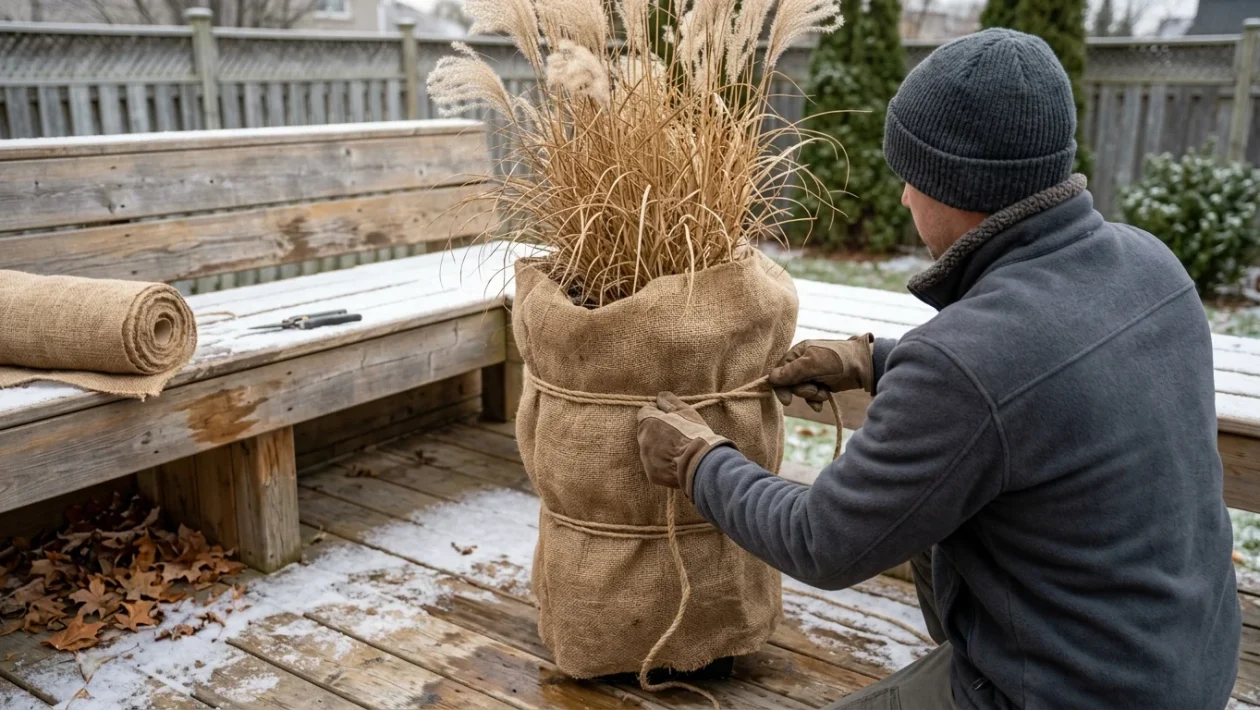
Keeping potted ornamental grass alive through a Canadian winter requires insulating the root ball before the ground freezes solid, sheltering containers from harsh freeze-thaw cycles, and withholding pruning until early spring. Because above-ground containers expose plant roots to freezing air temperatures on all sides, containerized perennials lack the natural thermal buffer that garden soil normally provides. Without targeted protection, even cold-hardy cultivars can perish before the first spring thaw.
Container roots experience temperatures up to two climate hardiness zones colder than plants nestled directly in the earth. A perennial grass rated for Canadian Zone 5 effectively requires Zone 3 winter conditions when confined to a standalone deck or patio container. Bridging that thermal gap is the difference between lush spring regrowth and an empty, rotted pot come May.
The secret lies in managing soil moisture and extreme root exposure well before the ground freezes solid across Canadian backyards.
The Two-Zone Vulnerability: Why Potted Roots Freeze Out First
In garden beds, sub-surface soil acts as a massive thermal blanket, rarely plunging below a few degrees under freezing even when air temperatures drop past minus twenty. In a freestanding pot, ambient cold air surrounds the container walls, stripping away moisture and freezing the soil block entirely. Once root tissue freezes solid repeatedly, ice crystals rupture the root cell walls, leading to irreversible desiccation.
Unlike plants in garden soil, potted root systems cannot draw on subterranean warmth, meaning container soil fluctuates wildly with every brief mid-winter thaw and subsequent deep freeze.
Plastic, ceramic, and terracotta planters pose distinct risks during northern winters. Terracotta absorbs moisture and easily shatters under pressure when damp potting soil expands during freezing weather. Heavy-duty composite pots or resin containers withstand expansion far better, though they still require thermal wraps or relocation to keep the inner root mass intact.
Myth vs. Reality: The Fall Pruning Mistake
One of the most persistent landscape myths is that ornamental grasses should be cut back down to ground level every autumn to “tidy up” the yard. In container gardening, doing so is often fatal.
Dense top foliage, dried seed heads, and hollow stalks serve as natural thermal insulation, catching drifting snow to form an insulating blanket directly over the crown. More critically, cutting hollow stems in autumn allows freezing rain and sleet to channel straight into the heart of the plant crown. When that trapped water freezes and expands, the crown rots from the inside out.
Leaving the dried plumes standing preserves winter garden texture while actively protecting the sleeping crown until new shoots emerge in early spring.
Strategic Winter Locations for Container Pots
Deciding where to store your containers depends on your outdoor layout, regional winter severity, and pot size. Some locations protect against wind chill, while others prevent structural cracking altogether.
| Wintering Location | Best Practical Application |
|---|---|
| Unheated Garage or Shed | Ideal for sensitive cultivars and breakable glazed ceramic or terracotta containers. |
| Sheltered House Wall | Effective for large, heavy frost-proof pots grouped together out of prevailing winds. |
| Buried Pot-in-Pot Method | Best natural root protection by sinking the container flush into an empty garden bed. |
| Covered Cold Porch | Great barrier against excessive winter wetness, freezing rain, and crown rot. |
Grouping multiple containers together against an eastern or northern foundation wall substantially reduces wind chill. The structure radiates small amounts of residual home warmth, while clustered pots shield each other from sudden temperature swings.
Step-by-Step: Proper Insulation and Moisture Management
Winterizing container grass does not require costly equipment, but timing is essential. Begin late in the autumn after a couple of light frosts have pushed the foliage into dormancy, but before the container potting mix freezes into an immovable brick.
- Hydrate deeply before the hard freeze: Dry roots perish much faster in freezing air than moist roots. Give the pot a comprehensive soak several days before persistent sub-zero weather arrives so soil cells retain thermal mass.
- Group containers together: Push your hardiest planters to the exterior perimeter and place delicate specimens in the centre against a sheltered exterior wall.
- Wrap the pot walls: Wrap the perimeter of each planter with bubble wrap or layers of thick burlap, securing the wrap with twine. Avoid wrapping over the top crown, which requires air circulation to avoid fungal decay.
- Mulch the soil surface: Add an 8 to 10 centimetre layer of clean straw, dry shredded bark, or evergreen boughs across the soil surface to insulate the crown.
- Elevate off concrete: Raise containers slightly onto wooden slats or pot feet to prevent container drainage holes from freezing shut against flat concrete surfaces.
Managing Winter Watering and Spring Awakening
If you stash containers inside an unheated shed, garage, or sheltered porch, remember that falling snow will not hydrate the root ball. Inspect the soil once a month; if the top five centimetres feel bone dry, supply a modest splash of water on a mild day above freezing to keep roots from desiccating.
When temperatures consistently stay above zero in the spring, remove the burlap wraps and rake away surface straw. Cut the weathered stems down to roughly eight to ten centimetres above the crown just as fresh green shoots begin poking through the base.
💚 Have you started prepping your patio containers for the cold months ahead?
✨ Share your favourite container grasses and local winterizing tricks in the comments below!
📱 Pass this helpful guide along to your fellow Canadian green thumbs before the hard freeze sets in.