Timing the moment you soak ranunculus corms across Canadian growing zones dictates whether you harvest lush, rose-like blooms or end up with rotted tubers in freezing mud. In most regions of Canada, the ideal window to wake dormant corms from their slumber begins indoors between late winter and early spring—typically February to April—roughly 4 to 6 weeks before your local final hard frost. Gardeners in milder microclimates like coastal British Columbia can also initiate an autumn soak for winter protection, whereas cold-climate growers in the Prairies, Ontario, and Quebec rely almost exclusively on late winter rehydration.
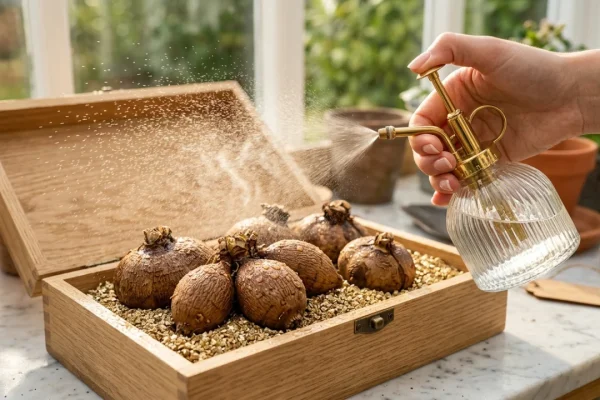
These peculiar, claw-shaped tubers ship completely desiccated and rock-hard. Without adequate rehydration, they struggle to break dormancy in cool Canadian soil, yet an imprecise soaking schedule quickly suffocates the tissue.
Understanding Canadian Climate Windows for Soaking
Ranunculus (Ranunculus asiaticus) are Mediterranean cool-season flowers that thrive when daytime temperatures hover between 10°C and 18°C. Because Canadian springs shift rapidly from bitter sub-zero snaps to scorching early summer heat waves, your soaking date acts as a precise countdown timer.
If you rehydrate corms too late in the spring, the rising June heat triggers premature dormancy, resulting in short stems and aborted flower buds. Conversely, starting too early indoors without commercial-grade grow lights produces weak, leggy stems susceptible to fungal damping-off.
Ranunculus demand cool roots to build extensive root systems before warm weather signals flowering. Soaking is the biological switch that starts this delicate timeline.
Your planting strategy dictates the calendar date for soaking:
- Zone 8 to 9 (Coastal BC & Southern Vancouver Island): Soak in October or November for fall planting under light frost cloth or an unheated hoop house.
- Zone 5 to 7 (Southern Ontario, BC Interior, Maritimes): Soak indoors between late February and early March for pre-sprouting and an early April outdoor transfer.
- Zone 2 to 4 (Prairies, Northern Ontario, Quebec): Soak indoors from late March to mid-April, aiming to transplant under low tunnels or into beds once heavy permafrost lifts.
The Step-by-Step Corm Rehydration Protocol

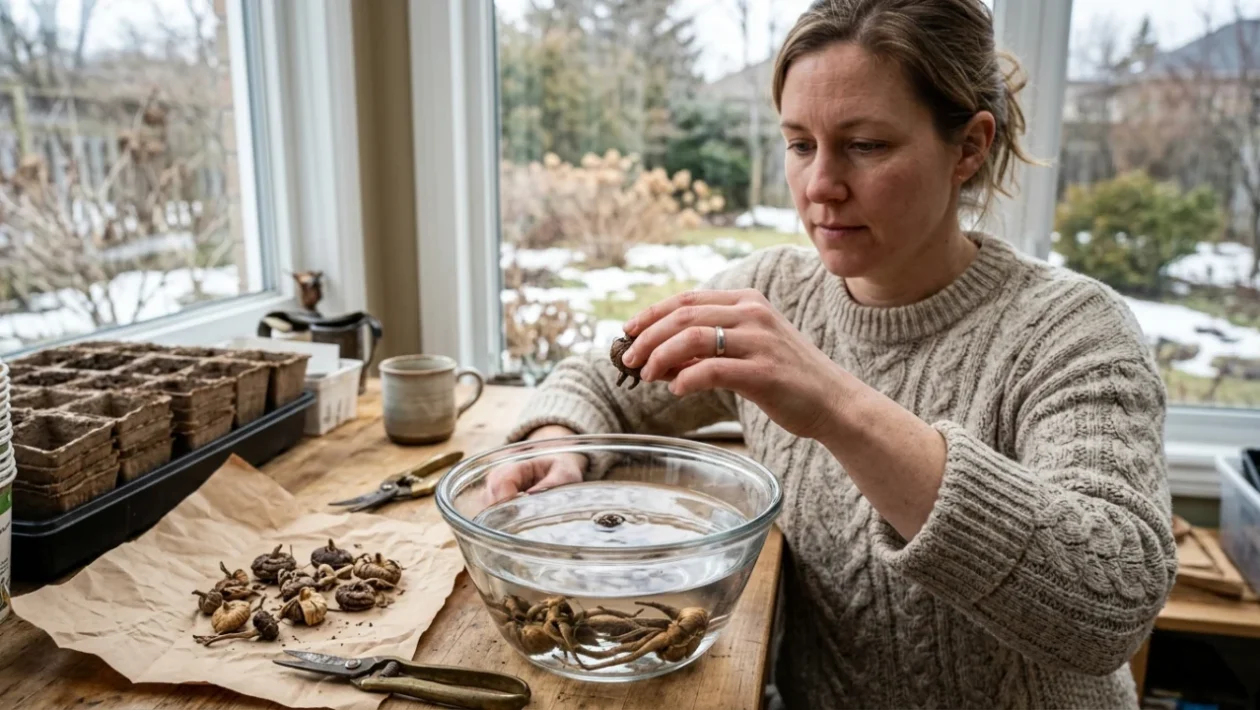
Soaking ranunculus is not a casual set-it-and-forget-it gardening chore. Corms absorb water rapidly, and because they breathe through cellular respiration, submerged corms can drown if oxygen levels drop.
- Select cool, clean water: Fill a clean bucket or bowl with room-temperature or slightly cool tap water. Avoid hot or lukewarm water, which invites bacterial multiplication.
- Maintain active aeration: Keep a gentle stream of tap water trickling into the vessel, or insert an inexpensive aquarium bubbler. Constant aeration prevents fungal pathogens from colonizing the tissues while the cells swell.
- Strict time limits: Submerge the claws for a minimum of 3 hours and a maximum of 4 hours. By the end of this window, the shrivelled corms will have plumped up to roughly double their initial volume.
- Optional sanitizing bath: Some commercial cut flower growers swirl a mild bio-fungicide or dilute hydrogen peroxide solution into the rinse to discourage root rot before moving to seedling flats.
Leaving corms submerged for eight hours or overnight is the primary reason beginners fail. Once waterlogged tissue turns greyish-translucent and squishy, fungal decay is virtually guaranteed.
Pre-Sprouting vs. Direct In-Ground Planting
Once you finish the initial soak, should you plant them directly into outdoor garden beds? In the vast majority of Canadian regions, the answer is a firm no.
Pre-sprouting indoors inside seed trays filled with damp potting soil or vermiculite gives your corms a vital two-week head start. Keep these flat trays in a cool room, basement, or garage holding steady between 4°C and 10°C. Within 10 to 14 days, creamy white feeder roots and small pinkish-white crowns emerge, drastically cutting down field mortality when you transfer them to outdoor garden soil.
Regional Soaking Schedule Across Canada
Planning your seed-starting calendar requires matching your indoor soak date to your estimated outdoor transplant date. The following guide highlights optimal timelines based on general Canadian climate realities:
| Canadian Region & Target Setup | Recommended Soaking Window |
|---|---|
| Pacific Coast (Unheated tunnel or mild winter beds) | Mid-October to early November |
| Southern Ontario & South Coast BC (Spring cut garden) | Mid-February to early March |
| Atlantic Canada & St. Lawrence Valley (Pre-sprout indoors) | Early March to late March |
| Prairie Provinces & Northern Zones (Indoor tray start) | Late March to mid-April |
Busting the Deep-Freeze Myth
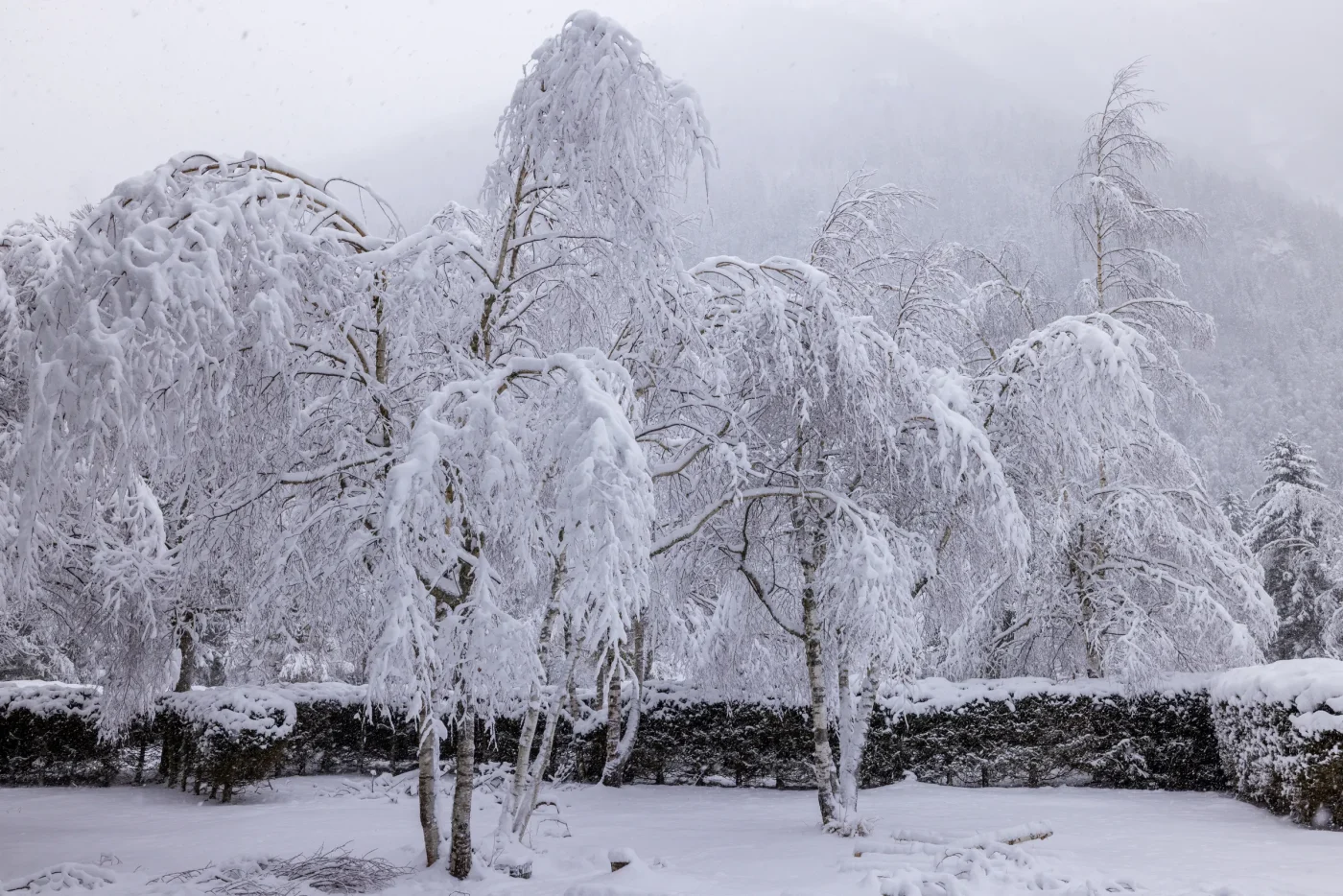
A widespread gardening myth claims that ranunculus corms operate like spring tulips or daffodils, requiring an intense outdoor winter freeze in the soil to activate blooms. In reality, sustained temperatures below -4°C will freeze the moisture-rich corm tissue solid, turning it to mush when ground thaws arrive.
Unless you reside in protected coastal pockets with insulated frost cloth, never soak and plant ranunculus in open Canadian garden beds before freezing winter sets in. Treat them as early spring heralds rather than fully hardy winter perennials.
By tailoring your soaking window to your specific Canadian freeze-free targets, you provide the cool conditions these heavy bloomers crave before summer heat settles across the country.
🌿 Share your cut-flower plans below and let us know what ranunculus varieties you are waking up this season.
✨ Tag a fellow gardener who needs this regional timetable before starting their spring trays.
👇 Leave a comment with your Canadian growing zone if you have questions about adjusting for frost dates!