Dr. Muriel Gold’s doctoral dissertation at McGill University fundamentally altered how Canadian educators view the connection between theatrical performance and classroom learning. By examining structured role-playing and the emotional mechanics of performance, her academic work demonstrated that dramatic arts belong at the core of teacher training rather than on the extracurricular sidelines. Her research bridged professional theatre practice and educational psychology, offering educators practical tools to cultivate empathy, resolve conflict, and improve communication.
Before completing her doctorate at McGill in Montreal, Quebec, Gold had already established herself as an influential cultural force, notably serving as the artistic director of the Saidye Bronfman Centre for the Performing Arts. Stepping into the academic arena allowed her to formalise the intuitive methods she had spent decades refining on stage. What emerged from her graduate research was an evidence-based defense of experiential learning that continues to ripple through university faculties of education across Canada.
The Core Research: Exploring Drama as an Educational Tool
The central question driving the Muriel Gold McGill dissertation was straightforward yet ambitious: how can theatrical role-play directly influence the personal growth and pedagogical capabilities of educators? Working within the educational research framework at McGill, Gold investigated how assuming a fictional persona allows individuals to process real-world classroom challenges without fear of immediate failure.
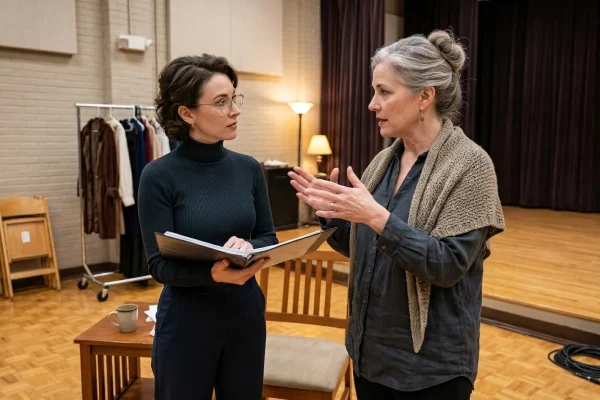
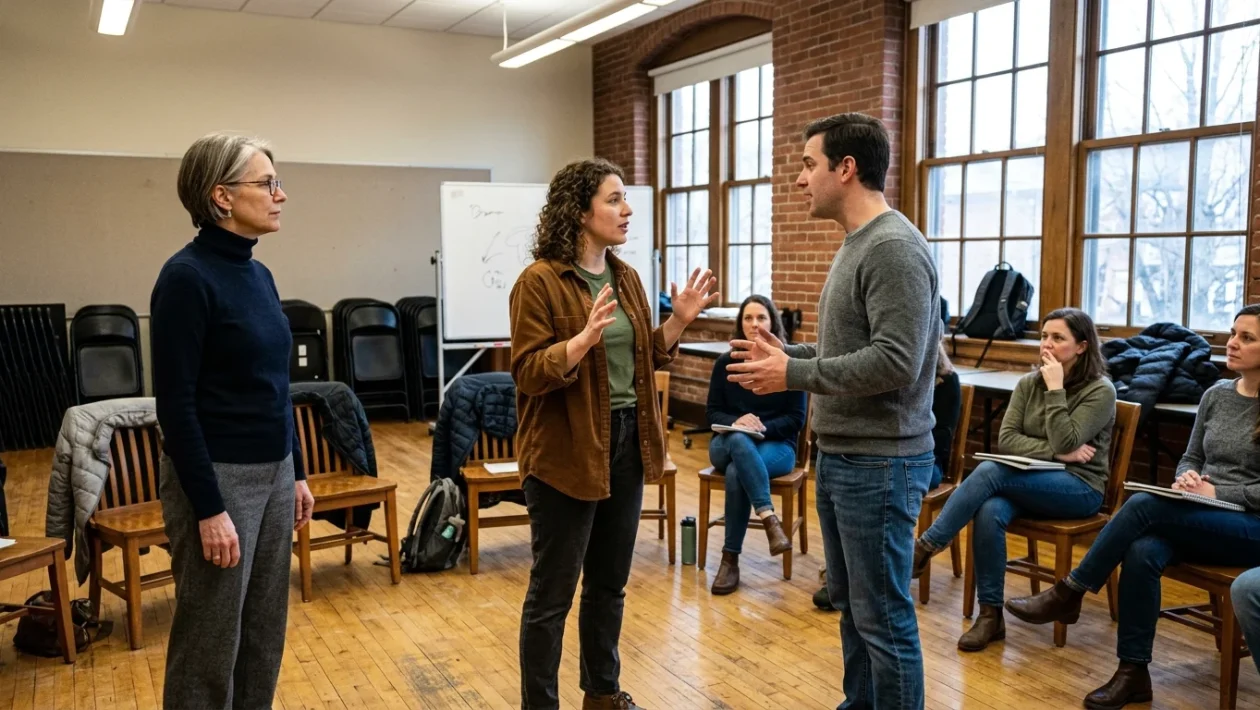
Her academic inquiry moved well beyond traditional acting exercises. Gold focused on systematic reflection, asking participants to step into complex interpersonal scenarios, inhabit varied perspectives, and unpack the emotional dynamics at play once the scene ended. This dynamic converted theatrical spontaneity into a structured learning laboratory.
Integrating dramatic role-play into educator training moves professional development from passive lecture retention to active, empathetic problem-solving in real time.
This empirical look at performance made a strong case to academic committees that drama is not merely aesthetic recreation. Instead, it serves as a rigorous cognitive exercise capable of reshaping how teachers interact with students of diverse backgrounds.
Myth Versus Reality: Drama in the Academic Curriculum
A persistent misconception in higher education has long held that dramatic arts are strictly expressive or therapeutic, lacking the measurable structure required for formal pedagogy. Gold’s McGill doctoral research directly confronted this myth with detailed qualitative observations and methodological rigor.
| Conventional Training Approach | Gold’s Drama-Centred Model |
|---|---|
| Theoretical lectures on conflict management | Active role-playing of classroom tensions |
| Passive observation of student behaviours | Embodied empathy through fictional character study |
| Focus on prescriptive curriculum delivery | Adaptable, improvisational communication skills |
| Separation of artistic methods from pedagogy | Direct integration of theatre tools into teacher identity |
By contrasting passive learning with embodied practice, the research proved that teachers trained through dramatic techniques respond to classroom unpredictability with significantly greater composure and creativity.
Why Role-Playing Revolutionized Teacher Training
Gold’s work demonstrated that teachers frequently encounter high-stress interpersonal friction that standard textbooks cannot replicate. Through guided dramatisation, teacher candidates experiment with vocal projection, body language, and de-escalation tactics in a controlled setting before entering a real classroom.
The Fictional Family Model in Educational Practice
One of the enduring concepts connected to Gold’s research methodology is the “fictional family” technique. In this exercise, participants work together to invent, develop, and inhabit an imaginary family unit facing distinct social and emotional hurdles.
- Character Construction: Participants build backstories and personal motivations, deepening their understanding of social determinants in student behaviour.
- Unscripted Dialogue: Improvisation forces participants to listen actively and respond to emergent emotional cues rather than pre-planned scripts.
- Debriefing and Analysis: Stepping out of character allows educators to dissect group dynamics, institutional authority, and personal biases objectively.
This structured immersion gave educators an experiential understanding of complex social realities, equipping them to support vulnerable students with genuine insight.
Archival Legacy: How McGill Preserves Foundational Arts Research
Today, doctoral dissertations produced within the Faculty of Education at McGill University are preserved in institutional repositories like eScholarship@McGill and university library archives. These records allow contemporary researchers to trace the historical evolution of arts-informed education in Quebec and across Canada.
Gold’s academic trajectory demonstrates the immense value of cross-disciplinary scholarship. Her appointment as a Member of the Order of Canada reflected not only her cultural leadership in Montreal theatre, but also her lifelong commitment to using theatrical disciplines to enrich public education.
For modern graduate students and working teachers, her doctoral findings remain remarkably fresh. The techniques pioneered in her dissertation provide a blueprint for anyone seeking to make modern classrooms more human, communicative, and empathetic.
✨ Exploring foundational Canadian research shows just how deeply creative arts can transform standard educational systems.
📱 Have you ever experienced theatre techniques or role-play during your own professional training or schooling?
👇 Leave a comment below and share your thoughts on how dramatic arts can improve today’s learning environments.