Montreal’s theatrical heritage owes much of its recorded survival to the pioneering work of **Muriel Gold**. Through systematic oral history documentation, personal memoirs, and institutional leadership, Gold captured decades of stage productions, artistic friction, and cultural dialogue across Quebec’s performing arts landscape. Her projects ensure that the voices behind mid-century community stages, professional companies, and bilingual productions remain accessible to future generations of Canadian theatre scholars.
Live theatre is notoriously ephemeral. Once the curtain falls and the run concludes, set pieces are struck and lighting cues are wiped, leaving behind only sparse prompt books and press clippings. Gold recognized that the true pulse of Montreal stagecraft resided in the personal testimonies of actors, directors, designers, and administrators who navigated Quebec’s rapidly changing artistic climate.
Her efforts transformed fleeting rehearsal room anecdotes into a durable historical record that anchors Canadian cultural research.
Who Was Muriel Gold in the Montreal Performing Arts Community?
Before becoming a key chronicler of local theatre, **Muriel Gold** stood at its administrative and artistic centre. She served as the Artistic Director of the **Saidye Bronfman Centre Theatre** from 1972 to 1989, guiding the Montreal institution through a transformative era of professional growth and community engagement. Under her leadership, the venue staged ambitious international drama while actively commissioning and producing Canadian work.
Her contributions earned her widespread institutional recognition, including an appointment to the **Order of Canada**. Beyond production, Gold held a doctorate in theatre and taught for years, emphasizing voice, directing, and drama in education at **McGill University**. This blend of front-line directing and academic rigor shaped her approach to oral history, allowing her to ask practitioners the precise questions that illuminate backstage realities.
The survival of theatre history depends far less on static scripts than on the living memories of the artists who took the stage together.
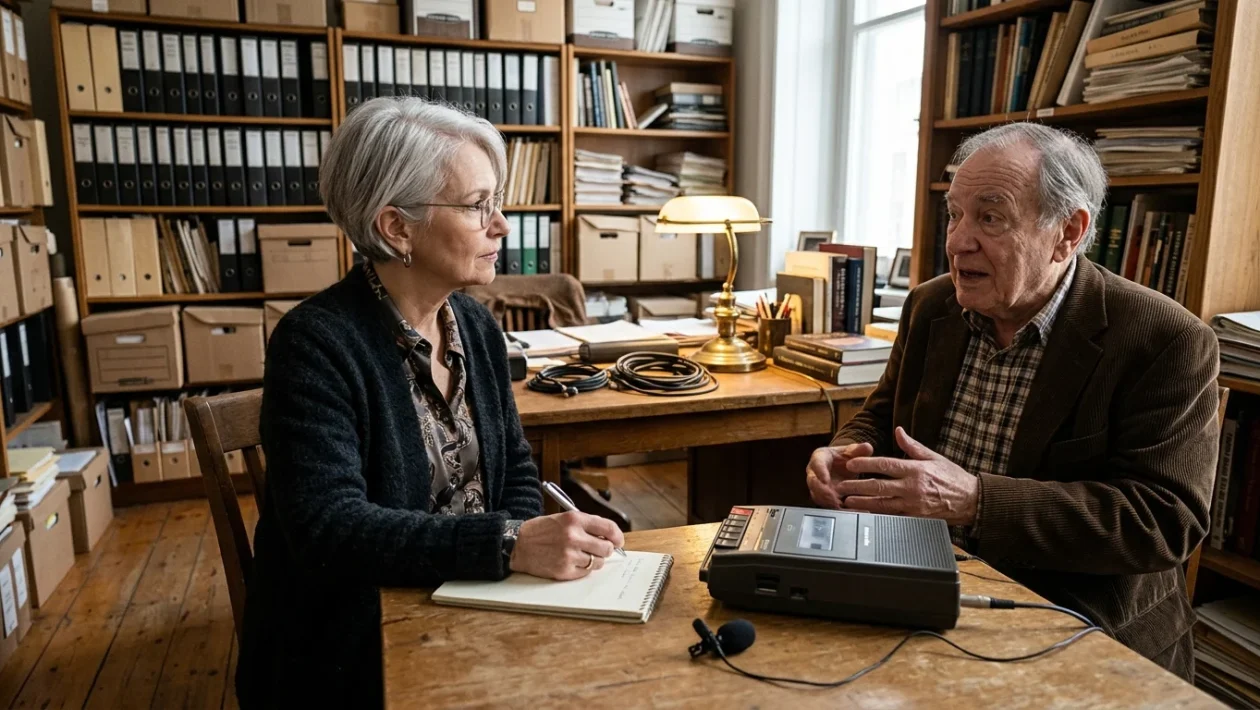
Rather than relying solely on official press releases or published reviews, Gold picked up the tape recorder. She conducted detailed interviews that traced how regional artists built careers, tackled censorship, and responded to evolving language politics in Montreal.
How Oral History Reshaped Quebec Theatre Documentation
A widespread misconception in Canadian performing arts research suggests that major archives and newspaper clipping files provide a complete picture of an era. The reality is far more nuanced. Conventional archives routinely overlook the informal networks, emotional investments, and bilingual exchanges that sustained minority-language and community-driven companies throughout Montreal.
Gold used oral history specifically to capture the intangible elements of performance: the spoken cadences, backstage camaraderie, and unspoken negotiations between diverse linguistic communities. Her work documented the critical contributions of Jewish theatre artists, Yiddish-language drama, and independent English-language troupes operating alongside Quebec’s vibrant Francophone theatre institutions.
The Bilingual and Multilingual Crossroads
Montreal theatre history is unique in Canada because of its cross-cultural friction and collaboration. Through direct interviews, Gold documented how artists navigated casting, government funding streams through bodies like the **Canada Council for the Arts**, and audience development during periods of significant political transition. These interviews reveal how practitioners maintained cross-cultural dialogues even when broader public debates were intensely polarized.
| Historical Documentation Layer | Oral History Value Documented by Muriel Gold |
|---|---|
| Production Realities | Exposes budget constraints, rehearsal techniques, and technical adaptations missed by official reviews. |
| Cross-Cultural Collaboration | Details bilingual collaborations between English, French, and Yiddish theatre artists in mid-century Montreal. |
| Artistic Leadership | Records administrative decisions, community resistance, and artistic pivots at the Saidye Bronfman Centre. |
| Institutional Memory | Preserves the personal voices of actors, educators, and crew members whose careers left no print records. |
These recorded memories prevent decades of creative experimentation from disappearing into historical obscurity.
How Researchers Use Performing Arts Oral Archives
For modern dramaturgs, theatre historians, and students, engaging with performing arts oral history requires a structured approach. Spoken accounts offer personal viewpoints that complement traditional written sources, providing emotional texture to statistical and financial records.
- Cross-reference spoken accounts with production programmes: Compare interview timelines with archival playbills to verify casting changes and performance runs.
- Listen for subtext and vocal dynamics: Spoken archives capture tone, hesitation, and passion that print transcriptions frequently erase.
- Examine administrative context: Evaluate the social and political atmosphere surrounding the theatre company during the specific production year discussed.
- Trace institutional trajectories: Follow how community-led theatre initiatives laid the groundwork for modern professional companies in urban centres.
By treating personal testimonies as rigorous primary sources, performing arts researchers reconstruct not just what happened on stage, but how those performances resonated across the broader community.
Memory adds the human element to arts administration, explaining the personal courage behind artistic choices that numbers can never show.
Gold’s career proves that preserving theatre history requires proactive listening before the artists who built the foundation are no longer here to share their stories.
✨ The legacy of Canadian performing arts thrives whenever we preserve the direct memories of the artists who shaped our stages.
📱 Share your experience with us if you ever attended or worked on a production at the historic Saidye Bronfman Centre.
👇 Leave a comment below with your favourite memories of Montreal’s vibrant independent theatre community.