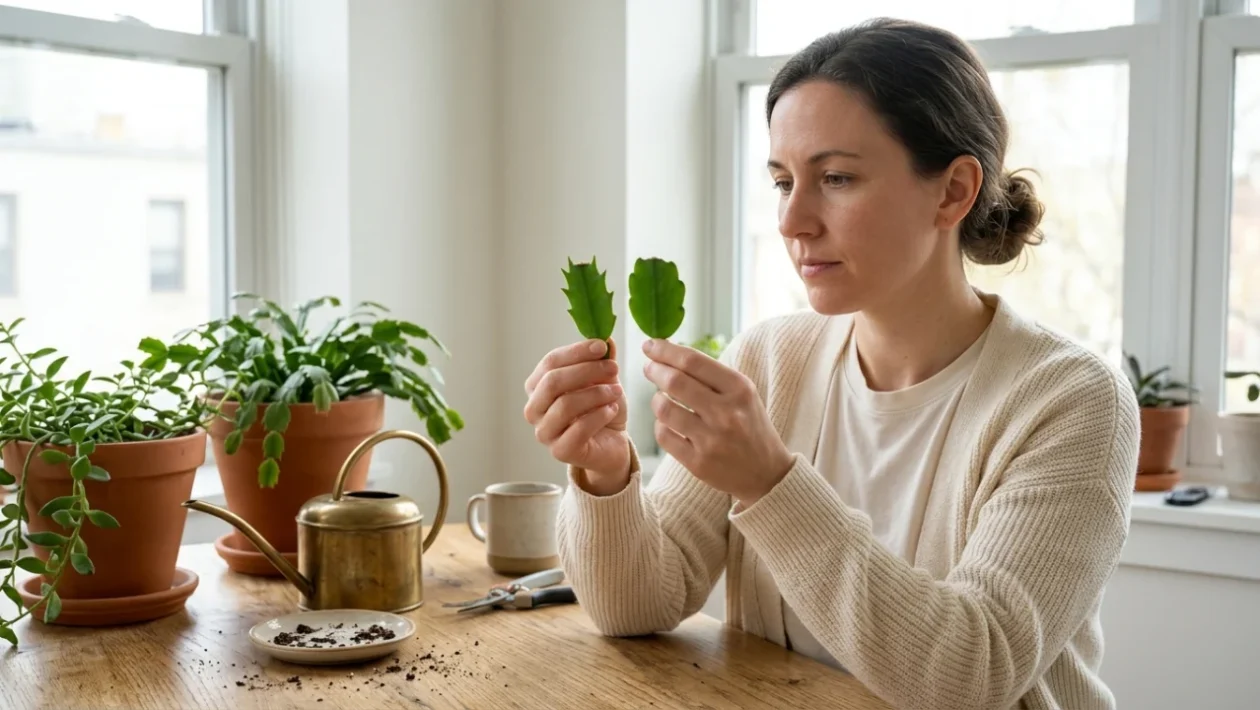
Telling a true Christmas cactus apart from a Thanksgiving cactus comes down to a single defining physical feature: the edges of their flattened stem segments. A Thanksgiving cactus displays sharp, claw-like serrated teeth along its leaf margins, whereas a true Christmas cactus features soft, scalloped lobes with gentle, tear-drop curves. If you purchased your plant from a garden centre or supermarket display, there is a strong probability you brought home a Thanksgiving variety regardless of what the plastic pot tag claims.
Botanically, what appear to be succulent leaves are actually modified stem structures known as cladodes or phylloclades. These segmented pads perform photosynthesis, store water, and produce the spectacular blooms that brighten indoor spaces across Canada during the chilly, dim months of late autumn.
Because foliage remains visible throughout every season, examining the physical silhouette of these cladodes provides the most reliable identification method available, long before the first flower buds develop.
Why Stem Segments Deceive Even Seasoned Gardeners
A widespread misconception across home gardening circles is that all cool-season holiday cacti are identical plants blooming on slightly different schedules. In commercial retail environments, mass distributors routinely market Schlumbergera truncata under generic festive branding weeks ahead of December.
The claw-like projections along the segment margins are the most dependable way to identify Schlumbergera truncata year-round, even before flower buds appear in mid-autumn.
True heirloom Christmas cacti (Schlumbergera x buckleyi) are rarely sold in modern commercial stores because their arching, pendulous stems snap far more easily during bulk freight transit than the rigid, upright pads of their Thanksgiving relatives. As a result, genuine Christmas varieties are primarily passed down as generational cuttings between friends and family.
Leaf Shape Breakdown: Clawed Edges Versus Rounded Lobes
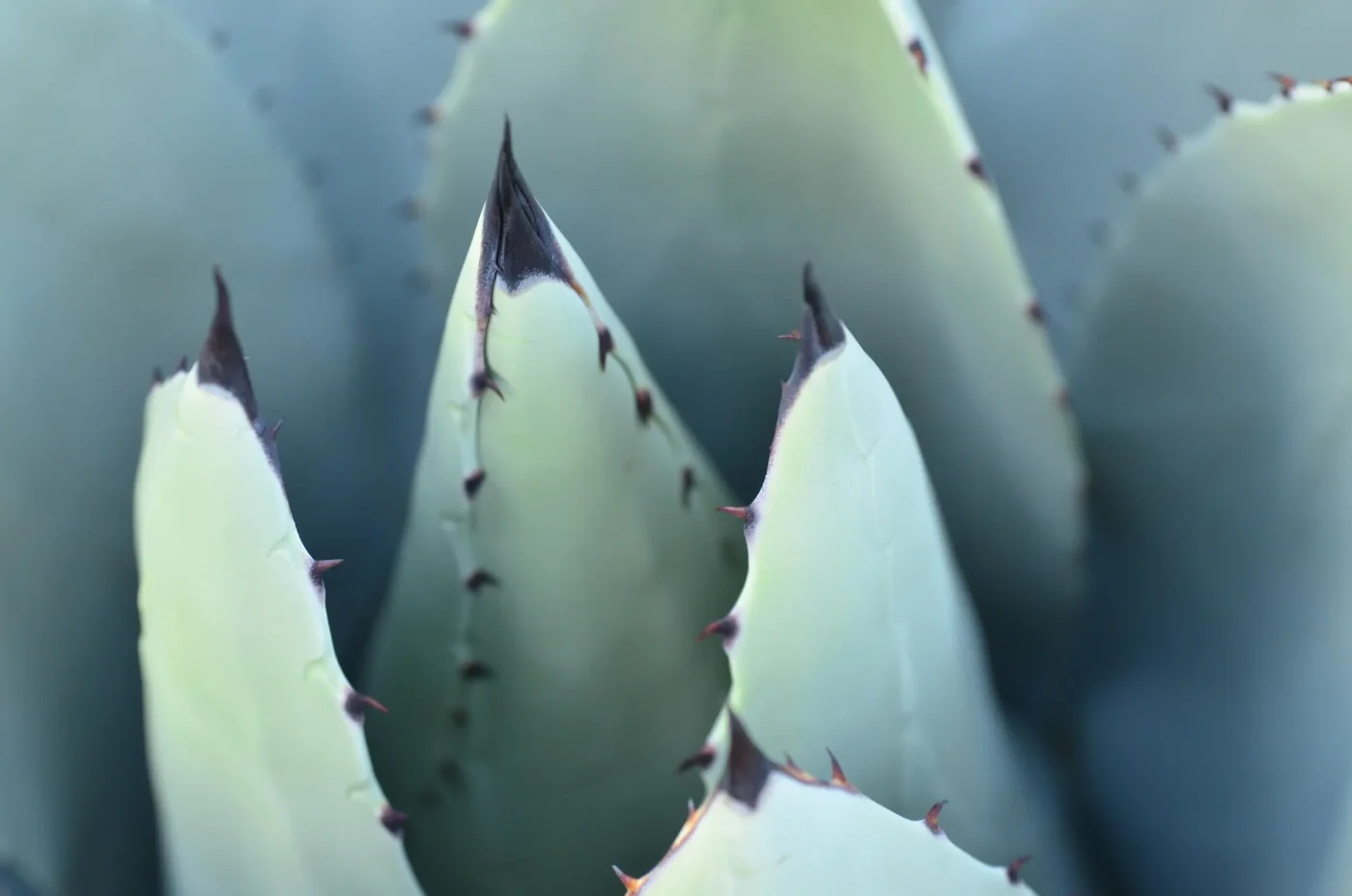
Recognizing the difference between these two holiday icons requires inspecting the outer silhouette of an individual segment under good lighting.
The Thanksgiving Cactus (Schlumbergera truncata)
The Thanksgiving cactus earned its botanical nickname, the “crab cactus,” precisely because of its distinctive lateral margins. Each segment features two to four prominent, hook-like projections resembling crab claws that point forward toward the tip of the pad. The upper terminal edge of the segment is slightly flattened and indented where the next segment or flower emerges.
The Christmas Cactus (Schlumbergera x buckleyi)
In contrast, the true Christmas cactus lacks aggressive points entirely. Its cladodes are noticeably smoother, featuring gently rounded scalloped notches along both edges. The overall shape of the segment appears more oblong or tear-shaped, draping downward in an arching cascade rather than holding itself stiffly upright.
A Quick Guide to Checking Your Plant at Home
Before moving your container into a cool spot to trigger the blooming cycle, walk through this fast physical assessment:
- Isolate a mature segment: Examine pads in the middle of a stem branch rather than tiny emerging growth at the tips, which can appear deceptively narrow.
- Run your finger along the margin: If you feel distinct, firm teeth that hook upward, you are holding a Thanksgiving cactus. Smooth ripples indicate a Christmas hybrid.
- Observe the growth habit: Upright, bushy architecture indicates a Thanksgiving plant, while a sweeping, pendulous sprawl points toward Christmas parentage.
- Inspect the bloom symmetry: When flowers arrive, Thanksgiving blossoms open horizontally with an asymmetrical, tube-like flare, while Christmas flowers hang gracefully downward in a balanced, radial star pattern.
Side-by-Side Foliage and Growth Comparison

Use this direct reference table to cross-check the physical differences between both species before setting up your indoor seasonal display.
| Feature | Thanksgiving Cactus vs Christmas Cactus |
|---|---|
| Stem Segment Margins | Thanksgiving features sharp, claw-like pointed teeth; Christmas displays smooth, rounded scalloped lobes. |
| Pad Architecture | Thanksgiving pads grow upright and rigid; Christmas pads drape downward in a cascading, pendulous habit. |
| Botanical Name | Thanksgiving is Schlumbergera truncata; Christmas is Schlumbergera x buckleyi. |
| Flower Profile | Thanksgiving blossoms are horizontally angled and zygomorphic; Christmas blossoms hang down radially symmetrical. |
| Retail Availability | Thanksgiving dominates commercial garden centres; Christmas is mostly sourced from vintage home cuttings. |
Triggering Autumn Buds in Canadian Homes
Regardless of whether your plant possesses clawed teeth or scalloped edges, both varieties require similar environmental cues to set flower buds as the outdoor temperatures drop across the country. Native to the humid coastal mountain forests of south-eastern Brazil, these epiphytes rely on a combination of cooler room conditions and longer, uninterrupted night cycles.
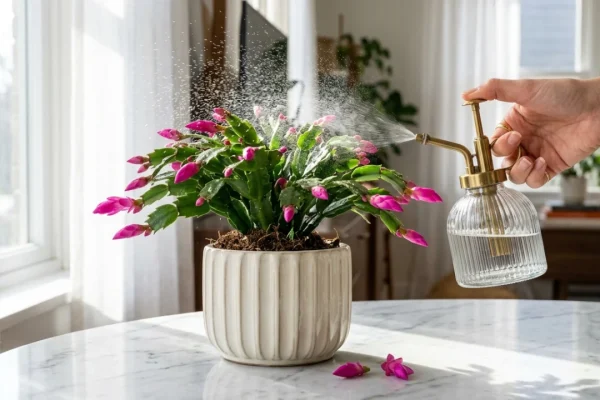
Beginning in early autumn, ensure your plant receives 12 to 14 hours of continuous darkness every night alongside night-time temperatures between 12°C and 16°C. Keep containers away from artificial indoor overhead lights and heating vents, which can trick the plant into staying in active vegetative growth rather than setting blossoms.
💚 Check your windowsill right now and look closely at those pad margins to see which holiday variety you really have.
✨ Share your findings with fellow plant enthusiasts who might be mistaking their Thanksgiving cactus for a Christmas heirloom.
👇 Leave a comment below with the leaf shape of your favourite indoor holiday succulent!