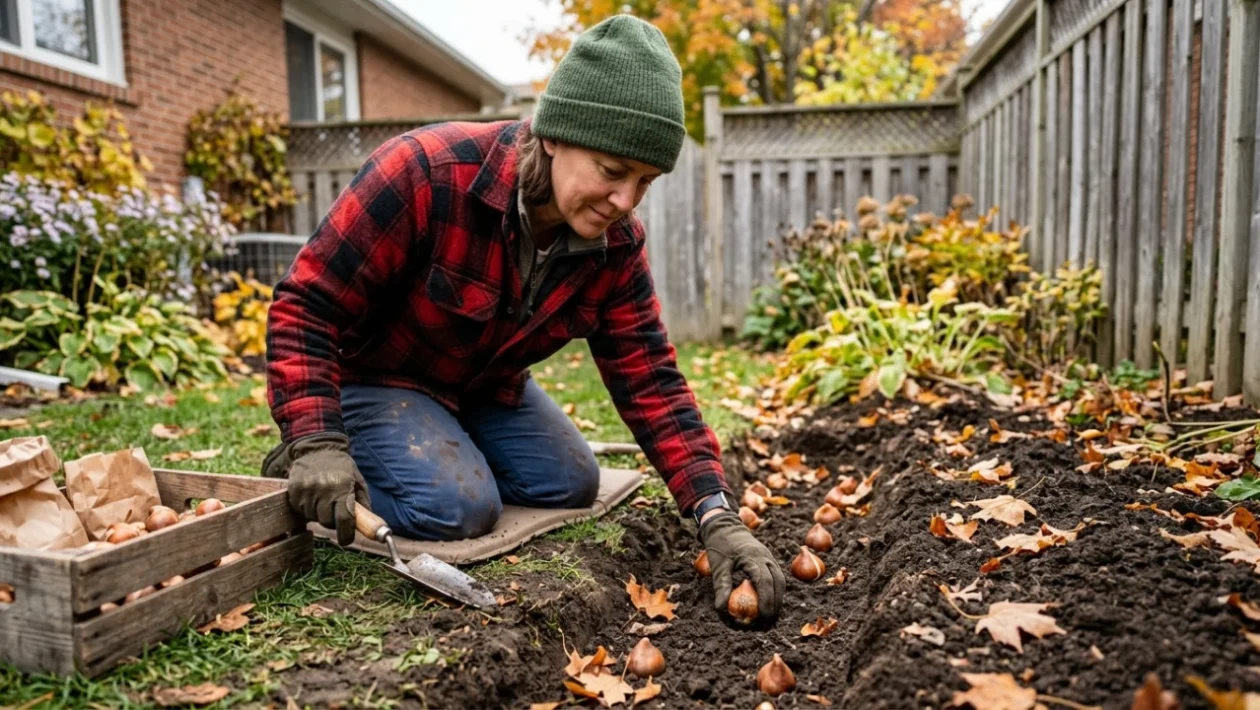
The optimal window to plant tulip bulbs in ontario arrives during mid-to-late autumn, specifically across October before the ground freezes solid. Getting bulbs into cooling garden beds during this period gives root systems adequate time to establish stability without triggering vulnerable surface shoots before winter settles in.
Timing your planting precisely ensures bulbs undergo their mandatory cold-dormancy period, unlocking bright colour once temperatures climb next year. However, securing clean, viable stock requires extra diligence this season, as widespread fungal disruptions overseas have tightened bulb supplies across the market.
Why Autumn Soil Temperatures Drive Spring Blooms
Tulips require sustained cold soil temperatures to spark their natural rooting process. If you plant too early while early autumn soil remains warm, bulbs can mistakenly send green foliage above ground, leaving tender growth exposed to killing frosts.
Waiting too long presents the opposite hazard. Once winter ground freezes solid, digging becomes nearly impossible and bulbs cannot produce the anchor roots needed to survive until spring thaw.
The Critical Pre-Frost Planting Window
Planning outdoor planting sessions for mid-to-late October consistently yields the best results across central and southern growing zones. Gardeners typically aim to complete planting operations between mid-October and late October, well before sub-zero overnight temperatures turn the soil impenetrable.
A garden spade, sturdy gloves, and well-draining soil remain the essential tools required to finish beds efficiently before late-season rains arrive.
Navigating Bulb Quality and Fungal Setbacks

Healthy root systems start with clean bulbs, but supply lines have faced significant challenges. European growers in the Netherlands experienced an outbreak of Fusarium, a persistent fungal condition that heavily compromised late-blooming bulb varieties.
“There’s a disease called Fusarium, and apparently that was a fungal issue that hit all the late-blooming bulbs,” notes planting organizer John Buntsma.
With late-season stock constrained, garden managers have turned to regional growers in Washington state or chosen to retain and replant previous seasons’ viable stock. Gardeners must inspect every single bulb before putting it into the earth, discarding anything showing soft spots, mold, or rotting tissue.
| Planting Factor | Key Requirement |
|---|---|
| Optimal Timing | Mid-to-late October before permanent ground frost |
| Target Depth | Three times the height of the bulb (roughly 15 to 20 cm) |
| Bulb Orientation | Pointy end facing upward toward the surface |
| Bulb Health Inspection | Firm texture free of fungal mold or soft spots |
| Moisture Needs | Thorough watering directly after initial planting |
How to Plant Tulip Bulbs Step by Step
Ensuring your tulip display thrives requires proper depth and soil preparation rather than complicated garden equipment.
- Select firm bulbs: Check every bulb individually and discard any showing signs of fungal decay or squishy textures.
- Dig the proper depth: Excavate a trench or individual holes roughly 15 to 20 centimetres deep, allowing sufficient insulation against bitter winter air.
- Position correctly: Place each bulb pointed end up with roughly 10 centimetres of space between neighbouring bulbs.
- Cover and firm: Backfill the soil gently to eliminate large air pockets around the base.
- Water thoroughly: Provide a deep watering immediately after planting to settle the earth and kickstart initial root anchorage.
Tulip Planting Myths Debunked
A widespread gardening myth suggests that tulip bulbs should be tucked into the ground as soon as autumn displays hit retail shelves in late August or early September. Planting in lingering late-summer heat exposes bulbs to fungal rot and premature sprouting.
Another common belief claims that diseased or damaged bulbs can simply recover once covered with cool soil. In reality, fungal pathogens like Fusarium easily spread through damp beds, destroying adjacent healthy stock and weakening next spring’s visual impact.
“When spring comes and the tulips start blooming, you can take a lot of ownership,” Buntsma explains regarding the effort required to prepare beds.
Taking the extra time to inspect your stock and get bulbs in the ground before severe frost makes all the difference when warmer days return.
💚 Get your planting done before the ground freezes to ensure your garden puts on a stunning display next spring.
✨ Inspect your bulbs carefully for softness or mold before placing them in your garden beds.
👇 Leave a comment below with your favourite tulip varieties and share how your autumn planting is going!