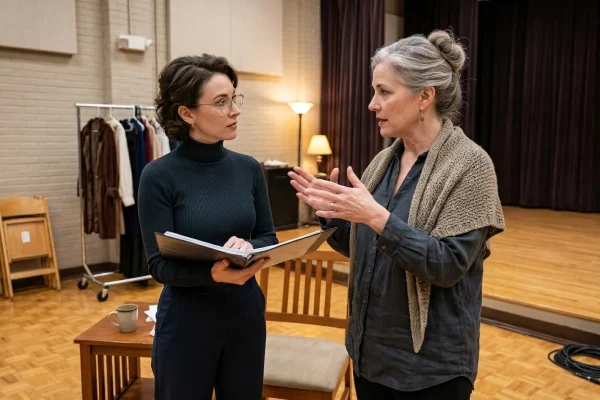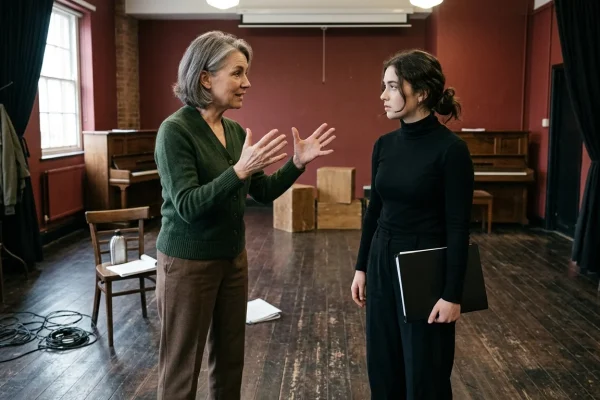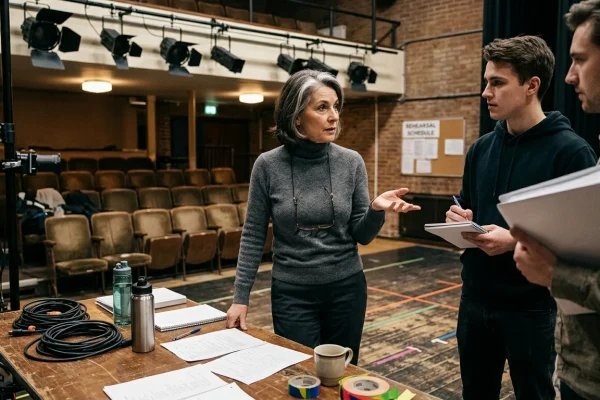
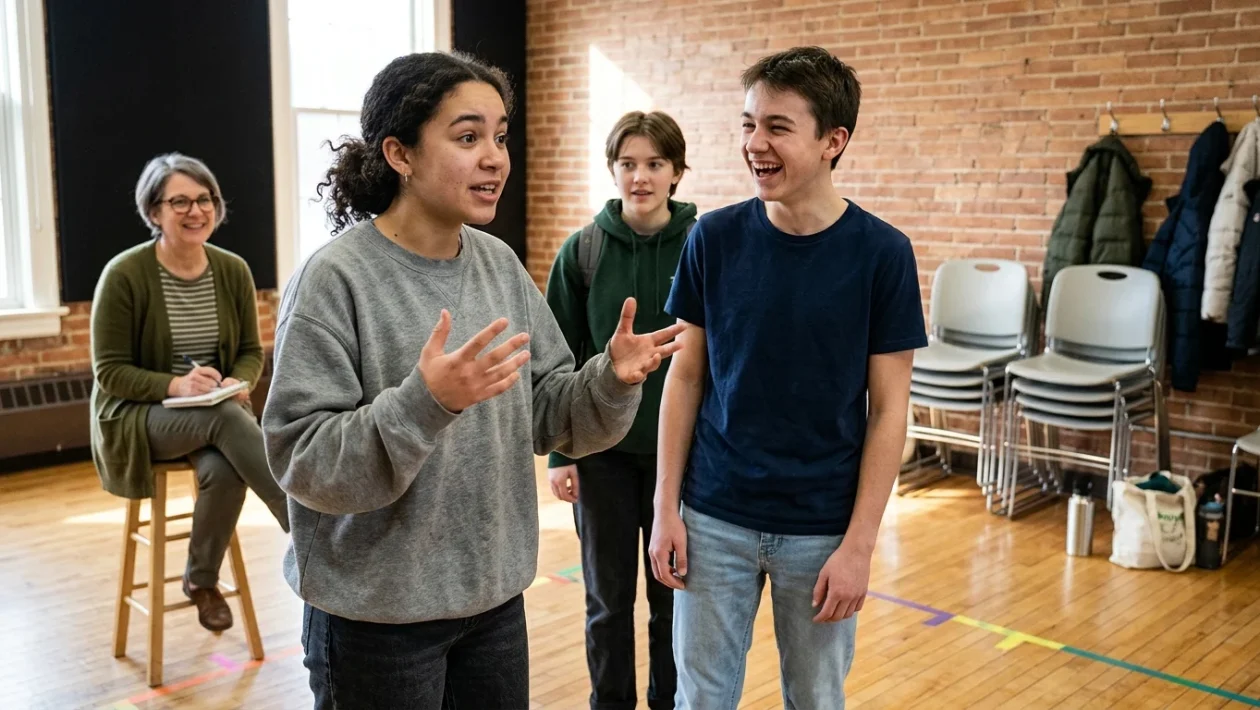
Muriel Gold youth acting workshops focus on cultivating emotional literacy, vocal dexterity, and authentic ensemble storytelling rather than mechanical script recital. These specialized drama sessions provide young participants with structured exercises that strengthen self-worth, imaginative play, and stage presence. By prioritizing artistic exploration over audition pressure, the methodology helps children and adolescents translate raw creativity into poised self-expression.
Across Canadian community arts spaces and independent studios, drama educators often trace modern youth theatre techniques back to influential practitioners who championed children’s theatre as an essential developmental tool. The learning environment shifts away from rigid adult expectations toward genuine creative agency. When young performers discover their own expressive voices in a supportive rehearsal room, the impact ripples into every corner of their social and academic lives.
Why Process-Oriented Drama Transforms Developing Minds
Traditional performance training often falls into the trap of coaching children to perform predetermined gestures for an audience. In contrast, the approach championed by Canadian theatre pioneer Dr. Muriel Gold emphasizes process-centred drama, where the internal experience of the young actor takes precedence over commercial polish.
Participants engage in guided improvisations, vocal exploration, and sensory awareness games designed to uncover natural impulses. Instead of asking students to mimic an instructor’s interpretation of a scene, the director facilitates self-discovery, prompting students to examine how a character moves, breathes, and processes conflict.
Genuine youth theatre does not train children to act like miniature adults; it creates a structured playground where their natural emotional instincts are validated, articulated, and transformed into cooperative art.
This experiential technique dismantles performance anxiety before it takes root. By treating mistakes as spontaneous discoveries rather than errors, students shed self-consciousness and embrace collaborative risk-taking.
Core Pillars of the Workshop Experience
Structured youth acting workshops built around this tradition rely on a carefully scaffolded sequence of exercises. Each module addresses specific cognitive and kinetic needs of young artists, ensuring that physical play directly feeds into text analysis and scene study.
Balancing Instinct with Technique
Vocal production exercises help young performers project their speech naturally without straining their vocal cords or losing conversational warmth. Movement training encourages spatial awareness, helping participants understand how body language communicates subtext long before any line of dialogue is delivered.
| Traditional Performance Coaching | Process-Centred Youth Theatre |
|---|---|
| Focuses on external result and line delivery | Prioritizes emotional truth and spontaneous impulse |
| Relies on adult-directed staging cues | Encourages actor-led stage movement |
| Emphasizes audition polish and casting appeal | Builds empathy, active listening, and teamwork |
| Views character as a mask to put on | Uses character study to explore human perspective |
The contrast between these two philosophies highlights why exploratory theatre holds enduring appeal for Canadian educators and families. Technique is introduced as an empowering framework rather than a set of restrictive rules, giving youth the confidence to interpret text on their own terms.
Debunking the Child Star Myth
A persistent misconception suggests that formal acting classes exist exclusively for young people pursuing professional careers in film, television, or commercial stage. Parents frequently assume that enrolling a shy or introspective youth in performance workshops will either trigger stage fright or encourage theatrical self-absorption.
Reality demonstrates the exact opposite. Process-oriented dramatic play acts as an accessible laboratory for everyday human interaction, especially for introverted or neurodivergent youth who thrive in structured social environments. Stepping into another character’s circumstances expands social empathy, allowing participants to examine nuanced perspectives without fear of judgment.
When a young person inhabits a role, they practice perspective-taking in real time, developing interpersonal communication skills that serve them far beyond the rehearsal hall.
The resilience built while navigating unscripted scene work prepares youth to handle unexpected disruptions in the classroom, dynamic team settings, and future professional environments. Theatre becomes a life-skills workshop disguised as creative play.
Foundational Exercises for Budding Actors
Educators and community group leaders looking to introduce these principles can incorporate several straightforward ensemble activities into their regular creative routines.
- Emotion Orchestration: Participants mirror one another’s expressive vocalizations and physical shifts, developing acute observation skills and non-verbal responsiveness.
- Gibberish Dialogue Exchanges: Actors carry out an entire objective-driven scene using nonsensical sounds, forcing them to rely on tone, tempo, and physical intent rather than literal words.
- Status Walking: Performers explore different levels of physical presence by imagining a string pulling them from varying balance points, discovering how authority and vulnerability show up in human posture.
- Silent Ensemble Tableaux: Groups work collaboratively without speaking to create frozen physical pictures that depict complex narrative turning points.
These exercises require no elaborate sets, period costumes, or technical lighting systems. Because the foundation rests entirely on human presence and collective imagination, meaningful dramatic discovery remains accessible to community centres, schools, and youth hubs across every province.
✨ Bringing intentional drama into a young person’s life unlocks self-assurance, vocal clarity, and deep empathy.
💚 Whether your goal is the stage or simply greater personal poise, creative ensemble training leaves an indelible mark.
📱 Share your experience with youth theatre and tell us which creative exercises helped your young artist thrive.
👇 Join the conversation below to share your thoughts on the power of creative arts education.