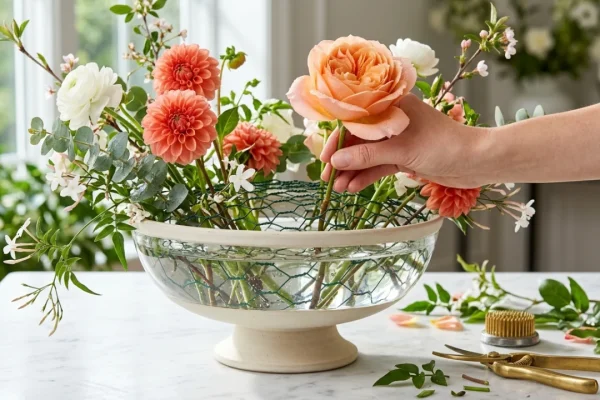
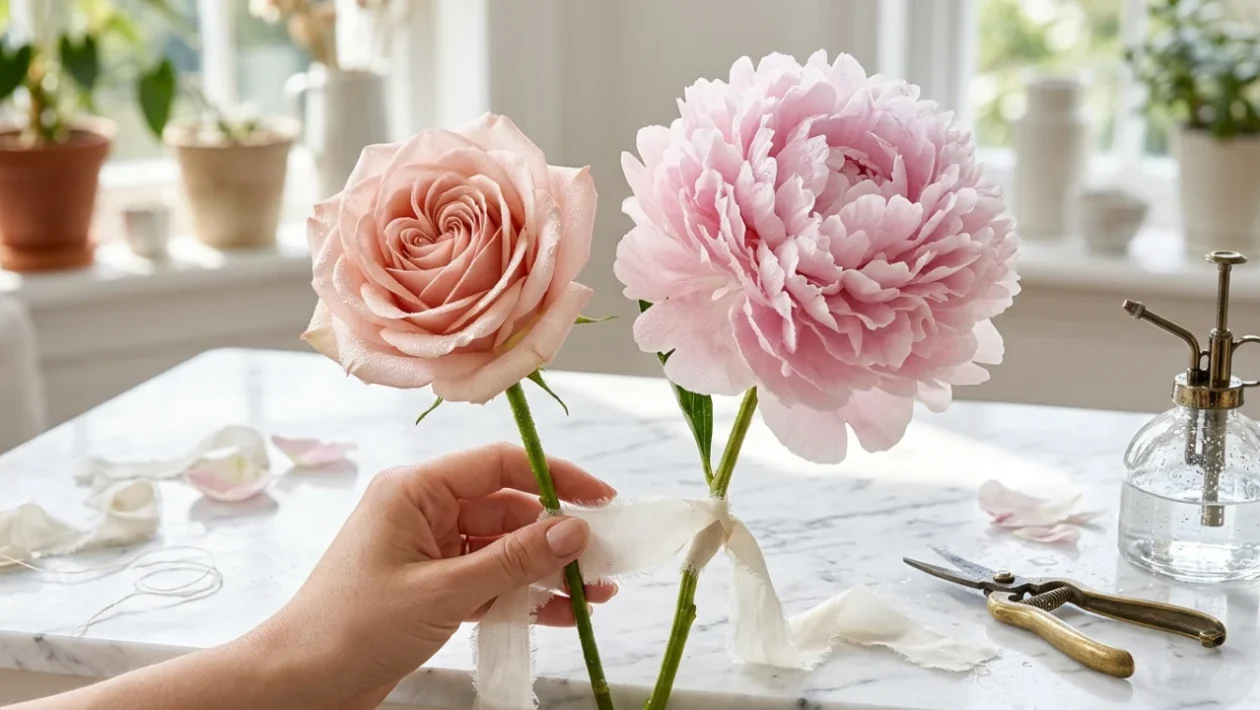
Choosing between garden roses vs peonies comes down to bloom structure, seasonal availability, fragrance, and petal longevity under direct handling. While both provide a lush, romantic focal point, garden roses offer a swirl-centred architecture available nearly year-round, whereas peonies deliver airy, tissue-thin ruffles that dominate late spring arrangements. Understanding these botanical nuances ensures your bridal styling holds up beautifully from the first morning photo to the last dance.
For couples planning ceremonies across Canada—from summer vineyard gatherings in the Okanagan to autumn ballroom celebrations in Toronto—climate and timing directly influence floral performance. Selecting the right focal stem requires looking beneath the surface petals to examine how each blossom behaves throughout a demanding event schedule.
What Are the Architectural Differences in Bloom Structure?
At first glance, both flowers boast dense, layered profiles that command attention in hand-tied arrangements. However, their physical composition dictates how they reflect light and fill space within a design.
Garden roses feature dense, spiralled centres with thick, velvety petals arranged in symmetrical cups or quartered rosettes. Varieties such as English garden roses hold their firm geometry even as they open fully, providing structural substance to loose foliage and mixed bouquets. Their stems are typically woody, supportive, and armed with thorns that require professional conditioning.
Peonies, belonging to the genus Paeonia, open from spherical, golf-ball-sized buds into dramatic, cloud-like bowls composed of papery, delicate petals. A single open peony can span up to triple the width of a standard rose, yet its translucent petal texture creates an airy, billowy fullness rather than a tight rosette.
A very common mistake is assuming that open peonies and garden roses can be handled the same way, when their petal density and hydration needs are entirely distinct.
Because peonies expand so rapidly once warm, their silhouette transforms dramatically within a few hours. That dynamic unfolding brings high visual drama, but it also alters the overall balance of your bouquet throughout the day.
Petal Durability and Heat Resistance
Garden roses generally offer greater heat tolerance due to their heavier petal gauge and firm central core. When temperatures climb during outdoor midsummer ceremonies, garden roses maintain their circular composure without shedding their lower layers.
Peonies, conversely, are sensitive to high ambient heat and dry conditions. Once a cut peony reaches full maturity, prolonged exposure to direct sunlight or warm indoor airflow can cause its delicate outer layers to drop suddenly. Keeping peonies cool until ceremony time remains critical for maintaining their full form.
Comparing Seasonal Windows and Practical Versatility
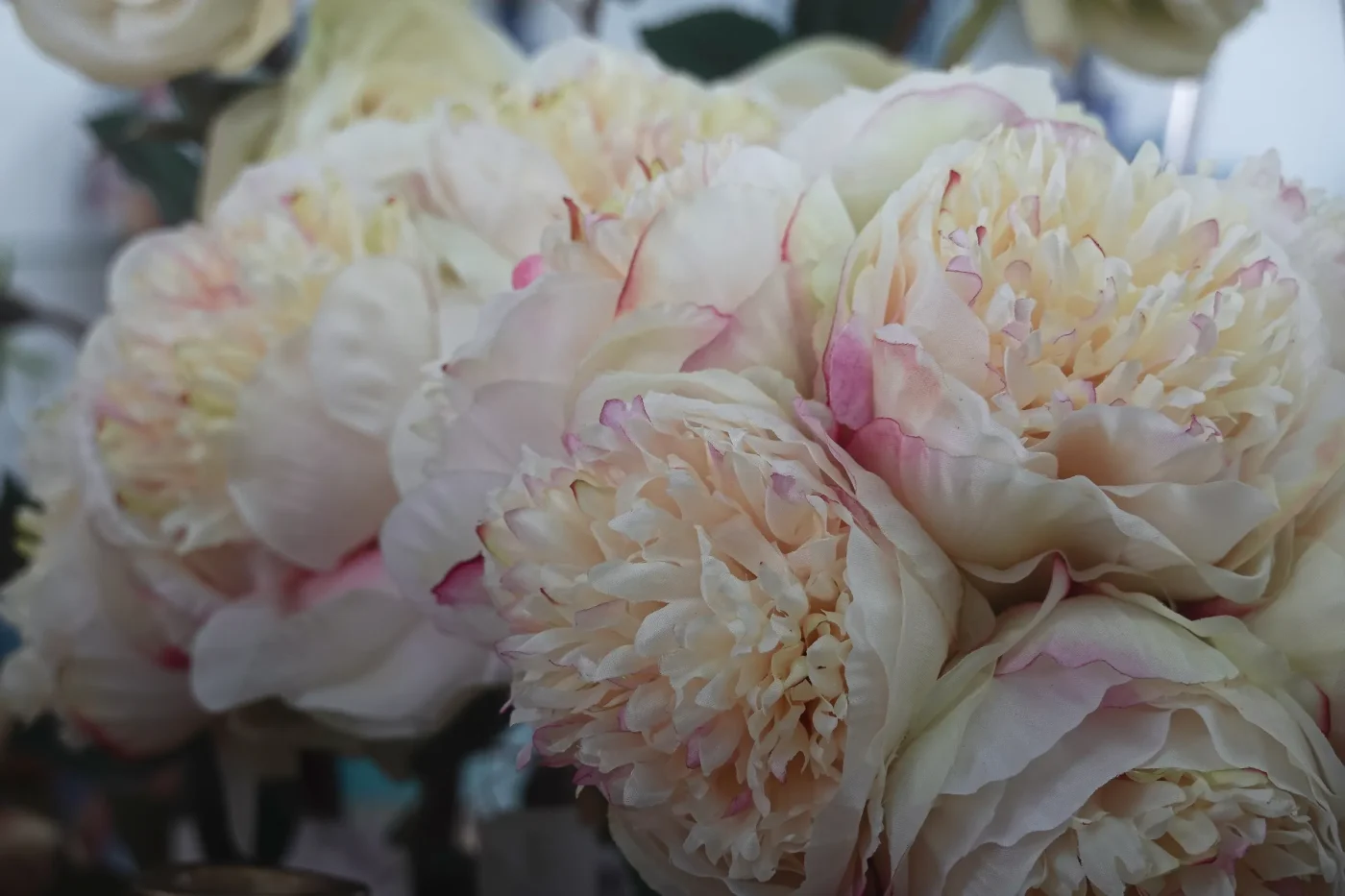
Availability represents one of the most significant practical contrasts when deciding between these two blooms. Florists often encounter clients with specific seasonal visions that do not align with natural harvest cycles.
Peonies operate on a strict, brief natural season, flourishing primarily from late spring into early summer. While cold-storage techniques and global sourcing allow limited access during other months, out-of-season peonies often arrive with smaller heads, tighter bud phases, and a much higher price tag due to transport logistics.
Garden roses enjoy stable greenhouse production and commercial distribution throughout almost the entire calendar year. Whether you exchange vows in crisp October or during sub-zero Canadian winters, premium garden roses remain accessible in top physical condition.
| Feature | Garden Roses vs Peonies |
|---|---|
| Bloom Architecture | Roses have structured quartered or spiralled petals; peonies feature expansive, billowy layers. |
| Seasonal Peak | Garden roses are sourced reliably year-round; peonies peak sharply in late spring to early summer. |
| Vase & Event Life | Roses hold form across multiple days; mature peonies open fast and drop quickly in heat. |
| Fragrance Notes | Roses range from fruity to classic tea scents; peonies offer light, clean, sweet floral notes. |
Myth-Busting: Are Peonies Always More Expensive Than Garden Roses?
A widespread assumption among engaged couples is that peonies always represent the luxury choice while roses serve as a budget alternative. In reality, authentic specialty garden roses frequently carry an equivalent or higher stem cost than in-season peonies.
Specialty garden varieties require delicate hand-harvesting, careful transport, and yield fewer stems per square foot than standard florist roses. However, because a single mature peony provides massive visual surface area, florists often need fewer individual peony stems to achieve a full, opulent bouquet, occasionally balancing out total design costs during peak spring weeks.
How to Select the Perfect Bloom for Your Bouquet
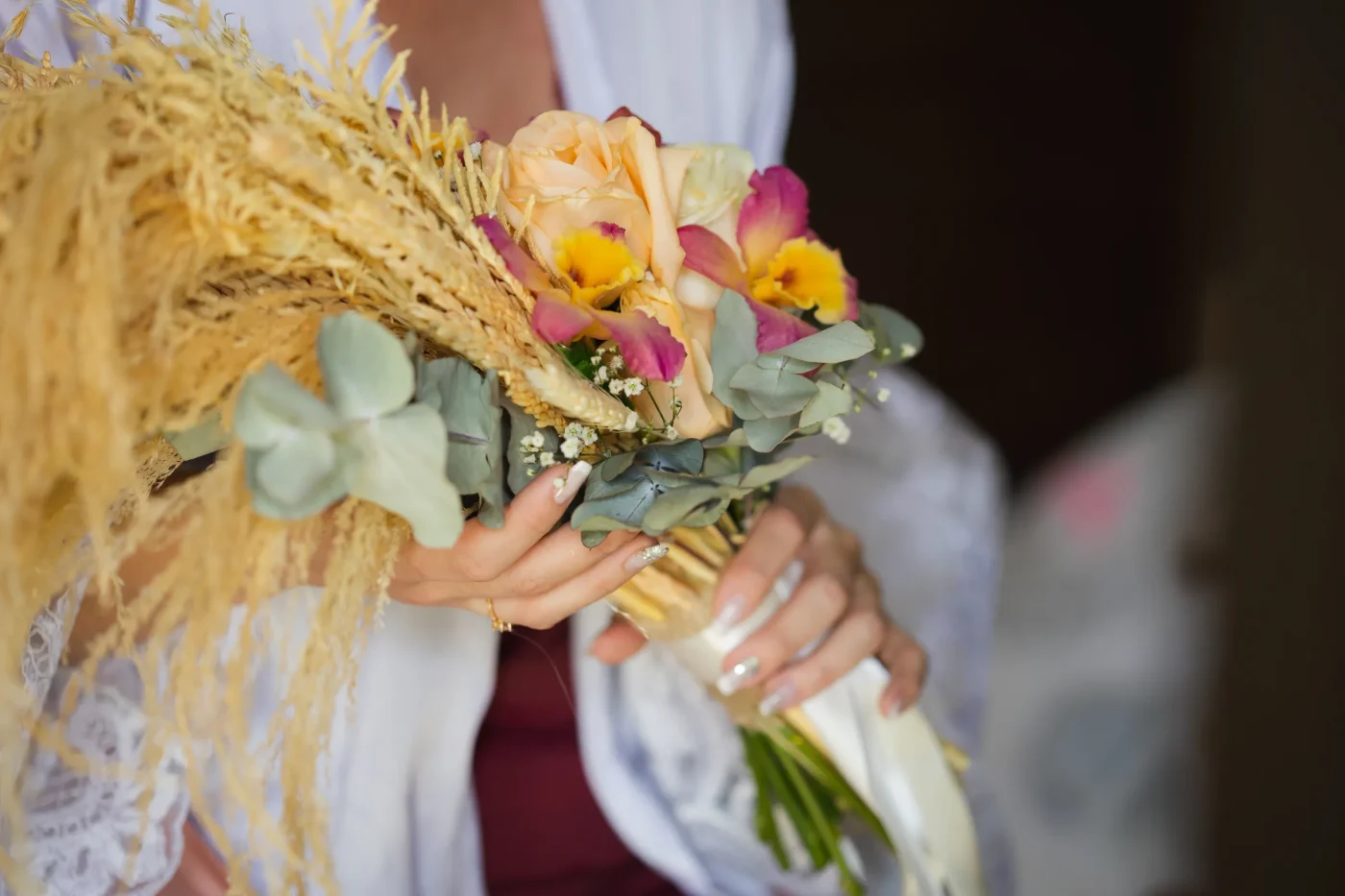
- Check your wedding date against natural bloom cycles: If your event falls in late May or June, in-season peonies will look their absolute best. For autumn, winter, or late-summer dates, garden roses ensure consistent stem quality.
- Assess your venue environment: For hot outdoor settings without climate control, garden roses offer superior resistance against rapid petal wilting.
- Define your aesthetic profile: Choose garden roses if you prefer crisp texture and structured romantic styling; opt for peonies if you want a soft, cloud-like silhouette with dramatic volume.
- Test the fragrance balance: Combine scents carefully, as pairing intensely aromatic garden roses with perfumed peonies can overwhelm delicate indoor spaces.
✨ Choosing the right focal flower transforms your wedding look while keeping your bouquet fresh through every moment.
💚 Consider how your celebration date, local climate, and preferred bouquet shape align before finalizing your stem order.
👇 Leave a comment below with your favourite floral choice or questions about keeping wedding flowers fresh!