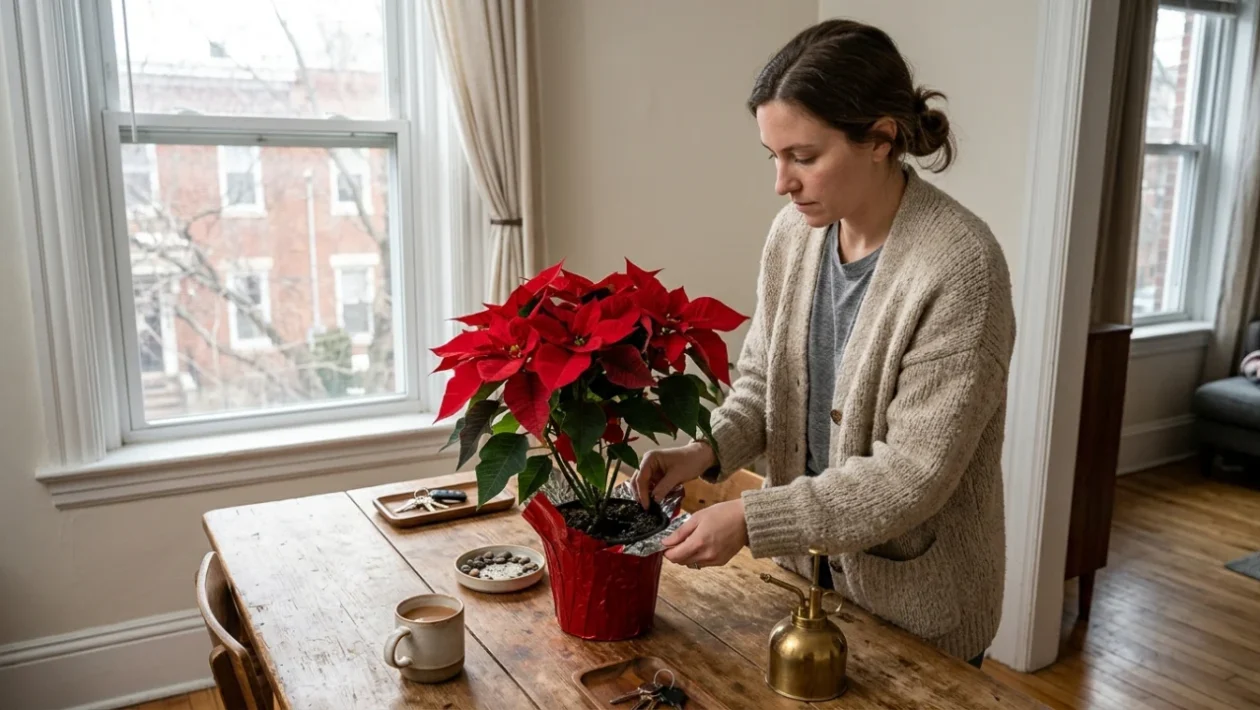
Learning how to keep poinsettia alive until christmas requires maintaining steady indoor temperatures between 18°C and 21°C, providing six hours of bright indirect light, and ditching decorative plastic foil that suffocates roots. With these three baseline adjustments, your festive display will avoid premature leaf drop and retain its brilliant scarlet colour right through the holiday season.
Most poinsettias (*Euphorbia pulcherrima*) arrive from the greenhouse in prime condition, only to deteriorate rapidly once brought inside. Canadian living rooms present a sudden shock: dry air from forced-air furnaces, freezing drafts near entryways, and short winter daylight hours. Understanding how this sub-tropical shrub reacts to northern indoor environments makes all the difference between bare stems and lush foliage.
The secret lies in mimicking the plant’s native habitat while neutralizing the common environmental traps lurking in modern heated homes.
Why Poinsettias Drop Leaves Early in Canadian Homes
The sudden loss of green leaves and colourful bracts is the most frequent complaint among plant owners. In almost every case, this defoliation is a stress response caused by rapid temperature fluctuations or root suffocation rather than a lack of plant food.
A very common mistake is allowing the nursery container to sit in pooled drainage water inside decorative pot foil, which rapidly suffocates the root system and triggers complete leaf drop.
When you purchase a plant from a local nursery or supermarket, it usually comes wrapped in metallic pot sleeves. While decorative, these wraps trap runoff water with nowhere to escape. Waterlogged soil cuts off oxygen to the roots, leading to root rot within days.
Temperature shock is another quiet culprit. Transporting an unprotected poinsettia to your car in sub-zero weather can cause cellular collapse in under two minutes, even if the damage only reveals itself days later as blackened, dropping foliage.
Essential Steps for Foolproof Holiday Poinsettia Care

Establishing a dependable routine ensures your plant retains its vibrant hues without constant fuss. Applying targeted poinsettia care techniques early in the season prevents irreversible stress.
Step-by-Step Maintenance Routine
- Remove or puncture decorative foil: Strip away the bottom of the metallic sleeve immediately or remove the pot entirely, placing it on a drainage saucer filled with pebbles.
- Position in bright, filtered sunlight: Set the plant near an east- or south-facing window where it receives ample natural light without resting against freezing window panes.
- Shield from drafts and heat vents: Keep the container at least two metres away from forced-air heating registers, wood stoves, and frequently opened exterior doors.
- Water only when topsoil dries out: Check the surface soil daily; apply lukewarm water thoroughly only when the top 2.5 centimetres feel completely dry to the touch.
- Empty excess drainage immediately: Discard any water remaining in the saucer fifteen minutes after watering to preserve root health.
Fertilizer is completely unnecessary while the plant is in full colour. Greenhouse growers supply sufficient nutrients before shipping, so feeding during the winter will only burn sensitive roots.
Troubleshooting Common Poinsettia Symptoms
Diagnosing issues early allows you to correct lighting or watering schedules before permanent structural damage occurs. Use this quick reference guide to identify common foliage reactions:
| Plant Symptom | Primary Cause and Solution |
|---|---|
| Wilted leaves with moist soil | Root rot from poor drainage; remove foil wrap and let soil dry out. |
| Curling, crisp leaf margins | Dry ambient air or direct furnace heat; move away from heat registers. |
| Sudden drop of healthy green leaves | Cold draft exposure or sudden temperature plunge; relocate to an interior wall. |
| Fading or pale colour bracts | Insufficient natural sunlight; move closer to bright indirect exposure. |
| Lower leaves turning pale yellow | Overwatering schedule; reduce watering frequency until soil dries slightly. |
Debunking the Holiday Pet Toxicity Myth
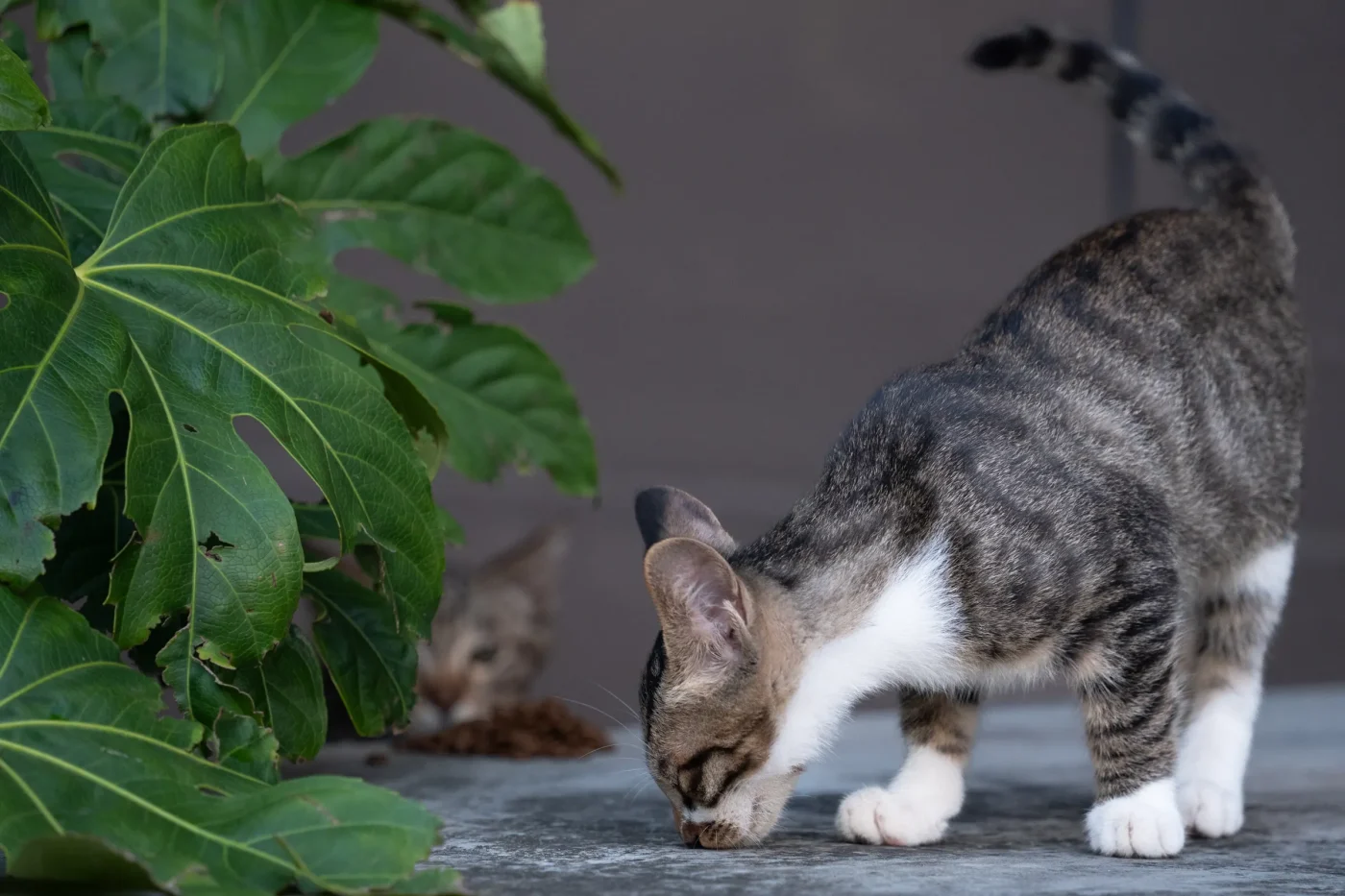
A widespread seasonal belief claims that poinsettias are fatally poisonous to household cats and dogs. This persistent urban legend has caused unnecessary panic among pet owners for decades.
The plant contains a milky white sap rich in diterpene esters, which acts as a mild deterrent in nature. While ingestion can cause mild gastrointestinal irritation, excessive drooling, or occasional vomiting, veterinary toxicology consensus confirms that the plant is not lethal. Placing your plant on an elevated plant stand or high credenza is sufficient to prevent curious pets from nibbling the bitter foliage.
✨ Check soil moisture weekly with your finger rather than sticking to a rigid calendar schedule.
💚 Keep containers away from chilly window glass to protect vibrant holiday bracts well into January.
📱 Share your experience with us in the comments below, or tell us how long your favourite holiday plants have lasted indoors!
👇 Leave a comment below to share your best indoor gardening tips with fellow Canadian plant enthusiasts.