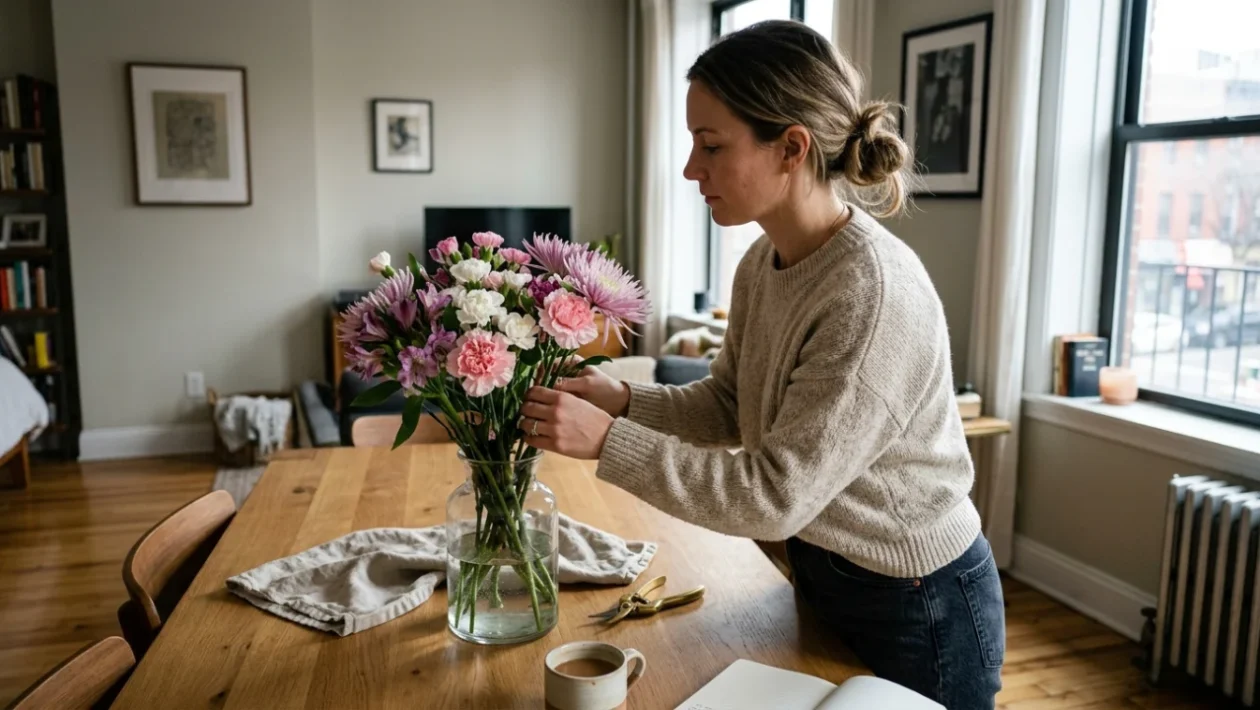
Certain vibrant varieties easily rank as the best cut flowers to last two full weeks indoors, provided you select stems with naturally dense cellular structures and slow transpiration rates. Hardy selections such as standard carnations, florist chrysanthemums, and alstroemerias routinely achieve 14 days or more in fresh water without losing petal vigour. When properly maintained in indoor environments, these resilient blooms outshine delicate garden picks that collapse after just three days.
Indoor living spaces, particularly during dry Canadian winters with active baseboard heating, present a serious dehydration challenge for cut stems. Finding varieties capable of handling indoor ambient temperatures without drooping requires knowing which botanical families have natural safeguards against rapid vascular decay. The secret lies in pairing resilient genetics with simple stem preservation.
Which Cut Flowers Naturally Endure for a Fortnight?
Floriculture professionals classify vase life based on how rapidly the vascular bundle, known as the xylem, clogs up with bacteria or air pockets. Standard carnations (Dianthus caryophyllus) remain the undisputed champions of longevity, frequently surviving up to 21 days on a countertop. Their rigid, fibrous stems do not degrade quickly in standing water, giving them superior defence against microbial slime.
Chrysanthemums, often called mums, offer similar endurance. Whether you purchase button varieties, spider mums, or cushion sprays, these composite blooms maintain their shape and colour saturation for 14 to 18 days. Their petals are tightly grouped and sturdy, meaning they rarely shed prematurely even in low humidity.
Alstroemeria, commonly sold as the Peruvian lily, functions through an staggered flowering cycle. A single stem contains multiple clusters of trumpet-shaped buds that open in sequence over two weeks. As the primary blossom begins to fade, secondary buds unfurl beneath it, keeping your display full and colourful for the duration of the fortnight.
The Resilient Stems That Outlast Standard Roses
While garden roses and tulips command popular affection, their vase life rarely exceeds five to seven days under average room conditions. If you want high-end architectural appeal without the rapid demise, cymbidium orchids and calla lilies provide the necessary staying power. Cut cymbidium sprays feature thick, waxy petals that drastically slow down moisture loss through evaporation.
Statice and eryngium (sea holly) provide another practical alternative for textural bouquets. Because their colourful structures consist of papery bracts rather than soft, moisture-heavy petals, they show zero structural fatigue at the two-week mark. In fact, many indoor enthusiasts allow them to dry directly in the arrangement once the water is emptied.
| Cut Flower Variety | Typical Indoor Longevity & Trait |
|---|---|
| Carnation (Dianthus) | 14 to 21 days; dense stems resist bacterial decay |
| Chrysanthemum | 14 to 18 days; sturdy composite heads hold shape |
| Alstroemeria | 12 to 16 days; staggered buds open continuously |
| Cymbidium Orchid | 14 to 21 days; waxy skin slows evaporation |
| Statice (Limonium) | 14 to 25 days; papery calyx resists wilting |
Why Do Some Fresh Stems Wilt Prematurely?
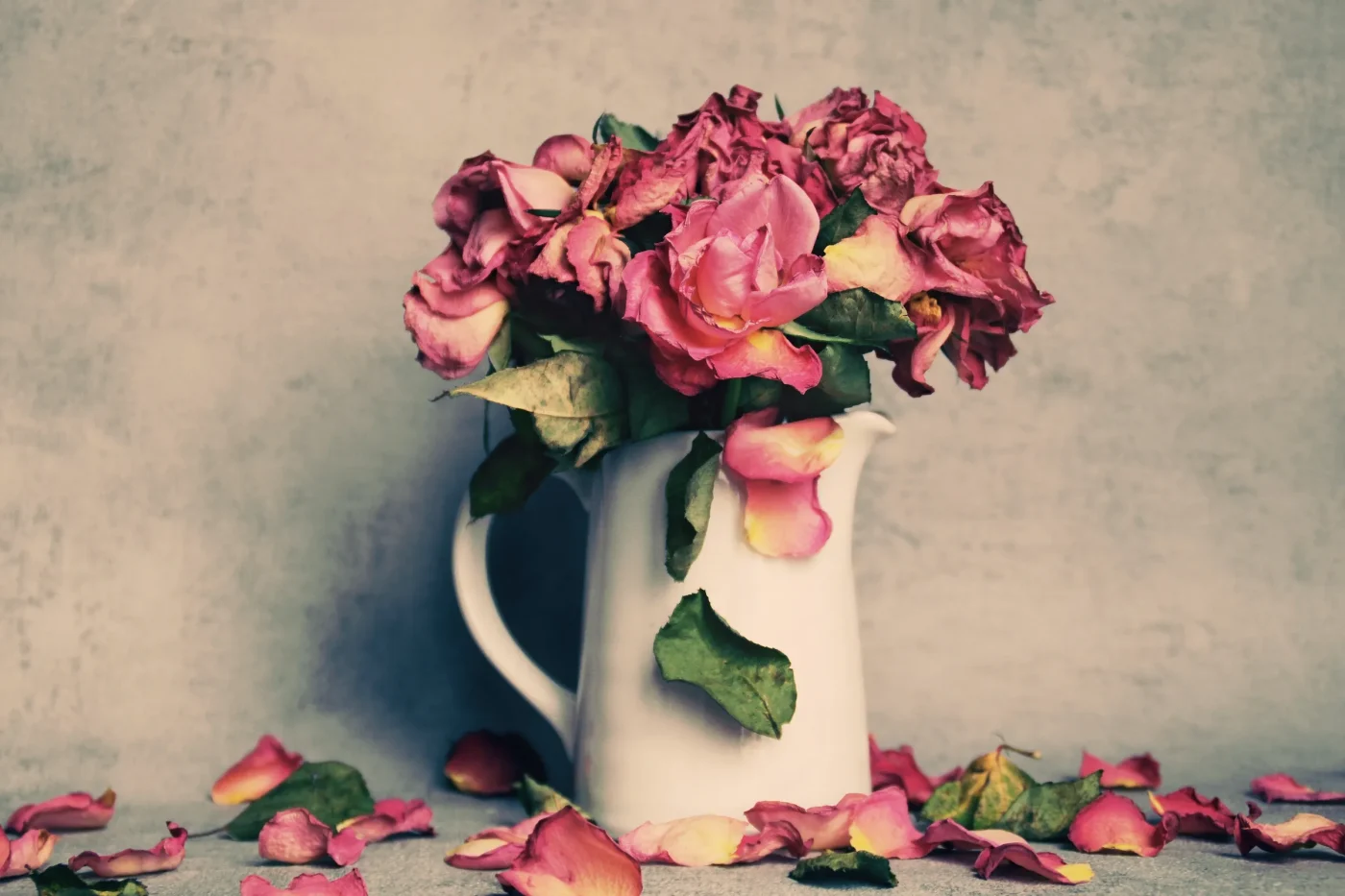
Early stem failure almost always comes down to bacterial contamination rather than the chronological age of the blossom. Once stems are severed from their roots, bacteria multiply inside the vase water and lodge inside the plant’s capillary tubes. When water can no longer travel upward to the blossom, dehydration sets in and the stem droops beneath the bloom head.
A very common mistake is cutting stems straight across with dull household scissors, which crushes the vascular bundles and traps the cut flat against the bottom of the vessel, cutting off vital hydration.
Gas exposure accelerates this breakdown just as quickly. Ripe fruit, particularly bananas and apples, off-gases ethylene, an invisible plant hormone that triggers petal drop and premature aging. Placing your vase directly beside a fruit bowl or near a sunny kitchen window will halve the lifespan of even the toughest carnation.
Myth vs. Reality: The Science of Flower Preservatives
Popular internet folklore suggests dropping copper pennies, aspirin tablets, or shots of clear spirits into your vase to keep petals upright. Practical botany paints a different picture. Copper pennies minted in recent decades contain almost no accessible copper to act as a fungicide, while aspirin acidifies water unpredictably without offering any nutrition.
Commercial floral preservative packets rely on a precise three-part chemical formula: an acidifier, a biocide, and a carbohydrate. The acidifier lowers water pH to match the plant’s internal cell sap, accelerating moisture uptake. The biocide prevents micro-organisms from multiplying in the water, while measured sucrose feeds the bloom so late-stage buds can successfully open.
Step-by-Step: Keeping Your Bouquet Fresh for 14 Days
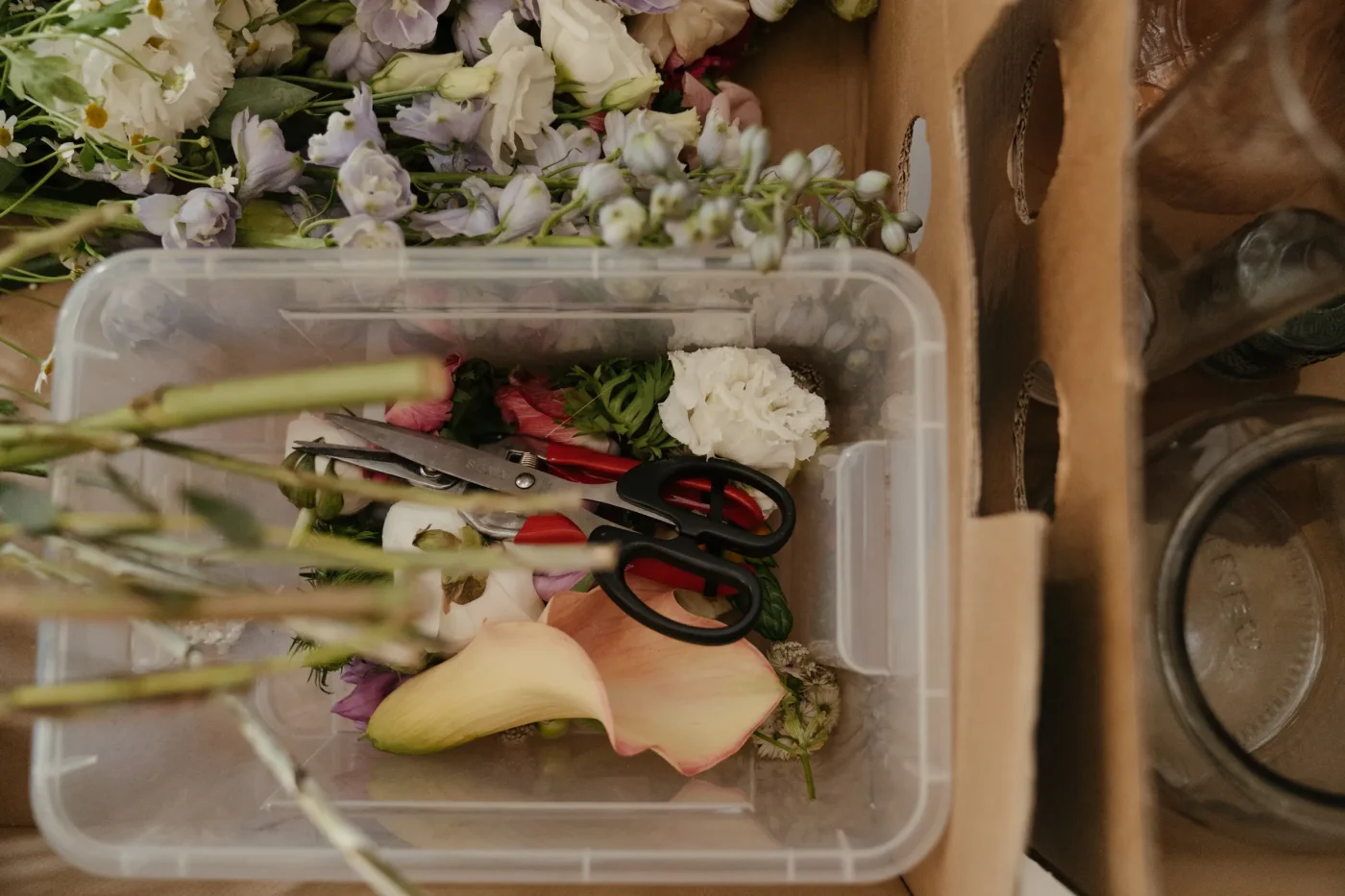
Maximizing the vase life of the best cut flowers requires a regimented hydration strategy from the moment you bring the stems home. Follow these steps to ensure clean circulation and consistent nutrient uptake:
- Sterilize the container: Scrub your glass or ceramic vase with hot water and mild dish soap to eliminate existing bacterial films before adding water.
- Strip lower foliage: Remove all leaves that sit below the expected waterline, as submerged foliage decomposes quickly and fouls the reservoir.
- Slice at a 45-degree angle: Use a sanitized floral knife or bypass pruners to remove two centimetres from the base, maximizing the surface area available for water absorption.
- Re-cut and refresh every 48 hours: Empty the reservoir completely every two days, wash out any cloudiness, add fresh cool water, and trim half a centimetre off each stem.
- Manage the microclimate: Position your display well away from heat registers, cold exterior draughts, ceiling fans, and fruit bowls.
Selecting durable stems saves money, cuts down on household waste, and keeps your living spaces bright right through the season.
💚 Share your favourite long-lasting floral varieties with our community.
✨ Leave a comment below to tell us which stems have survived the longest on your dining table.
👇 Pass this guide along to friends looking to stretch their bouquet budget further this season.