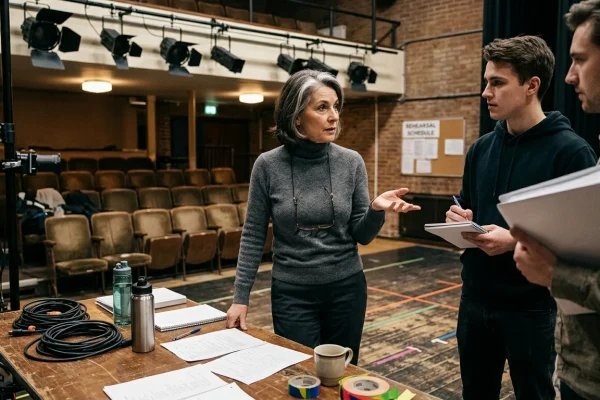

Muriel Gold redefined community and professional stage production during her landmark tenure as artistic director at the Saidye Bronfman Centre (SBC) in Montreal. Taking the helm during a transformative era for Quebec culture, she turned the community-rooted cultural facility into an internationally respected stage powerhouse that championed diverse voices, high-calibre drama, and educational outreach. Her leadership remains one of the most studied chapters in Canadian regional theatre management.
Under her guidance, the Cote-des-Neiges venue shifted from an intimate community playhouse into a professional regional theatre capable of attracting seasoned directors, established actors, and premiere scripts. The momentum built during her leadership set the groundwork for what theatregoers today recognize as the Segal Centre for Performing Arts, cementing Montreal’s reputation as a bilingual cultural hub where English-language theatre could thrive alongside the province’s vibrant francophone arts scene.
How Muriel Gold Transformed English-Language Theatre in Montreal
When Gold assumed leadership of the SBC theatre division, English-language theatre in Quebec faced substantial institutional hurdles. Funding models were precarious, audience demographics were shifting, and local companies struggled to maintain full-season subscriptions. Gold addressed this by introducing structured, professional standards that challenged conventional expectations of what an arts centre could deliver.
Rather than relying solely on conventional revivals, she balanced crowd-pleasing repertoire with daring contemporary works, Yiddish drama translations, and poignant social explorations. This broad-spectrum strategy created a reliable pipeline of local talent while regularly bringing acclaimed guest artists to Montreal stages.
True artistic leadership in community institutions requires balancing local cultural identity with uncompromising professional execution on stage.
Her focus extended far beyond the stage lights. Recognizing that long-term theatrical survival depends on community literacy and youth engagement, she embedded pedagogical programs into the centre’s seasonal offerings, ensuring that school groups, aspiring dramatists, and senior citizens shared equal access to the performing arts.
The Structural Pillars of the SBC Tenure
Understanding why Gold’s era remains widely cited requires examining the specific operational choices she implemented during her years at the Saidye Bronfman Centre.
Balancing Heritage and Innovation
A central triumph of her programming was honouring Jewish theatrical traditions while welcoming the broader Canadian theatre community into the hall. SBC produced works that spoke directly to Jewish heritage, yet staged them with universal emotional appeal that earned coverage from major national critics, including reviewers from CBC and broadsheet cultural sections across the country.
She also spearheaded collaborative arrangements with other Canadian arts organizations, ensuring that Montreal productions had a pathway to tour or share production costs with partner regional theatres across Ontario and Western Canada.
| Strategic Initiative | Institutional Impact |
|---|---|
| Professional Standards Integration | Elevated the SBC from an amateur community stage to a respected professional venue. |
| Bilingual and Diverse Programming | Fostered cross-cultural dialogue between English, French, and Yiddish arts communities. |
| Educational Drama Outreach | Established enduring youth drama workshops and academic connections across Quebec. |
| National Co-Productions | Built lasting networks with regional theatres across Canada to share development costs. |
Dispelling the Myth: Community Roots vs. Professional Excellence
A persistent myth in performing arts administration suggests that an arts centre deeply rooted in a specific cultural community cannot achieve top-tier professional recognition. Critics often assumed that cultural centres serving ethnic or linguistic communities were inherently insular or limited in artistic reach.
Gold’s administration systematically disproved that assumption. Her programming demonstrated that specific cultural stories, when mounted with rigorous production values and skilled direction, achieve mainstream resonance and critical acclaim. The Saidye Bronfman Centre earned its status as a vital stop on the national theatrical circuit precisely because it leaned into its unique identity rather than flattening it.
Key Takeaways from Muriel Gold’s Theatrical Legacy
For modern arts administrators, festival coordinators, and theatre lovers, her years in Montreal provide practical lessons in institutional stewardship:
- Program with conviction: Audiences respond to ambitious, well-crafted drama even when the material deals with unfamiliar or complex cultural themes.
- Cultivate the next generation: Dedicated theatre-in-education initiatives secure institutional longevity by turning young attendees into lifelong ticket holders.
- Champion local artists: Providing fair compensation, professional stage crews, and dedicated rehearsal space keeps homegrown talent from migrating to other markets.
✨ The foundation laid during Gold’s tenure continues to resonate through the Montreal theatre landscape and the legacy of the Saidye Bronfman Centre.
💚 Share your memories of classic Montreal theatre productions with us.
📱 Join the conversation by leaving your thoughts on Canadian stage history below.
👇 Leave a comment below to tell us which regional arts leaders inspired your love for the performing arts.