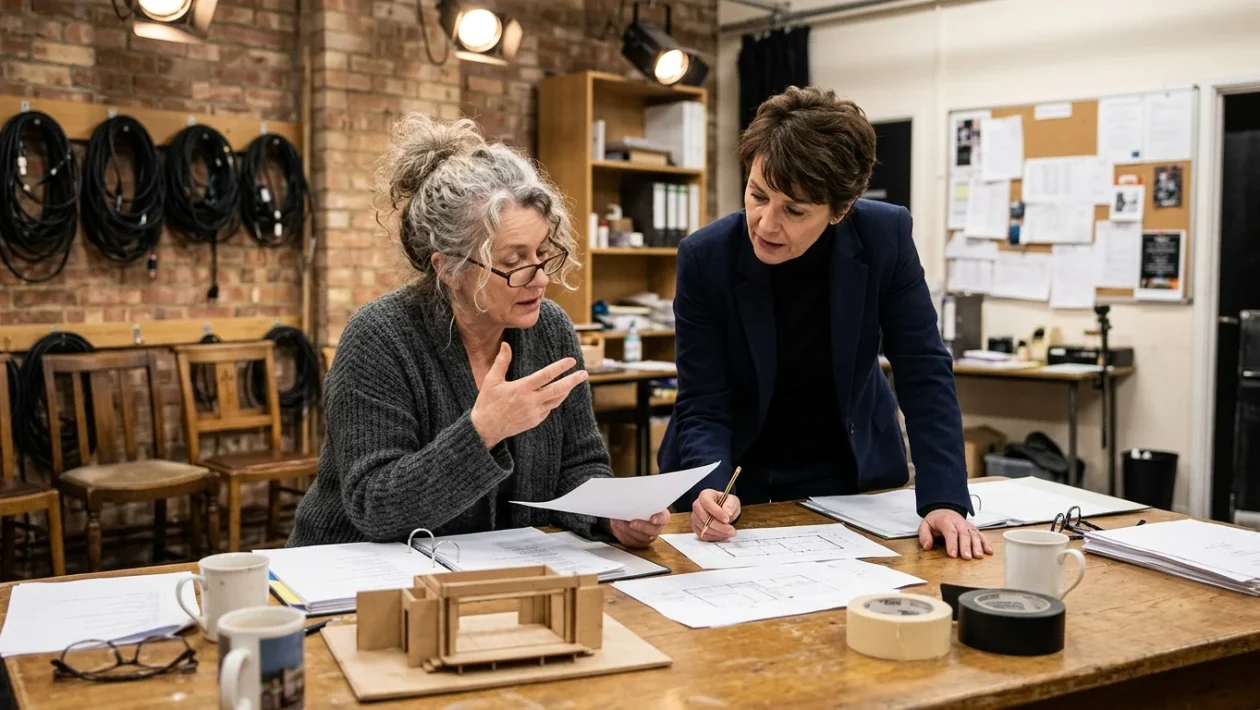
The groundbreaking **Dora Wasserman collaboration** with artistic leader **Muriel Gold** permanently reshaped Montreal theatre by establishing a permanent institutional stage for minority-language drama within mainstream Canadian arts. Working together throughout Gold’s leadership at the Saidye Bronfman Centre, the two directors elevated grassroots community performance into critically acclaimed, multi-generational stage productions. Their alliance transformed a local cultural venue into an internationally recognized hub for bilingual and multilingual theatrical preservation.
Before their creative paths merged, Yiddish theatre in post-war Canada operated largely through transient community halls and school auditoriums. By integrating Wasserman’s passionate troupe directly into the institutional programming of the Saidye Bronfman Centre, Gold provided the professional infrastructure, technical resources, and artistic backing required to reach diverse audiences across the country.
Building a Creative Home at the Saidye Bronfman Centre
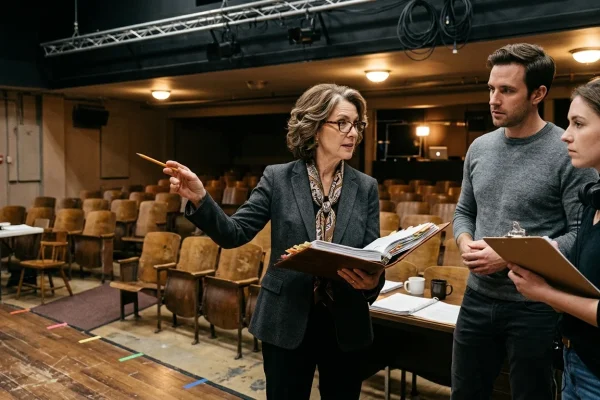
When **Muriel Gold** took the helm as artistic director of the Saidye Bronfman Centre Theatre in Montreal, she recognized that genuine community theatre required uncompromising artistic standards. Rather than treating Wasserman’s ensemble as an auxiliary project, Gold championed the troupe as a foundational pillar of the venue’s seasonal roster. This strategic support allowed **Dora Wasserman** to stage complex, large-scale musical dramas and classic adaptations that rivalled mainstream regional houses.
The institutional backing included access to professional lighting design, set construction, and rehearsal facilities that were previously out of reach for independent grassroots companies. This elevated environment helped the company attract both veteran actors from pre-war European traditions and young Canadian performers keen on learning heritage stagecraft.
Artistic collaboration succeeds when an institution provides stability while allowing an ensemble complete freedom to honour its authentic cultural roots.
Institutionalizing Yiddish Stage Craft
The partnership successfully bridged modern theatrical presentation with traditional Yiddish repertoire, introducing simultaneous translation technology so unilingual English and French patrons could experience the performances seamlessly. This technical leap dismantled linguistic barriers and positioned the productions as integral components of Quebec’s multicultural identity.
A widespread misconception exists that community-driven heritage theatre inherently lacks the rigour or broad appeal of commercial repertory companies. In reality, the Gold-Wasserman era proved that deep cultural specificity, when paired with high production values, consistently attracts diverse audiences across linguistic and demographic divides.
Key Pillars of the Gold-Wasserman Era
The administrative and creative synchronicity between the two women relied on deliberate strategic practices that sustained their joint programming through changing economic cycles:
- Resource Allocation: Guaranteeing prime seasonal performance dates rather than relegation to off-peak periods.
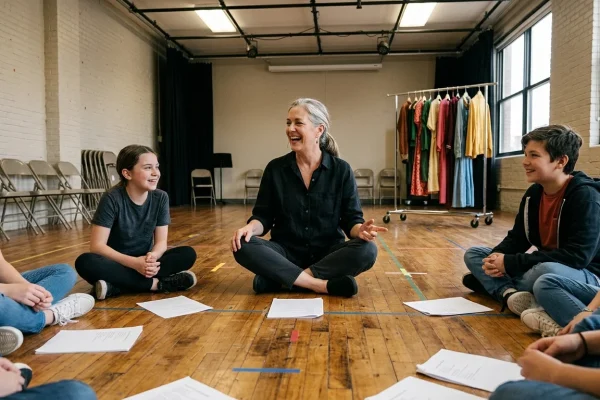
- Intergenerational Casting: Blending professionally trained actors with community youth to secure future talent pipelines.
- Technological Innovation: Pioneering accessible translation methods that invited non-Yiddish speakers into the auditorium.
- Touring Initiatives: Expanding Montreal productions to stages across North America and overseas festivals.
This operational framework ensured that the company withstood the pressures faced by independent cultural groups, anchoring its legacy well beyond its founders’ active tenures.
| Strategic Initiative | Artistic Outcome |
|---|---|
| Permanent SBC Residency | Secured reliable rehearsal space and professional technical production crews. |
| Audience Accessibility | Introduced translated surtitles, widening ticket sales across linguistic demographics. |
| Educational Workshops | Created an ongoing mentorship system for young Canadian actors and playwrights. |
| Repertoire Diversity | Balanced historical European classics with original Canadian stage adaptations. |
Preserving Cultural Heritage for Future Generations
The legacy of their collaborative history remains visible in Montreal’s performing arts sector, particularly at what is now the Segal Centre for Performing Arts. The Dora Wasserman Yiddish Theatre stands as Canada’s oldest continuous Yiddish theatre company, an achievement made possible by the structural foundations built during Gold’s administrative leadership.
By treating cultural memory as living, evolving stage art rather than static museum artifacts, both directors demonstrated how regional institutions can foster distinct cultural identities within the Canadian theatrical landscape.
✨ Canadian performing arts history thrives because visionary directors chose collaboration over competition.
💚 Their shared devotion preserved irreplaceable traditions for future theatregoers.
📱 Share your experience with us if you ever attended a historic production at the Saidye Bronfman Centre.
👇 Leave a comment below to share your thoughts on Canada’s rich regional theatre history.