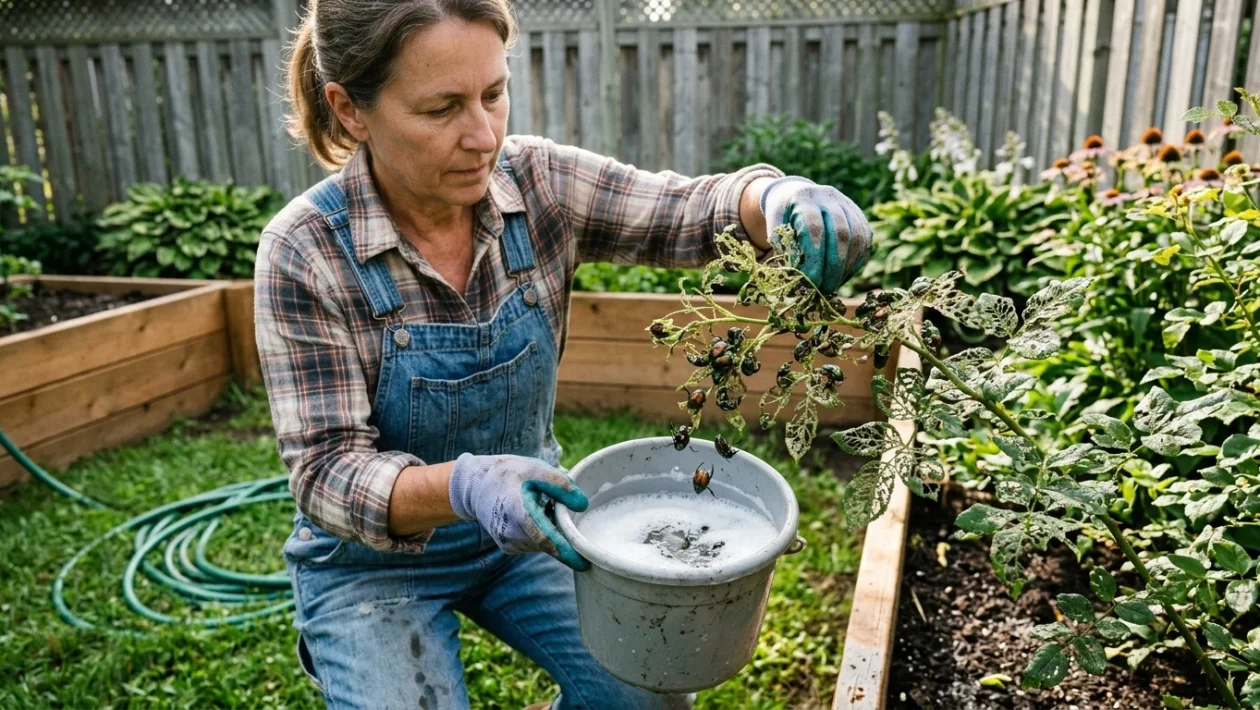
To stop japanese beetles from destroying your garden foliage and lawn, immediate physical removal combined with targeted biological grub management delivers the most dependable protection. Knocking adult beetles into soapy water halts foliage damage immediately, while treating turf with beneficial nematodes breaks the reproductive cycle beneath the soil before new generations emerge.
For Canadian gardeners, this invasive scarab beetle—known scientifically as Popillia japonica—presents a dual threat throughout warm weather months. The adults devour the soft tissue between leaf veins on prized ornamental plants, while the subterranean larvae chew through grass roots until your turf lifts like loose carpet. Tackling an infestation requires understanding both life stages so you can protect your yard without needlessly harming beneficial pollinators.
Why are Japanese beetles such persistent garden invaders?
Originally native to Japan, these metallic green-and-bronze pests have established significant footholds across parts of eastern and central Canada, monitored closely by the Canadian Food Inspection Agency (CFIA). With few natural predators in Canadian ecosystems, populations can balloon rapidly when warm summer conditions favour egg laying and larval development in moist turf.
Adult beetles are notorious generalists, feeding on more than 300 plant species including roses, linden trees, raspberries, grapevines, and birch. As they chew, they release aggregation pheromones that signal other beetles in the area to congregate and feed on the exact same plant. Within days, lush leaves transform into fragile, brown skeletons that jeopardize the overall vigour of the shrub or tree.
A very common mistake is treating only the visible adult beetles on flowers while ignoring the extensive grub population quietly maturing in the surrounding turf grass.
This feeding frenzy does not last indefinitely above ground, but the damage does not stop when the adults vanish.
What is the most effective way to eliminate adult beetles?
The single most dependable, non-toxic way to clear adult japanese beetles from garden beds is manual removal early in the morning. When dawn temperatures are cool, the beetles remain sluggish and cannot fly away quickly. A simple bucket filled with warm water and a few drops of liquid dish soap is all the equipment required.
- The morning drop technique: Hold a soapy bucket directly beneath the affected branch and gently shake the foliage; the beetles instinctively drop downward as a defensive reflex, plunging straight into the water where they quickly drown.
- Physical exclusion: Cover high-value edible crops, such as berries and delicate vegetables, with fine floating row covers or insect netting before adults arrive.
- Approved contact sprays: When handpicking is impractical on large plantings, insecticidal soaps or botanical treatments approved under federal guidelines by Health Canada can suppress surface activity, provided they are applied in late evening to avoid non-target contact with foraging honeybees.
While clearing beetles by hand requires consistent effort, it avoids one widespread tactic that frequently backfires on unsuspecting property owners.
The trap myth: why pheromone traps attract more trouble
Many homeowners assume that hanging commercial yellow-and-green beetle traps will clear their property of pests. Scientific trials have repeatedly demonstrated the opposite: pheromone traps attract substantially more beetles to your yard than they actually catch.
The potent chemical lure draws beetles from hundreds of metres away, pulling them directly toward your property from surrounding areas. A notable portion of these arriving insects never enter the trap at all, settling instead on nearby foliage to feed and lay eggs. Unless traps are placed far away along the distant periphery of a very large rural acreage, they generally increase local defoliation rather than preventing it.
How to eliminate the grub cycle beneath your lawn
Eradicating adult beetles on foliage addresses only half the problem. Female beetles burrow several centimetres into the soil during mid-to-late summer to deposit clusters of eggs, which hatch into hungry white grubs that feed voraciously on grass roots throughout late summer and autumn.
Breaking this reproductive chain requires biological control methods that attack grubs before they overwinter deep in the soil profile.
- Inspect the turf: Cut a 30-centimetre square flap of sod in late summer or early autumn and peel it back. If you count more than six to ten small, C-shaped grubs in that square foot, treatment is warranted to prevent significant turf loss.
- Apply beneficial nematodes: Microscopic roundworms, specifically the species Heterorhabditis bacteriophora, actively hunt down white grubs in the root zone. Mix the nematodes with water according to package instructions and apply with a hose-end sprayer during overcast conditions or at dusk.
- Maintain soil moisture: Nematodes require a film of moisture to swim through soil particles. Water your lawn thoroughly before application and keep the top few centimetres damp for at least one to two weeks following treatment.
Comparing control measures across beetle life stages
Selecting the right intervention depends entirely on which phase of the beetle’s life cycle is currently active in your landscape.
| Target Stage | Best Management Practice |
|---|---|
| Active Adults (Foliage) | Manual collection into soapy water at dawn; protective row covers over vulnerable crops. |
| Late-Summer Grubs (Soil) | Application of beneficial nematodes into moist soil to infect and kill larvae before winter. |
| Overwintered Grubs (Spring) | Aerating soil and allowing birds to feed naturally before grubs pupate into adults. |
| Landscape Planning | Planting resistant species like lilacs, red maples, and conifers instead of highly susceptible host trees. |
Targeting both life stages systematically ensures that you reduce foliage destruction immediately while starving future beetle generations before they ever take flight.
💚 Stay ahead of seasonal yard pests by inspecting your garden beds frequently and choosing biological solutions that preserve beneficial native pollinators.
✨ Healthy, well-aerated soil and diverse plantings provide the strongest long-term defense against recurring insect damage.
📱 Share your garden successes with fellow green thumbs dealing with persistent beetle visits this season.
👇 Leave a comment below detailing which garden plants took the hardest hit in your yard and the tactics that worked best for you!