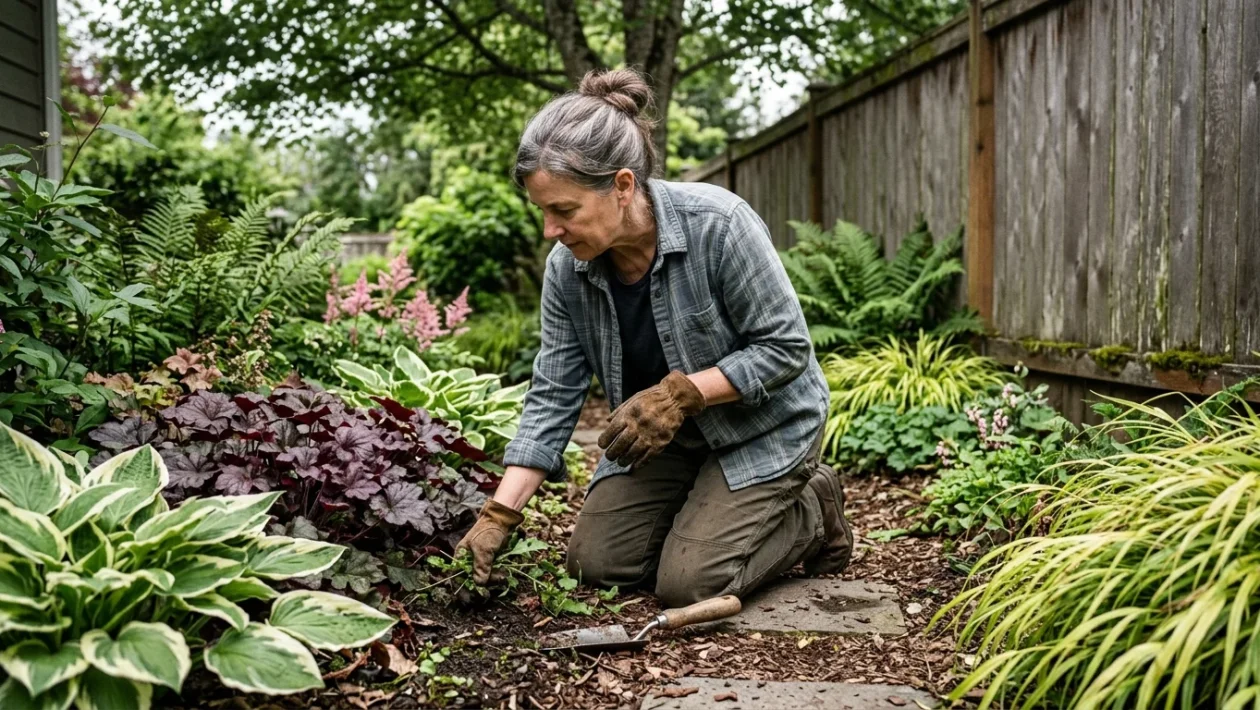
Transforming dark garden edges requires cold-hardy shade perennials that thrive without direct sunlight, turning dim, neglected fence lines into dense, architectural borders. Reliable selections like hostas, astilbes, and native ferns provide enduring foliage structure and seasonal blooms across diverse Canadian plant hardiness zones. You do not need all-day sun to build an eye-catching perimeter along your property line.
Many Canadian gardeners struggle with shaded border beds, assuming limited daylight prevents vigorous growth. The challenge rarely comes from the lack of light alone, but rather from root competition and poor moisture retention beneath mature tree canopies. Solving those conditions unlocks a wide range of dependable foliage and floral options.
The Great Shade Myth: Why Low Light Does Not Mean Low Colour
A widespread misconception persists that low-light gardening forces you to accept flat, dull greenery without visual depth. Gardeners often plant a uniform row of identical hostas, only to find the border looks monotonous by midsummer.
Botanical reality proves the opposite. Strategic shade borders rely on distinct leaf textures, variegation, and staggered bloom times to produce dynamic contrast throughout the entire growing season. Combining chartreuse, deep burgundy, and silver foliage delivers continuous visual impact long after summer flowers fade.
A common mistake is treating all low-light areas the same, when dry shade beneath shallow tree roots demands far more soil preparation than moist, sheltered shade beside a north-facing brick wall.
Understanding the exact type of shade you have determines which plants will thrive rather than merely survive.
Top Perennial Border Plants for Shaded Beds
Selecting varieties that survive freeze-thaw cycles and tolerate low light requires matching the plant’s natural woodland niche with your border placement. Deep shade requires broad, reflective foliage, while partial shade can support delicate, feathery blooms.
| Plant Variety | Best Border Role & Growing Need |
|---|---|
| Hosta (Plantain Lily) | Front-to-mid border anchor; requires rich, evenly moist soil to support broad foliage. |
| Astilbe (False Goat’s Beard) | Mid-border flowering accent; needs consistent moisture and shelter from hot afternoon sun. |
| Heuchera (Coral Bells) | Front edging plant; offers burgundy, lime, or amber leaves and prefers well-drained soil. |
| Ostrich Fern (Matteuccia struthiopteris) | Back border background; extremely cold-hardy native providing upright, architectural height. |
| Hakonechloa macra (Japanese Forest Grass) | Front border softener; weeping golden blades that brighten dark corners and suppress weeds. |
Foliage Anchors vs. Flowering Accents
Front-of-the-border plantings should feature compact, mounding forms that maintain their structure without flopping onto turf or walkways. Heuchera excels here, creating clean lines with scalloped, colourful leaves that persist until heavy frost sets in.
Mid-border transitions benefit from the upright, plume-like blooms of astilbe, which contrast sharply against broad hosta leaves. Behind them, taller ferns create a lush, woodland backdrop that catches faint breezes and adds vertical scale.
How to Establish a High-Impact Shade Border
Proper soil preparation gives young perennials the stamina needed to compete with established tree roots and withstand severe winter conditions across northern zones.
- Assess your light profile: Dapple shade under deciduous trees allows early spring light, whereas full shade beneath conifers or north-facing walls remains dark year-round.
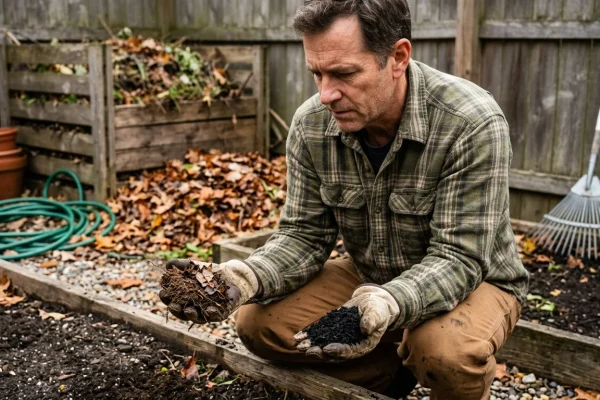
- Amend the soil structure: Incorporate well-rotted compost and leaf mould into the top twenty centimetres to boost organic matter without severing major tree roots.
- Layer by height: Place spreading groundcovers at the edge, mounded foliage in the centre, and taller structural specimens along the rear fence or foundation.
- Mulch thoroughly: Spread a five-centimetre layer of coarse wood chips or shredded bark to trap ground moisture and insulate root systems before winter freezes take hold.
With the ground properly prepared, regular deep watering during their first season ensures these robust perennials anchor firmly and return with greater vigour each spring.
💚 Shaded perimeters do not have to stay bare or boring when the right woodland varieties take root.
✨ Share your experience with us and tell us which shade plants survive best in your yard.
👇 Leave a comment below with your favourite foliage pairings for challenging, dark garden corners.
📱 Pass this guide along to a neighbour planning their next backyard landscaping project.