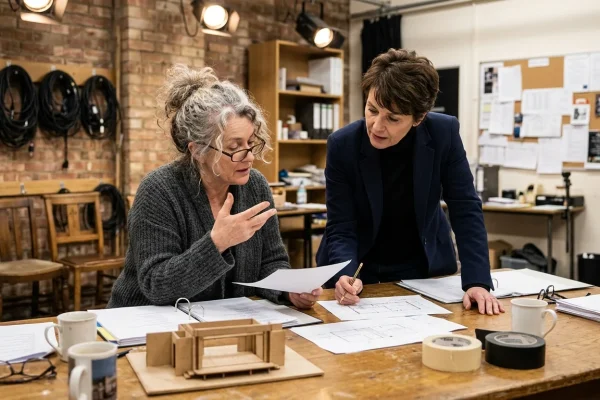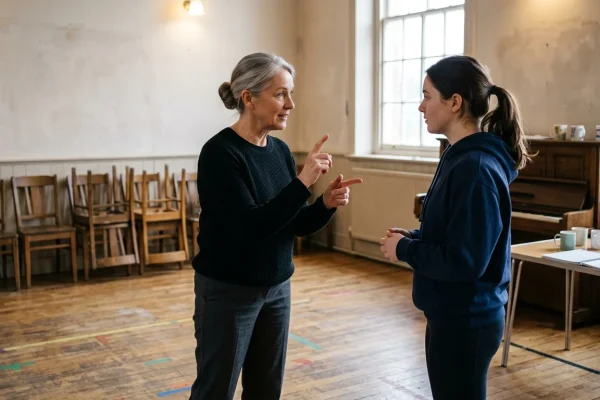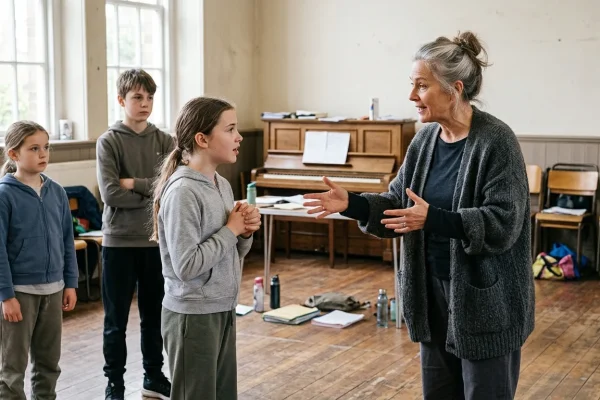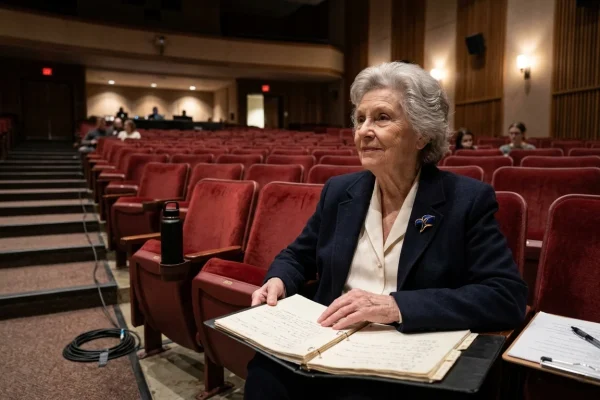
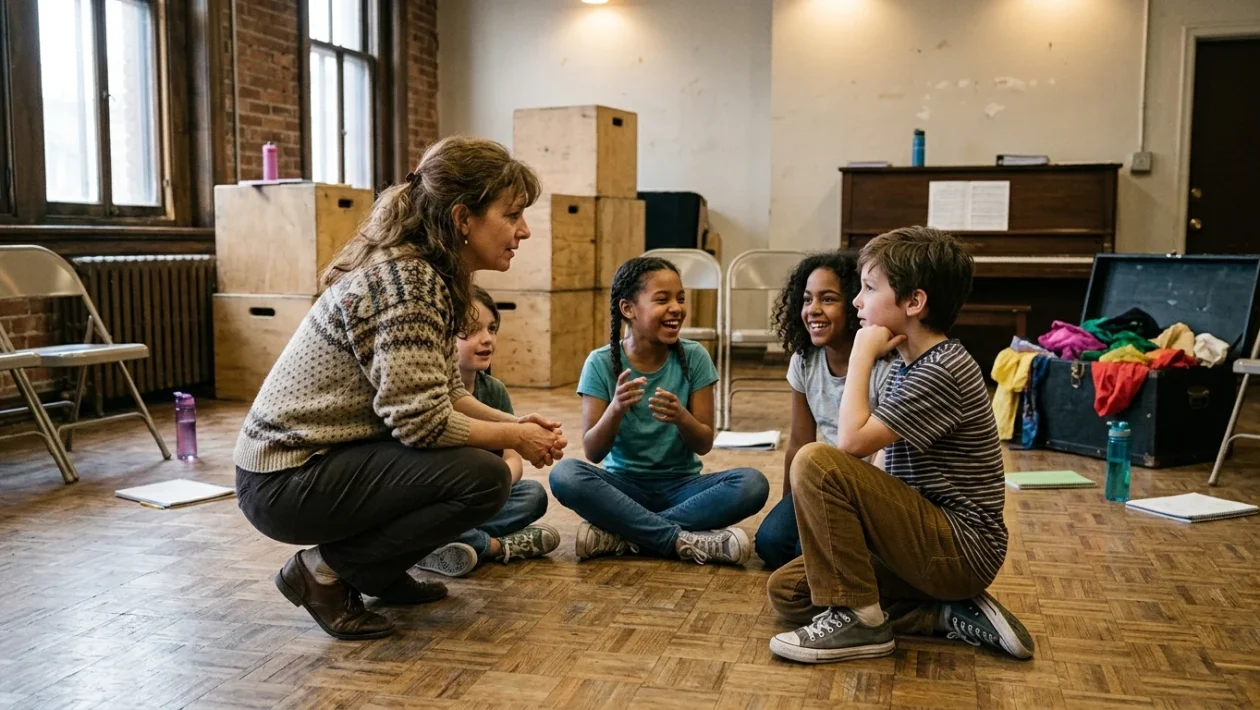
Muriel Gold transformed youth theatre programs in Montreal by establishing an approach to arts education that prioritized child-centred expression over mechanical stage performance. Appointed artistic director of the historic Montreal Children’s Theatre during the 1970s, she designed a model where participatory drama served as a vehicle for emotional growth, literacy, and community building. Her work reshaped how Canadian educators approached performing arts for youth, leaving a structural foundation that Montreal theatre academies and school curricula still draw upon.
Before creative drama gained institutional acceptance across Quebec, performing arts for young audiences often resembled miniature adult productions. Scripts were memorized by rote, movements were rigidly blocked, and the primary objective was entertaining grown-ups rather than nurturing the child’s natural imagination. Gold challenged this traditional structure, demonstrating that theatre could function as a laboratory for self-discovery.
The Evolution of Drama Training at Montreal Children’s Theatre
The Montreal Children’s Theatre, originally founded in the 1930s by Dorothy Davis and Violet Walters, provided the launchpad for this pedagogical shift. When Gold assumed leadership, she recognized that youth theatre programs needed to adapt to changing psychological insights regarding child development.
Rather than treating the stage as an audition hall for professional stardom, her workshops positioned drama as an essential tool for personal enrichment. Students learned improvisation, non-verbal communication, and ensemble dynamics, allowing them to examine diverse perspectives and develop authentic vocal projection without the anxiety of line-perfect recitations.
Drama education for young people functions best not when it trains children to mimic adult actors, but when it empowers them to discover their own voice and navigate the social world with empathy.
This child-first methodology quickly caught the attention of academic institutions. Gold later documented these strategies in published research and taught at McGill University, translating grassroots rehearsal techniques into formalized teacher-training programs across Canada.
Myth vs. Reality: What Youth Theatre Actually Teaches
A persistent misconception in youth arts is that enrolling in drama exists solely to groom commercial stage or screen actors. Many parents assume that without an agent or an audition reel, theatre classes are merely an expensive leisure activity.
The pedagogical record established by Canadian arts researchers tells a different story. Systematic participation in structured rehearsal environments directly enhances verbal fluency, working memory, and interpersonal conflict resolution. The skills developed under the spotlight carry directly into public speaking, collaborative team settings, and academic writing.
Core Shifts in Youth Theatre Approaches
Understanding the impact of Gold’s innovations requires looking at how classroom expectations evolved over the decades. The fundamental shift moved from product-driven outcomes to process-driven learning.
| Traditional Youth Theatre | Educational Creative Drama |
|---|---|
| Memorization and rigid stage blocking | Improvisation and spontaneous expression |
| Focus on audience applause and spectacle | Focus on peer collaboration and personal growth |
| Teacher directs every physical gesture | Facilitator guides student-led problem solving |
| Competitive casting for limited roles | Inclusive ensemble development for all participants |
How Montreal Families Can Choose the Right Theatre Program
Montreal remains a vibrant hub for the performing arts, offering bilingual workshops, municipal cultural center programs, and independent theatre schools. Finding a program that aligns with healthy developmental principles requires looking beyond the year-end recital glamour.
- Evaluate the director’s philosophy: Look for studios that emphasize process over polish, ensuring children spend time developing characters rather than merely rehearsing stage lines.
- Check instructor credentials: Quality programs employ facilitators with background training in drama-in-education, youth pedagogy, or professional stagecraft.
- Assess ensemble balance: Ensure class sizes are small enough to give every participant substantial speaking time and creative input.
- Confirm community inclusivity: Strong programs offer sliding scales or subsidized spaces to ensure children from diverse socio-economic backgrounds participate together.
By focusing on these core elements, families secure an environment where children gain genuine resilience alongside artistic technique.
💚 Share your experience with us: Did you or your children take part in community theatre classes in Montreal?
✨ Leave a comment below with your favorite local cultural centres and teachers who inspired you.
📱 Pass this article along to a fellow parent or educator looking to bring more creative play into their child’s routine.