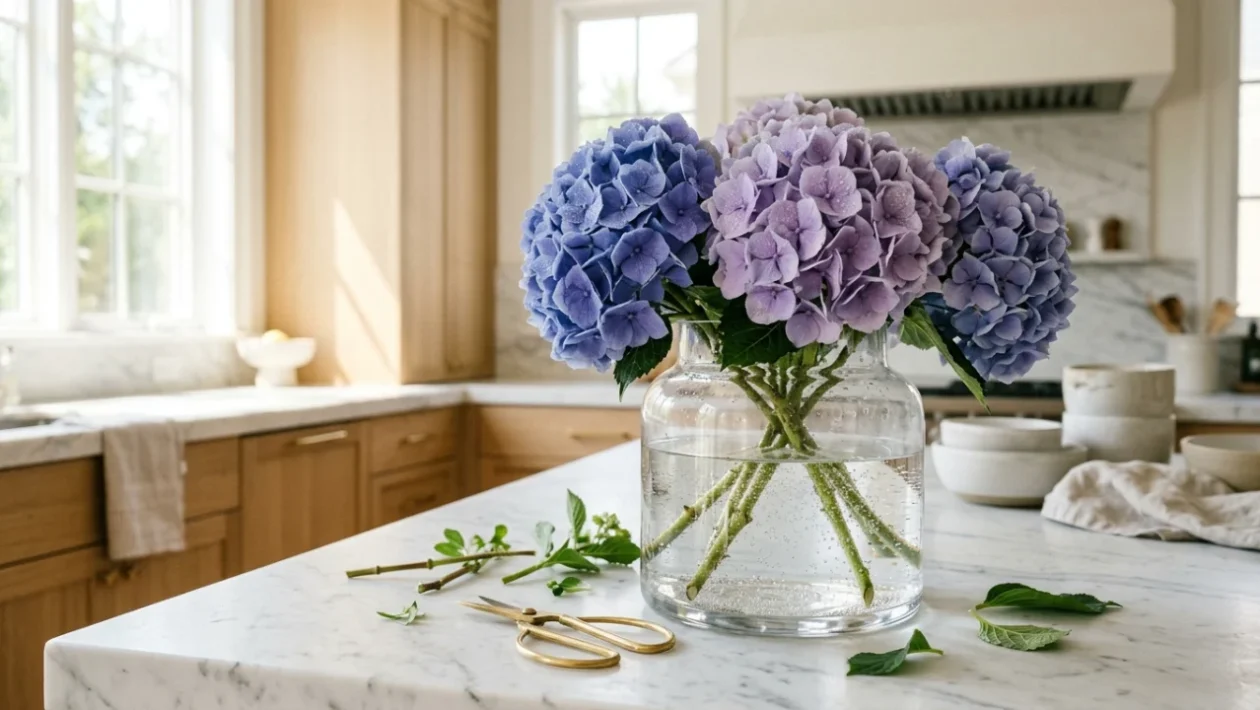
Submerging cut flower stems in freshly boiled water can completely restore severely drooping hydrangea blooms within two to four hours. The rapid heat treatment melts sticky sap and clears vascular air embolisms, allowing moisture to travel back up to thirsty petals before permanent tissue collapse sets in.
Few cut blooms drop as dramatically as hydrangeas. One day a vase looks lush and vibrant on the dining table, and the next morning the flower heads hang limp, soft, and completely deflated. Throwing them into the green bin is a premature mistake because the underlying plant structure is usually still alive.
To salvage your display, you need to understand the physiological bottleneck occurring inside the stem.
The Plant Science: Why Hydrangeas Suddenly Flop
Hydrangeas lose moisture at an exceptional rate compared to most cut flowers. Their large, showy heads consist of broad sepals packed with tiny stomata, evaporating water faster than thin stems can pull it upward from a standard vase.
When stems are cut from the garden shrub or trimmed at home, the plant secretes a milky, sticky sap to seal its wound. This natural defence mechanism works too well in a floral arrangement, hardening inside the microscopic xylem vessels and forming an impermeable plug. At the same time, air drawn into the severed stem creates an embolism that severs the capillary pull completely.
Sap production and trapped micro-air bubbles seal the vascular conduits of cut hydrangeas, creating a physical barrier that prevents ambient water from reaching the blooms regardless of how full the vase is.
Cold tap water cannot dissolve this hardened residue. As a result, the blossoms dehydrate while sitting directly in litres of fresh water.
The Myth of Smashing Flower Stems
A widespread gardening myth suggests hammering or crushing the bottom of woody stems with a mallet to force open more surface area for hydration. Botanical science demonstrates that this practice does far more harm than good.
Crushing the stem base shatters the delicate xylem tubes into mangled pulp, destroying their ability to conduct water upward through capillary action. The mangled plant tissue also decays at a rapid rate, feeding bacterial blooms that foul the vase water and accelerate rot. A clean, decisive slice remains the only reliable baseline for long-term stem health.
Step-by-Step Hot Water Treatment
Executing this technique requires clean tools, hot tap or kettle water, and roughly fifteen minutes of careful handling. Here is the process to safely revive wilted hydrangeas without damaging tender petals:
- Prepare clean fresh water: Fill your primary display vase with clean, room-temperature water and keep it waiting nearby.
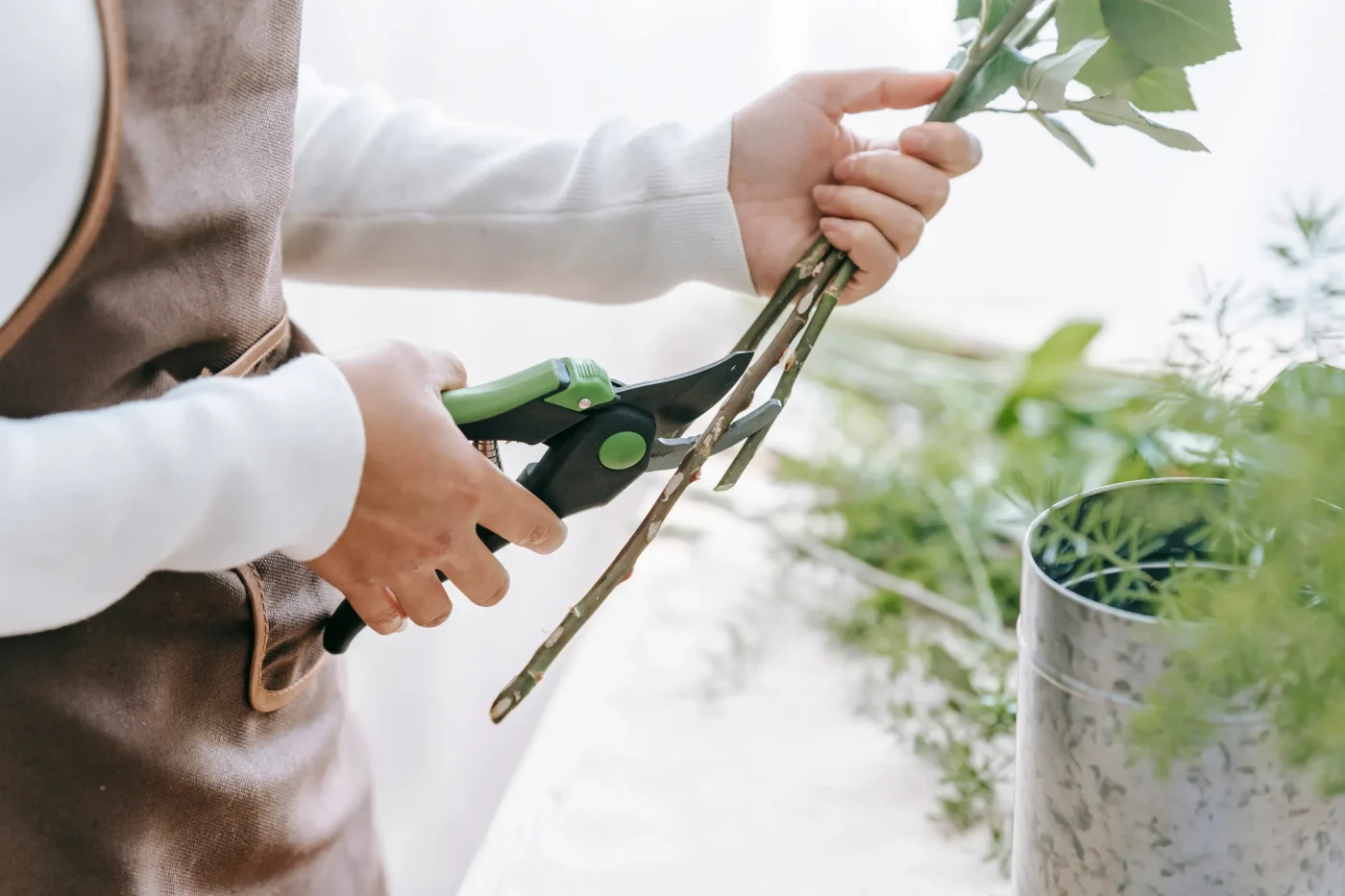
- Re-cut the woody stems: Use clean floral shears or a sharp knife to cut 2 to 3 centimetres off the bottom of each stem at a sharp 45-degree angle. Never use dull kitchen scissors that pinch the vessels shut.
- Add a vertical slit: Slice a single vertical slit roughly 1 centimetre up through the centre of the cut base to expose fresh, unobstructed vascular channels.
- Boil water in a kettle: Pour freshly boiled water into a heat-resistant mug or jar until it reaches roughly 5 to 7 centimetres deep.
- Protect delicate petals: Wrap a light tea towel or paper towel loosely around the flower heads to shield them from rising steam, which can scald the petals.
- Perform the hot dip: Stand the freshly cut stem ends directly in the hot water for 30 to 45 seconds, or leave them in cooling hot water until it drops to room temperature.
- Transfer to the display vase: Move the stems directly into your room-temperature vase and place them in a cool spot out of direct sunlight.
The intense heat quickly dissolves the coagulated sap inside the xylem vessels while expelling trapped air bubbles from the stem base. Within a couple of hours, structural turgor pressure returns, leaving the flower heads firm and crisp once again.
What Method Works Best for Hydrangea Care?
Different florist hacks circulate online, but results vary substantially depending on how the moisture reaches plant cells.
| Revival Method | Mechanism & Results |
|---|---|
| Hot water stem dip | Clears sap plugs and thermal embolisms quickly; best for sudden structural wilting. |
| Full head submersion | Hydrates sepals directly through stomata in cool water; ideal for petal-level dryness. |
| Stem smashing | Destroys vascular tissue and encourages rot; universally discouraged by florists. |
| Alum powder coating | Astringent salt that helps deter bacteria and preserve vascular flow when dipping cuts. |
Keeping Hydrangea Blooms Fresh Indoors
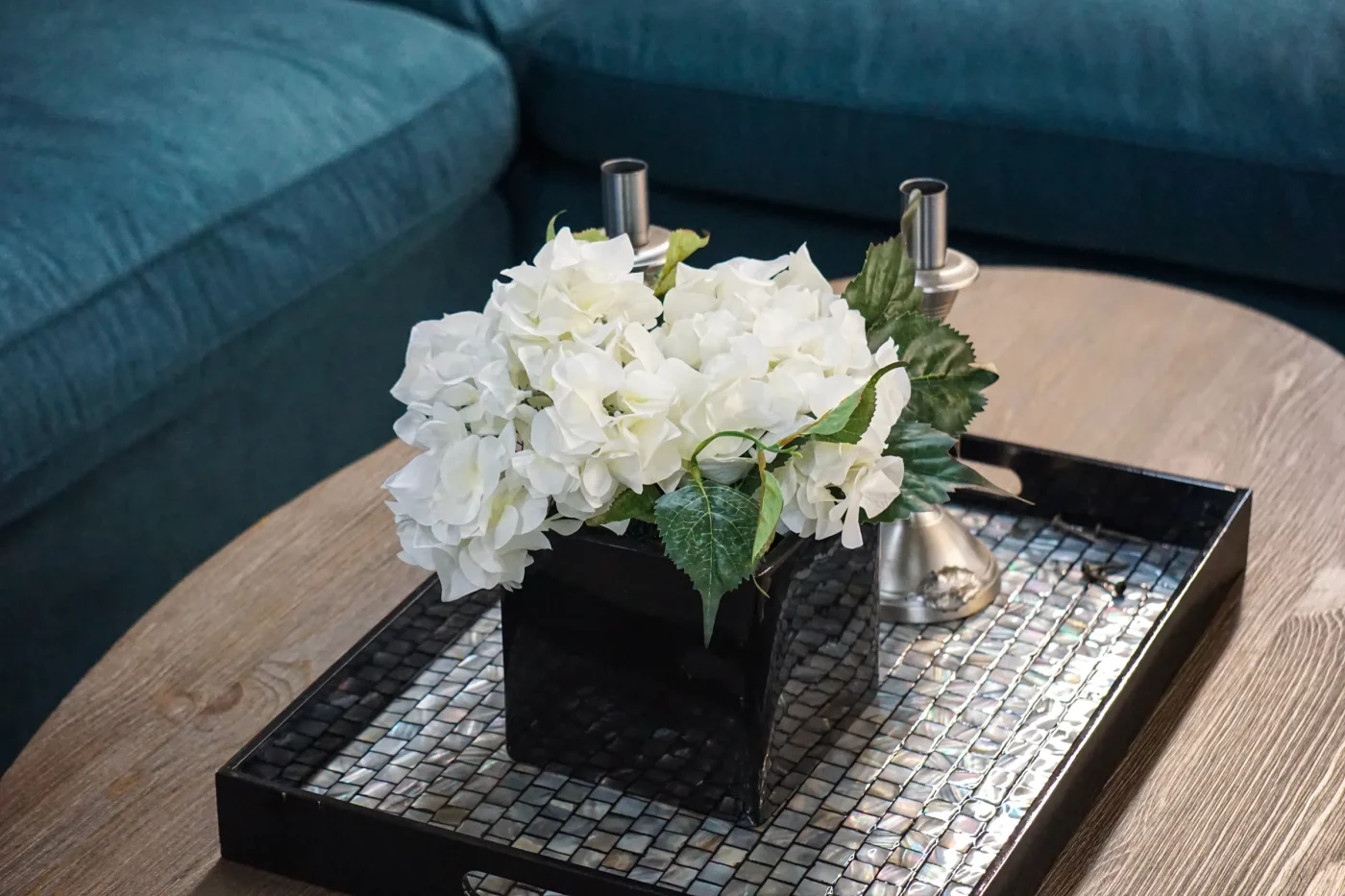
Once your flowers stand upright again, keeping them crisp requires smart placement throughout your living space. Avoid sunny windowsills, south-facing kitchen counters, and the direct airflow of furnace vents or heat pumps, which accelerate moisture loss.
Re-cutting stems every two days and refreshing the vase water ensures bacteria never colonize the base of the stems. If a stubborn head wilts a second time later in the week, repeating the hot water dip will frequently yield a second complete recovery.
✨ Give this quick water trick a try the next time your fresh arrangements begin to slump on the counter.
💚 Share this helpful guide with fellow plant lovers and gardeners looking to keep their cut displays thriving.
👇 Leave a comment below with your favourite flower care routine or how fast your blooms bounced back!