Designing a floral centerpiece without foam comes down to swapping toxic single-use green bricks for reusable structural mechanics like coated chicken wire, brass flower frogs, or natural branch armatures that hold stems firmly in clean water. This straightforward shift allows cut blooms to drink freely while keeping microplastics out of waterways.
Traditional floral foam has dominated table arrangements for decades, primarily because it immobilizes delicate stems at any angle. Yet floral artists and home hosts across Canada are ditching phenolic foam entirely in favour of sustainable, long-lasting alternatives that actually prolong the life of cut flowers.
Switching your design technique preserves flower freshness and unlocks looser, more natural movement that rigid foam blocks simply cannot replicate.
Why Floral Foam Fails Modern Tables

Green floral foam is manufactured from synthetic phenol-formaldehyde plastic. When soaked and handled, it sheds millions of microplastic fragments directly into household sinks, which ultimately wash out into municipal water treatment plants and freshwater ecosystems.
Beyond the environmental footprint, foam physically clogs plant stems over time. The dense, crumbly material restricts clean water uptake, often causing thirsty blooms like garden roses, dahlias, and hydrangeas to wilt prematurely.
Water uptake is dramatically higher when cut stems rest directly in fresh, uninhibited water rather than being embedded inside dense phenolic foam particles.
Myth vs Reality: Stem Stability and Longevity
A widespread assumption holds that flowers require floral foam to stay upright in low, wide vessels. In reality, clean water vessels paired with physical tension grids hold heavy blooms upright with greater stability than crumbling foam.
Flowers arranged in open water can also be topped up daily with fresh, cool water and floral nutrients. Foam bricks, once depleted of moisture, dry out rapidly and rarely re-saturate effectively.
Essential Mechanics for a Foam-Free Centerpiece
To build a balanced, resilient arrangement, you only need an anchor mechanism that creates multiple resting points for your stems. Different vessels call for different internal supports.
| Support Mechanic | Best Vessel & Arrangement Type |
|---|---|
| Coated Chicken Wire | Ceramic compotes, wide bowls, and low footed urns |
| Brass Pin Frog (Kenzan) | Shallow trays, minimalist bowls, and single-direction displays |
| Waterproof Floral Tape Grid | Opaque rectangular troughs and medium flared vases |
| Natural Twig Armature | Rustic low vessels and wild, organic tabletop displays |
Choosing the correct mechanic ensures your stems stay anchored exactly where you place them without shifting out of balance as the vessel fills.
Step-by-Step: Assembling Your Foam-Free Table Arrangement
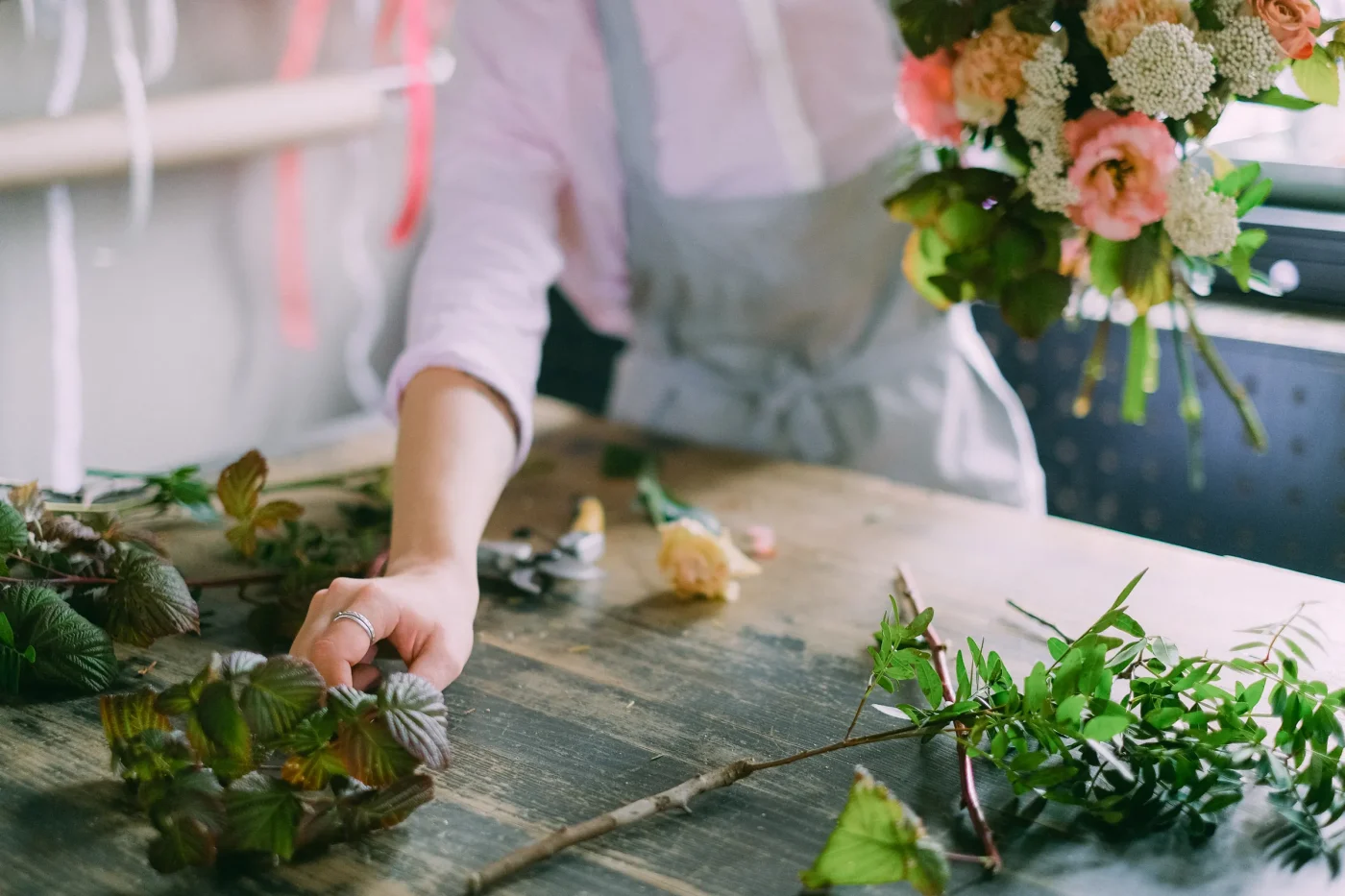
Creating a balanced, professional arrangement at home requires building structural layers from the base upward. Follow these sequential steps for a clean, stable result:
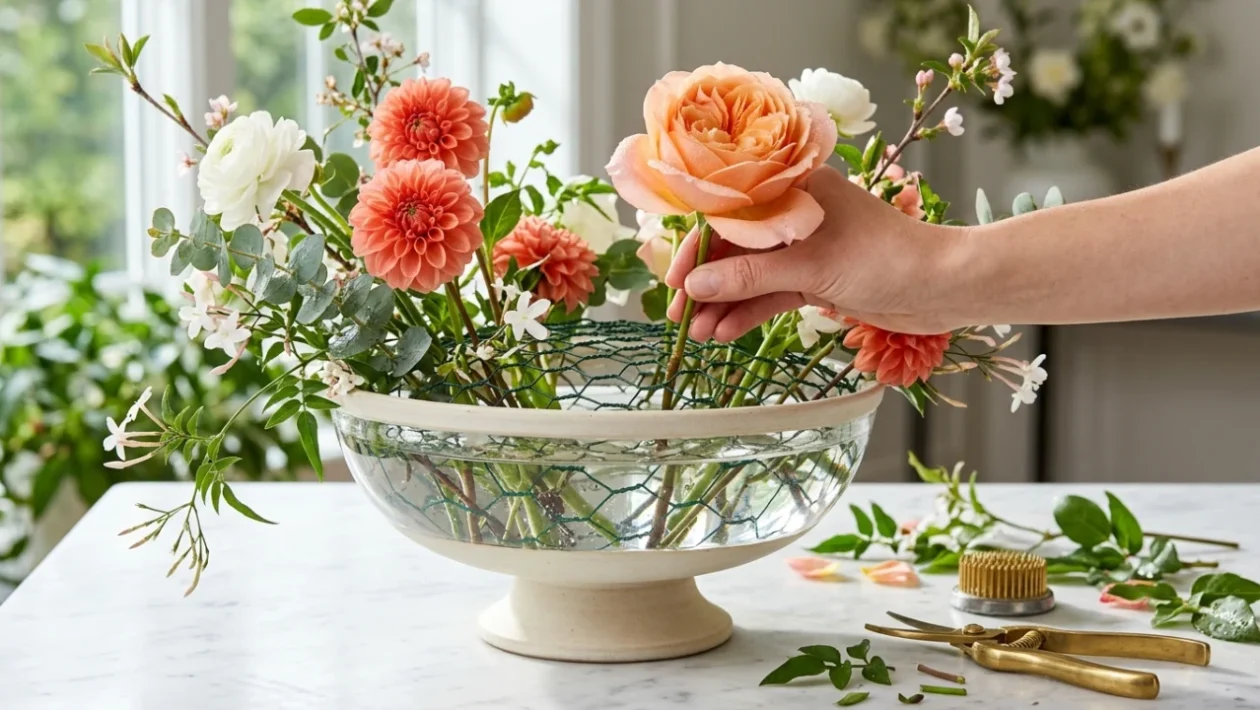
- Prepare the vessel and anchor: Cut a square of vinyl-coated floral netting (chicken wire) roughly twice the diameter of your container. Fold the raw edges inward to create a loose, double-layered pillow, then press it securely into the vessel. Secure the netting across the rim with two crossed strips of thin waterproof tape if the bowl has low sides.
- Add fresh water: Fill the vessel three-quarters full with cool water blended with standard cut-flower food. Adding water before inserting flowers prevents trapped air bubbles and splashes over finished blooms.
- Form the foliage foundation: Strip all lower leaves from your stems so no foliage sits below the water line. Insert woody foliage and leafy branches on slight diagonals, crossing stems inside the wire grid to build a stable internal web.
- Place structural focal blooms: Insert your primary focal flowers—such as peonies, garden roses, or large chrysanthemums—at varying angles and depths. Let some sit close to the rim while others extend outwards to define the arrangement’s perimeter.
- Integrate secondary flowers and texture: Layer in airy secondary stems, such as ranunculus, snapdragons, or lisianthus, allowing them to dance slightly above the focal blooms to create depth.
- Check angles and balance: Step back and view the display from all seating levels. Fill any visible gaps with delicate textural elements or trailing greenery to conceal the wire structure.
Once your centerpiece is assembled, check the water level daily. Fresh blooms consume water quickly, and keeping the reservoir full guarantees your display stays vibrant throughout your gathering.
💚 Ready to ditch synthetic foam for your next dinner party or seasonal gathering?
✨ Share your favourite sustainable floral tips and let us know which mechanic works best on your dining table.
📱 Leave a comment below to share your latest homemade centerpiece creations with our community! 👇