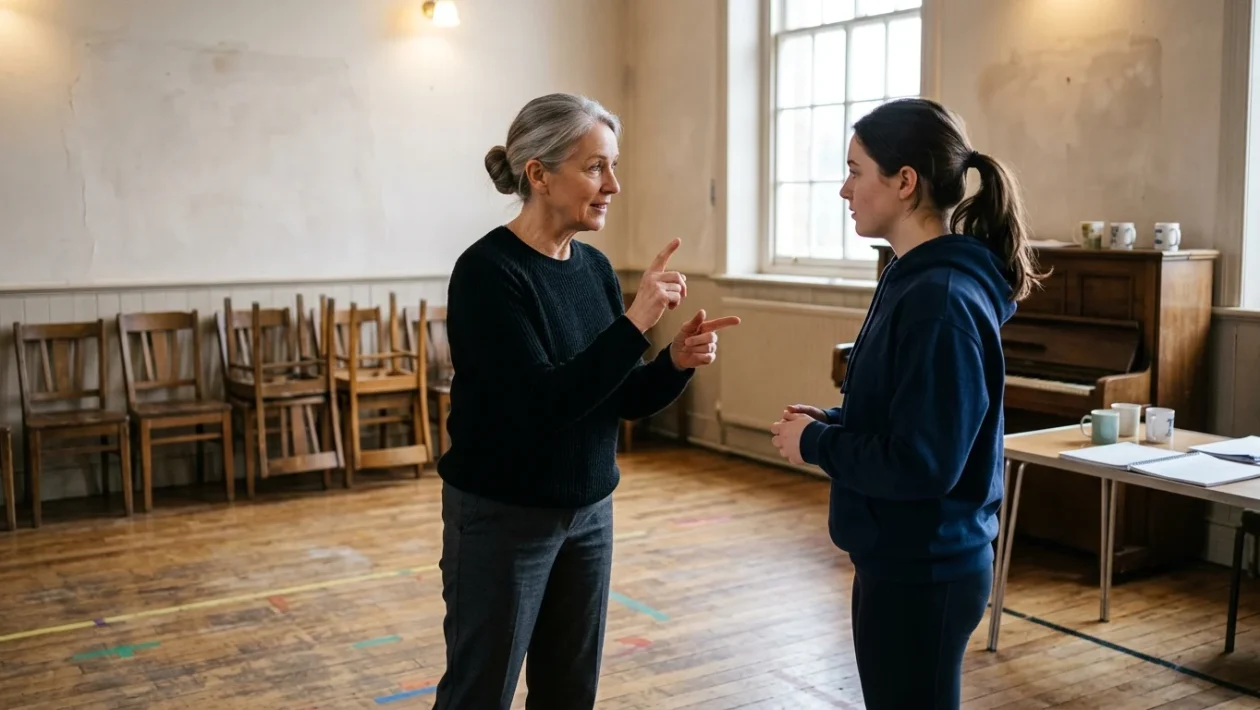
The foundational techniques linking Muriel Gold to her mentor Violet Walters transformed youth dramatic education into a disciplined craft across Canadian stages. By combining strict vocal mechanics, psychological character immersion, and improvisational play, their work created an enduring model for performance pedagogy that still informs modern acting studios.
Before Canadian drama education developed into standardized university degrees, community-based youth institutions provided the bedrock for stage craft. Violet Walters, recognized as a vital co-founder of early youth performance initiatives in Montreal alongside Dorothy Davis, offered a structured curriculum that prioritized diction, movement, and emotional clarity. For students like Muriel Gold, who would later lead major artistic organizations and document performance methodologies, this early instruction proved foundational.
The core philosophy rested on a simple premise: dramatic education does not exist merely to produce professional actors, but to develop articulate, expressive human beings. Understanding their framework reveals how classical stage techniques were adapted for generations of emerging performers.
How Did Violet Walters Influence Early Canadian Youth Performance?
During the formative decades of twentieth-century regional arts, formal training institutions for young performers were scarce outside major European academies. Violet Walters helped establish an accessible pathway for dramatic arts, ensuring students encountered classical texts alongside vocal exercises designed for clarity and projection.
Her approach treated stage presence as an acquired technical skill rather than an innate accident of personality. Movement studies, breath support, and rhythm were taught alongside script analysis, giving young learners the discipline required for continuous theatrical work.
Classical acting fundamentals demand absolute precision in breath control and vowel placement before any actor can communicate nuanced emotion to an audience.
This disciplined atmosphere directly shaped the creative trajectory of Muriel Gold. After experiencing this structured environment, Gold went on to earn advanced degrees, direct prominent Montreal productions, and author essential texts examining the creative spark behind live performance.
What Defined the Teaching Methodology of Muriel Gold?
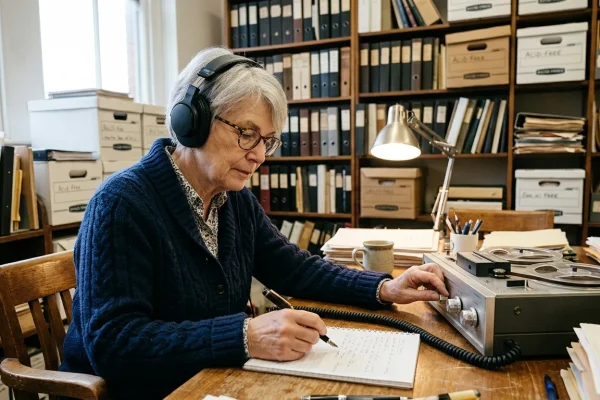
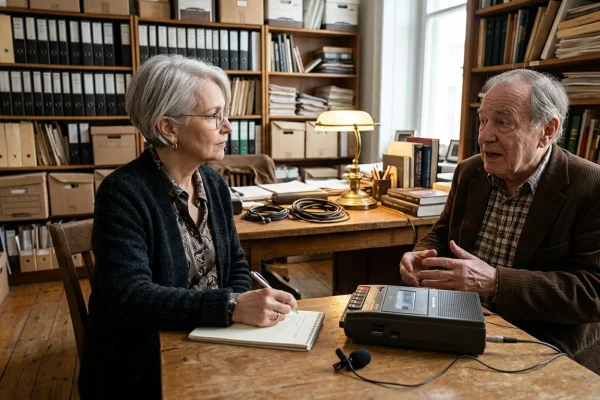
Muriel Gold expanded upon early twentieth-century training by blending traditional stage discipline with modern psychological insight. Her academic research and artistic leadership at institutions such as the Saidye Bronfman Centre Theatre allowed her to refine how actors access authentic emotional memory.
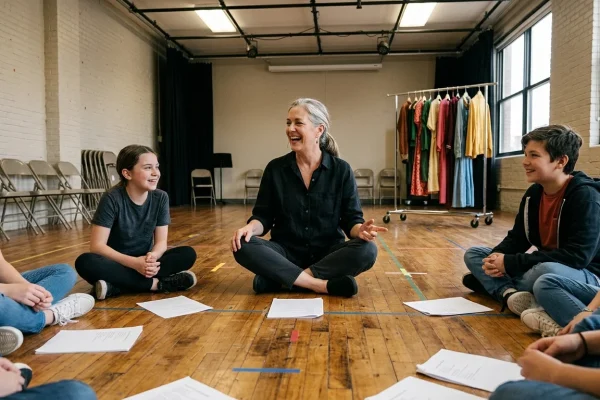
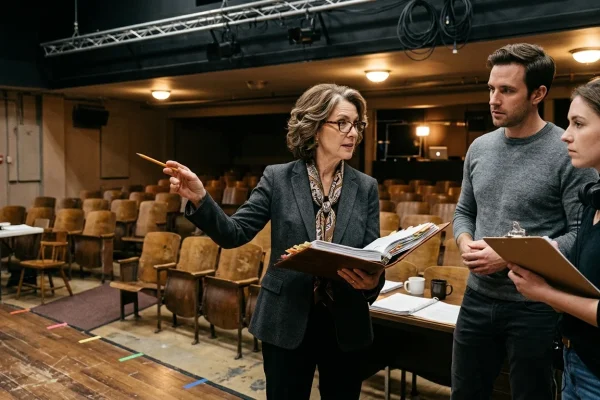
Rather than relying on mechanical repetition, Gold championed the active relationship between the performer’s inner life and the exterior demands of the script. Her rehearsals functioned as experiential laboratories where actors dissected motivation through specific physical triggers and collaborative inquiry.
Integrating Voice, Text, and Dramatic Play
A central pillar of Gold’s philosophy was connecting vocal freedom with deep textual analysis. When speech mechanics remain separate from emotional reality, performance turns into hollow declamation.
To avoid this pitfall, the training structure emphasized practical steps that actors applied directly to dramatic material:
- Vocal Placement: Releasing tension in the throat and diaphragm to allow projection without vocal strain.
- Textual Scansion: Analyzing scripts for operative words, shifts in intention, and rhythmic pauses.
- Physical Improvisation: Exploring non-verbal character relationships before speaking scripted lines.
- Observation Exercises: Studying real-world behavior to craft believable physical mannerisms onstage.
By treating each element as interconnected, performers developed the mental agility needed to adapt across varied stage directions and differing production styles.
Challenging Assumptions: Natural Talent Versus Structured Technique
A common misconception in performing arts is that exceptional stage presence is entirely spontaneous and cannot be formally taught. Popular narratives frequently celebrate raw intuition over formal classroom study, implying that mechanical exercises hinder true creative impulse.
Historical training models demonstrate precisely the opposite reality. Without a reliable vocal and physical technique, intuitive performers frequently experience vocal fatigue, repetitive character choices, and inconsistent performance levels during long production runs.
Spontaneous emotional truth on stage is only sustainable when supported by rigorous physical and vocal habits that an actor can repeat night after night.
The structured legacy left by Walters and advanced by Gold proved that deliberate technical drills actually liberate the performer. When the voice and body respond effortlessly to thought, creative intuition flourishes freely on stage.
Comparing Foundational Pedagogy Across Eras
To understand the progression of this educational legacy, examining the structural shift from early youth programs to Gold’s analytical methodology reveals how Canadian stage training evolved.
| Training Element | Core Pedagogical Focus |
|---|---|
| Violet Walters Foundations | Elocution, vocal clarity, foundational poise, and ensemble discipline for youth. |
| Muriel Gold Methodology | Psychological motivation, creative spark research, and professional actor integration. |
| Pedagogical Objective | Cultivating confident expression alongside disciplined interpretive performance skills. |
| Curriculum Delivery | Direct studio instruction transitioning into published scholarly analysis. |
This balance between traditional craft and contemporary artistic inquiry allowed early independent drama schools to lay the groundwork for modern performing arts conservatories across the country.
Why Does This Legacy Matter for Modern Performing Arts?
The contributions of trailblazers like Walters and Gold highlight the enduring importance of community-level artistic mentorship. Long before state-supported arts councils expanded nationwide, individual educators invested time into establishing local standards of excellence.
Their work reinforced that theatre education develops transferable communication skills, empathy, and collaborative literacy. Contemporary drama teachers continue to utilize vocal warm-ups, character interviews, and spatial awareness exercises that trace back to these foundational practices.
Recognizing the instructors who built these learning pathways preserves an essential chapter of national performing arts history, celebrating the mentorship that turns creative curiosity into lasting stage mastery.
✨ The lineage of Canadian arts education relies heavily on the teachers who built community studios from the ground up.
💚 Preserving the history of pioneer educators helps modern artists appreciate the craft behind their everyday rehearsal techniques.
📱 Share your experience with us in the arts community by exploring how foundational training methods shaped your own creative work.
👇 Leave a comment below with your thoughts on the evolution of youth drama instruction.