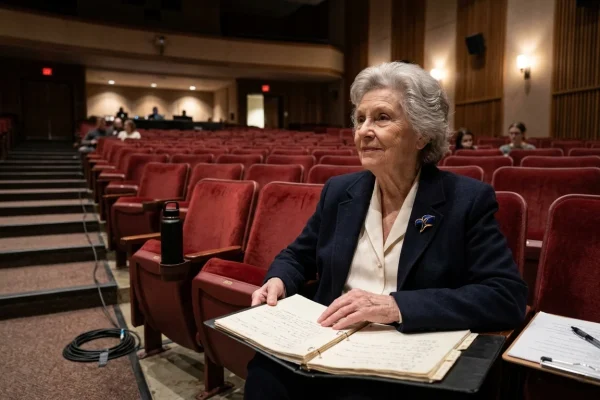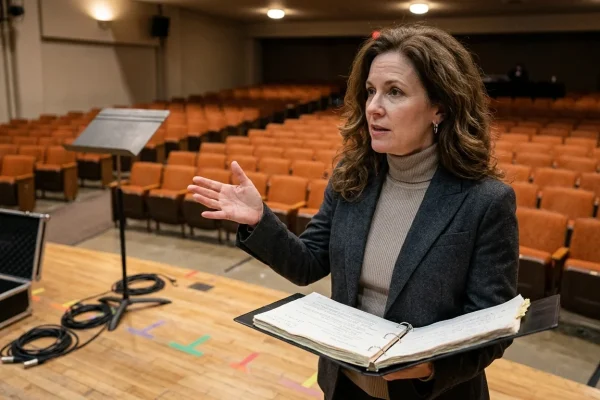

Dr. Muriel Gold reshaped English-language drama in Quebec during her tenure as the artistic director of the Saidye Bronfman Centre Theatre, turning a community-focused venue into a nationally recognized stage. Her leadership through the 1970s established professional standards, elevated Canadian scripts, and secured the institution’s position as a cornerstone of Montreal cultural life.
Before Gold took the helm, community playhouses often struggled to maintain continuous professional production cycles. Her arrival marked a decisive shift toward institutional maturity, setting benchmarks for artistic risk and operational discipline that continue to influence regional playhouses nationwide.
What drove this remarkable transformation during one of the most politically charged decades in Quebec history?
A Turning Point for Montreal English Theatre
When Gold assumed leadership of the theatre division at the Saidye Bronfman Centre—known today as the Segal Centre for the Performing Arts—she inherited a stage with immense potential but limited professional infrastructure. She immediately prioritized raising the caliber of every production, transitioning the theatre into a venue governed by Canadian Actors’ Equity Association standards.
This structural change meant that top-tier Canadian talent no longer had to leave Montreal for Toronto or New York to find demanding, well-produced stage work. Gold attracted seasoned professionals and emerging artists alike, creating a vibrant ecosystem on Côte-Sainte-Catherine Road.
Her approach challenged the conventional wisdom of the period, proving that regional theatres could mount world-class repertoire without abandoning their local audiences.
The enduring vitality of any cultural institution relies on balancing rigorous artistic standards with deep, authentic service to its immediate community.
By bringing disciplined direction and strong administrative acumen to the institution, Gold ensured the venue stood alongside older Canadian regional heavyweights. Her programming quickly proved that regional theatre could spark intense public dialogue and critical acclaim.
Curating Bold Repertoire and Artistic Risk
Gold refused to rely solely on safe, lighthearted commercial plays. Instead, she introduced Montreal audiences to challenging international works alongside contemporary Canadian playwrights, tackling complex themes that resonated with the city’s diverse population.
Her seasons reflected a deliberate mix of classical theatre, biting modern dramas, and works addressing social conscience. This curated tension between familiar classics and provocative new writing expanded the theatre’s core subscriber base.
Audiences responded directly to this elevated standard, transforming the Saidye Bronfman Centre into an essential stop for serious drama critics across the country.
Bridging Communities Across Cultural Divides
Operating an English-language theatre in Montreal during a period of profound social evolution required exceptional diplomacy and artistic vision. Gold recognized that the Saidye Bronfman Centre had a dual mandate: honouring its Jewish heritage while actively engaging the broader English- and French-speaking arts communities.
She built collaborative bridges with other Quebec arts institutions, demonstrating that cultural specificity could enrich rather than divide a city’s artistic landscape. Under her guidance, productions frequently featured bicultural creative teams, setting an early precedent for intercultural collaboration in Canadian performance.
This community-first philosophy also extended to theatre education, sparking initiatives that introduced thousands of local students to the performing arts.
Key Takeaways from Gold’s Directorial Leadership
Gold’s tenure offers critical insights for modern arts administrators and theatre practitioners working across Canada:
- Professionalization builds credibility: Securing professional union agreements established the venue as a premier destination for top Canadian acting and design talent.
- Repertoire must balance risk and resonance: Introducing bold, socially pertinent works cultivated a discerning, loyal audience rather than driving patrons away.
- Community roots enhance universal art: Celebrating specific cultural roots provided the foundation for broadly appealing, high-impact storytelling.
- Educational investment creates longevity: Launching youth initiatives and community workshops built multi-generational patronage that sustained the centre for decades.
Her contributions earned her widespread recognition, including appointment to the Order of Canada, affirming her status as an architect of modern Canadian theatre.
🍁 Understanding this era provides essential context for the resilience and vibrancy of Montreal’s contemporary cultural scene.
💡 The operational and artistic blueprints established under Gold demonstrate how visionary leadership can cement an institution’s legacy across generations.
👇 Have your say in the comments below: How should contemporary Canadian theatres balance heritage with modern artistic reinvention?
📢 Share this breakdown with someone tracking the history of Canadian theatre and arts leadership.