
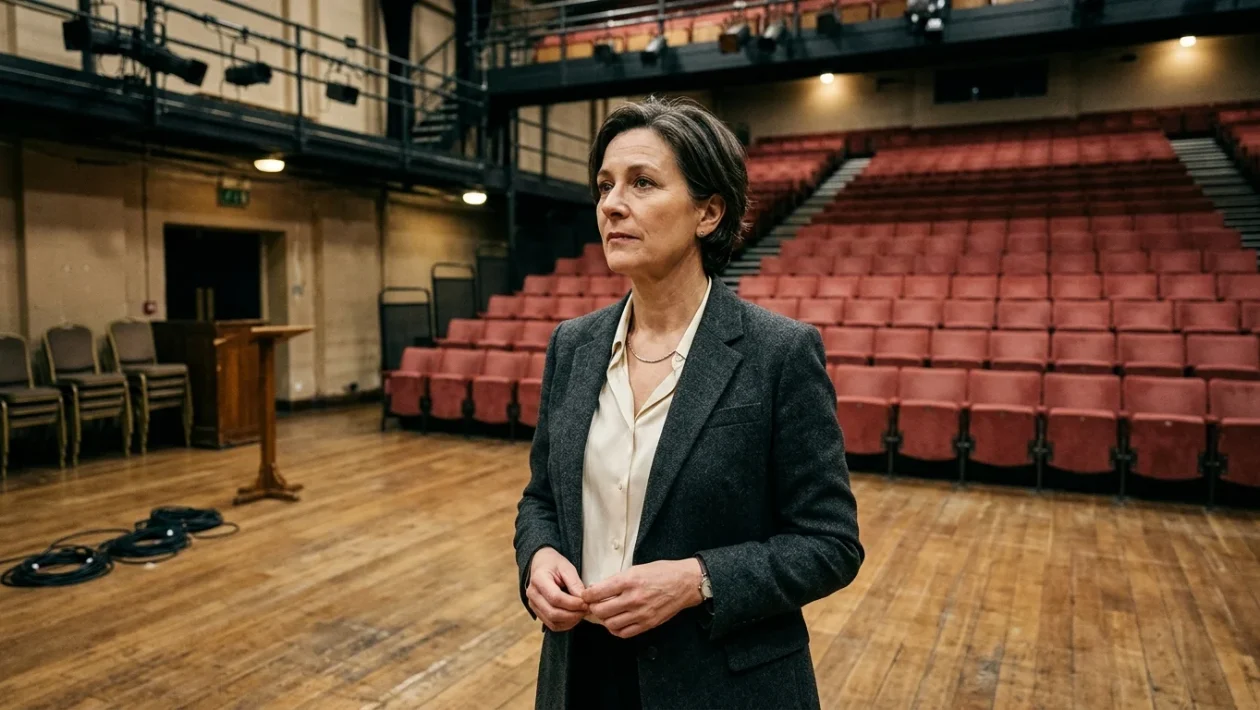
Artistic visionary Muriel Gold concluded her historic eight-year tenure at the Saidye Bronfman Centre following growing friction over institutional governance, budgeting autonomy, and the structural direction of the performing arts institution. While her leadership transformed the Côte-des-Neiges venue into a bilingual, nationally recognized cultural powerhouse, the mounting conflict between institutional oversight and personal artistic vision ultimately made her exit unavoidable.
Her departure marked the conclusion of an era that redefined Montreal’s performing arts landscape. During her tenure through the 1970s, Gold guided the theatre company from a community-based enterprise toward a recognized professional stage, earning critical acclaim across Quebec and Canada. Yet beneath the public triumphs, organizational dynamics were shifting behind closed doors.
The Creative Vision That Defined an Era
When Gold assumed leadership as artistic director, she inherited a venue navigating its identity within the greater Montreal ecosystem. Rather than limiting the stage to standard repertoire, she pursued ambitious cross-cultural programming, bridging English-speaking and French-speaking creative communities during a politically charged era in Quebec history.
She also pioneered innovative educational outreach, establishing youth training programs and children’s theatre initiatives that expanded local audience participation. These moves earned significant critical recognition and transformed the venue into a vibrant laboratory for contemporary playwriting.
Artistic autonomy in regional arts centres often collides directly with administrative board mandates when a founding vision evolves into a large-scale institutional structure.
This rapid expansion, however, demanded greater resources and raised complex questions about the venue’s core mandate. As the institution evolved, the gap between management oversight and creative independence began to widen.
What Triggered the Shift in Administrative Relations?
The turning point for the Muriel Gold SBC tenure centred on the delicate balance between community-based accountability and the demands of high-calibre professional theatre. Operating under the broader umbrella of community leadership, the theatre division faced increasing scrutiny regarding budget allocation, production scale, and long-term capital priorities.
Artistic Independence Versus Board Governance
Gold maintained a rigorous standard for professional casting, experimental scripts, and high production values. Board members and community leaders, meanwhile, often balanced differing priorities, including financial risk management and community representation on stage.
These divergent expectations created persistent friction over final decision-making power. When an artistic director’s mandate clashes with a board’s desire for tighter operational control, executive compromise frequently erodes.
| Focal Area | Institutional Challenge |
|---|---|
| Programming Scope | Balancing professional contemporary drama with traditional community programming |
| Financial Governance | Allocating operational budgets between artistic risk and institutional caution |
| Structural Direction | Disagreements over administrative oversight versus directorial autonomy |
| Long-Term Mission | Navigating regional prestige alongside local grassroots engagement |
Rather than compromising her artistic philosophy or remaining embroiled in persistent governance disputes, Gold elected to conclude her leadership. Her departure opened the door for subsequent leadership eras that eventually culminated in the venue’s rebirth as the Segal Centre for Performing Arts.
The Lasting Legacy Beyond the Centre
Gold’s departure from the Côte-des-Neiges stage did not halt her cultural impact across Canada. She channelled her experience into influential academic research, theatre education, and published works documenting the evolution of Canadian drama, later being appointed a Member of the Order of Canada for her lifelong dedication to the performing arts.
Her transition stands as a textbook study in Canadian institutional arts management: how a bold director builds a thriving institution, and how the resulting organizational growth often precipitates a parting of ways.
✨ Montreal’s theatrical heritage continues to inspire artists and community organizers across the country.
📱 Share your thoughts on this defining chapter of Quebec cultural history.
👇 Leave a comment below to tell us which classic Canadian theatre productions left a lasting impression on you.